
aiSpine Corrector vs Wearable: Which Posture Monitor Fits?
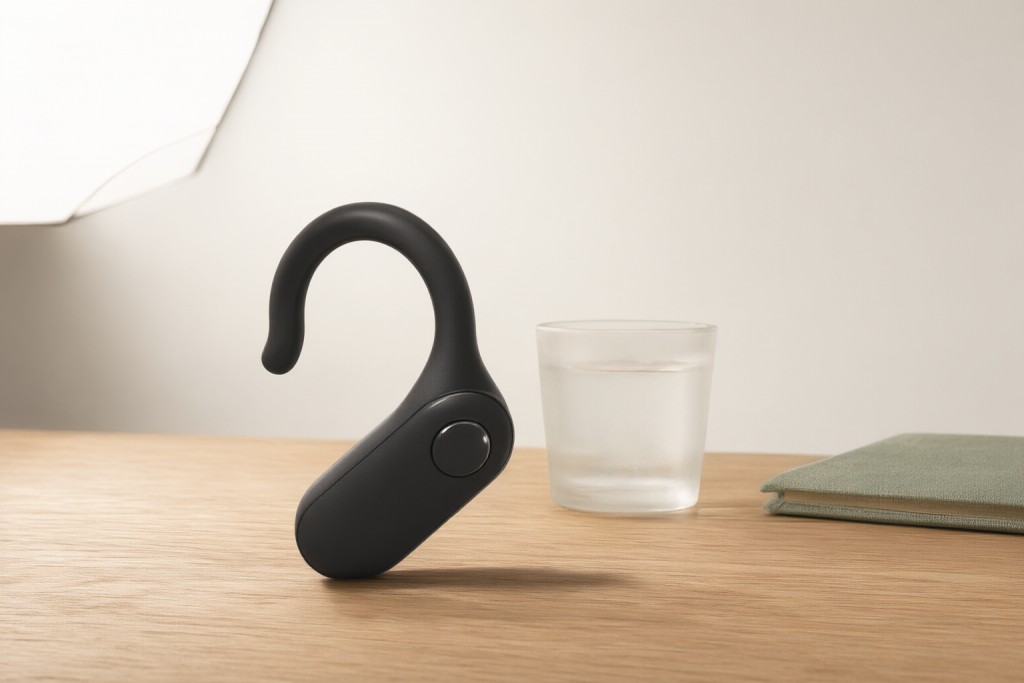
If you want a small monitor you can move between attachment points through the day, the aiSpine wearable is the closer fit. It is a compact, one-button posture-awareness device that supports over-ear, eyeglass, front clip-on, and back clip-on wearing configurations, so you can keep the same monitoring routine going across screen work, study, commuting, and other parts of your day. Its app workflow centers on calibration to a natural reference posture, a real-time angle display, vibration or app feedback, and daily, weekly, and monthly reports covering wearing time, reminder frequency, average angle, severity distribution, and historical changes.[source][source]
If you would rather put something on once and follow a habit-and-goals routine, the aiSpine Corrector is the closer fit. It is a separate stretchable, sweat-wicking garment/device, not an accessory for the original wearable. Its page describes real-time spine-curvature monitoring with immediate vibration or app alerts, plus daily posture-habit tracking with actionable insights, progress tracking, daily goals, and custom exercises based on age, weight, and posture severity.[source]
Both products are built around the same everyday job: helping you notice your neck and back posture in real time, giving you a nudge when posture moves outside the range you selected, and recording progress you can look back on. The practical difference is form factor and review style, not the underlying purpose. The sections below walk through what each one helps you do day to day, how their feedback and review workflows differ, and why those differences matter when you choose.[source][source]
What the aiSpine Wearable Helps You Do Day to Day
The aiSpine wearable is designed for real-time neck and back posture monitoring. You calibrate it to a natural reference posture, choose the posture range you want it to watch, and it shows your current angle in real time. When posture moves outside your selected range, it gives immediate feedback through gentle vibration or an app reminder so you can adjust. Because the module moves between over-ear, eyeglass, front clip-on, and back clip-on configurations, you can keep the same monitoring routine going across different parts of your day.[source][source]
The marketing page also describes cervical and lumbar posture awareness, personalized posture goals and training plans, structured posture-deviation and questionnaire indicators, and AI-assisted analysis of recorded posture data. In everyday terms, this is a posture-awareness workflow: it helps you notice and track posture, not diagnose or treat a condition.[source]
What the aiSpine Corrector Helps You Do Day to Day
The aiSpine Corrector is designed around a garment you put on. Its page describes real-time spine-curvature monitoring with immediate vibration or app alerts, plus daily posture-habit tracking that turns your recorded posture into actionable insights. It also describes progress tracking, daily goals, and custom exercises based on age, weight, and posture severity. The product page describes a 3-axis accelerometer, gyroscope, and tension sensors, with iOS and Android app reporting.[source]
In everyday terms, the Corrector is about wearing a garment and following a habit-and-goals routine rather than carrying a small module and repositioning it. These are product-owner descriptions of the workflow, not independently established treatment outcomes, and the Corrector does not diagnose or treat a condition.[source]
How the Feedback and Progress Review Differ
The wearable's review workflow is report-oriented. Its app produces daily, weekly, and monthly reports covering wearing time, reminder frequency, average angle, severity distribution, and historical changes. That structure suits someone who wants to see how often posture drifted, how often reminders fired, and how the pattern shifted over weeks and months.[source][source]
The Corrector's review workflow is habit-and-goals oriented. Its page describes daily posture-habit tracking with actionable insights, progress tracking, daily goals, and custom exercises based on age, weight, and posture severity. That suits someone who wants a daily routine with goals and suggested exercises rather than a report set organized by week and month. Both workflows are software-supported posture routines, not individualized medical treatment.[source]
Using Recorded Posture Information in a Professional Conversation
Recorded posture information can help you have a more informed conversation with a professional. The aiSpine marketing page describes information that can support a user discussing progress with a professional, and where available and prescribed, it describes support for Remote Therapeutic Monitoring workflows by recording posture activity between visits and giving care teams a view of engagement and progress. That is a conditional care-workflow capability, not a claim that every purchase includes clinical monitoring, and coverage and eligibility vary by patient, provider, device, and payer requirements.[source][source]
Used this way, the reports are a record of what you did and what your posture looked like over time, which you can bring to a conversation. They are not a diagnosis, a medical interpretation, or a treatment recommendation, and they do not replace professional medical care.[source]
Why These Differences Matter When You Choose
Form factor decides how often you will actually use the device. A compact module that moves between attachment points fits people whose day shifts between a desk, a commute, and other settings, and who want the same monitor in each. A garment fits people who would rather put something on once and wear it, and who prefer a habit-and-goals routine with daily goals and suggested exercises over weekly and monthly report review.[source]
Review style decides what you get out of it. If you want to look back at wearing time, reminder frequency, average angle, severity distribution, and historical changes, the wearable's report set is the closer match. If you want daily habit tracking, progress tracking, daily goals, and custom exercises, the Corrector's described workflow is the closer match. Neither product promises a posture or pain outcome, so the practical question is which routine you will keep up with.[source]
aiSpine Corrector vs Wearable at a Glance
The table below summarizes the confirmed, buyer-facing differences. Prices are current listed prices that may change, so confirm them on the matching official product page before buying.[source]
| Feature | aiSpine wearable | aiSpine Corrector |
|---|---|---|
| Form | Compact, one-button module | Stretchable, sweat-wicking garment/device |
| Wearing position | Over-ear, eyeglass, front clip-on, or back clip-on | Worn on the body as a garment |
| Everyday job | Real-time neck and back posture monitoring with user-selected ranges and reminders | Real-time spine-curvature monitoring with immediate vibration or app alerts |
| Feedback | Gentle vibration and app reminders | Vibration and app alerts |
| Progress review | Daily, weekly, and monthly reports on wearing time, reminder frequency, average angle, severity distribution, and historical changes | Daily posture-habit tracking, progress tracking, daily goals, and custom exercises |
| Sensors described | Calibration to a natural reference posture and a real-time angle display | 3-axis accelerometer, gyroscope, and tension sensors |
| Material or color | Module with interchangeable attachments | Stretchable, sweat-wicking; Black and Pink options |
| Current listed price | $74 when reviewed | $104 when reviewed |
| Best-fit routine | Moving one monitor between attachment points through the day | Wearing a garment and following a habit-and-goals routine |
Accessories That Belong to the aiSpine Wearable
Four accessories are listed for the original aiSpine wearable. The Collar Accessory clips to the chest or back to support lumbar-placement use. The Ear Accessory provides a discreet behind-ear/over-ear mounting option for neck and upper-back posture routines. The Eyeglass Accessory attaches to eyeglass temples for screen, study, commuting, and similar routines. Each of these three was listed at $23 when reviewed.[source]
The USB Charging Case provides portable charging and storage for the original aiSpine wearable and was listed at $30 when reviewed. These accessories belong to the original wearable, not to the separate aiSpine Corrector, and an accessory page does not establish that the accessory itself contains the posture sensor or works independently. For more detail on how the wearable's configurations work, see the related guide on aiSpine wearable configurations.[source]
Choosing Between Them: A Short Checklist
Start with how you want to wear a monitor: a compact module you can reposition, or a garment you put on. Then decide how you want to review progress: weekly and monthly reports on wearing time, reminder frequency, average angle, severity distribution, and historical changes, or daily habit tracking with goals and custom exercises. Finally, confirm the current listed price and color on the matching official product page, since prices and availability can change.[source]
If you choose the wearable, check which attachment you need and whether the USB Charging Case is useful for your routine. If you choose the Corrector, confirm the color option and garment details on its own page. Whichever you pick, it is a posture-awareness workflow, not a diagnosis or a guaranteed treatment outcome.[source]
Frequently Asked Questions
Is the aiSpine Corrector an accessory for the aiSpine wearable?
No. The aiSpine Corrector is a separate stretchable, sweat-wicking garment/device with its own sensing and feedback description. It is a family member, not an accessory for the original wearable, and the two should not be treated as interchangeable.
Which accessories are confirmed for the original aiSpine wearable?
The official Shop lists the Collar, Ear, and Eyeglass attachment accessories and the USB Charging Case for the original aiSpine wearable. The Collar, Ear, and Eyeglass accessories were each listed at $23 when reviewed, and the USB Charging Case was listed at $30 when reviewed. These accessories belong to the wearable, not the Corrector.
What wearing configurations does the aiSpine wearable support?
The aiSpine wearable supports over-ear, eyeglass, front clip-on, and back clip-on wearing configurations using the appropriate attachment. The module can be moved between these configurations.
What is the current listed price of each product?
When reviewed, the aiSpine wearable was listed at $74 and the aiSpine Corrector was listed at $104. Prices are current listed prices that may change, so confirm them on the matching official product page before buying.
What colors does the aiSpine Corrector come in?
The aiSpine Corrector was offered in Black and Pink options when reviewed. Confirm current color availability on the Corrector's official product page.
Does the aiSpine wearable diagnose or treat posture problems?
No. It is a posture-awareness device with calibration, a real-time angle display, vibration or app feedback, and app reports. It does not diagnose or treat posture problems and is not a substitute for professional medical care.
How do the feedback and progress review differ between the two products?
The wearable's app workflow centers on calibration, a real-time angle display, vibration or app feedback, and daily, weekly, and monthly reports covering wearing time, reminder frequency, average angle, severity distribution, and historical changes. The Corrector's page describes real-time spine-curvature monitoring with immediate vibration or app alerts, plus daily posture-habit tracking with actionable insights, progress tracking, daily goals, and custom exercises based on age, weight, and posture severity.
Can recorded posture information support a conversation with a professional?
The aiSpine marketing page describes information that can support a user discussing progress with a professional. Where available and prescribed, it also describes support for Remote Therapeutic Monitoring workflows by recording posture activity between visits and giving care teams a view of engagement and progress. This is conditional and does not imply that every user, purchase, clinician, payer, or care setting supports RTM.
References
- Home-new – Home — www.aihnet.com
- aiSpine shared product-family boundary confirmation — www.aihnet.com