
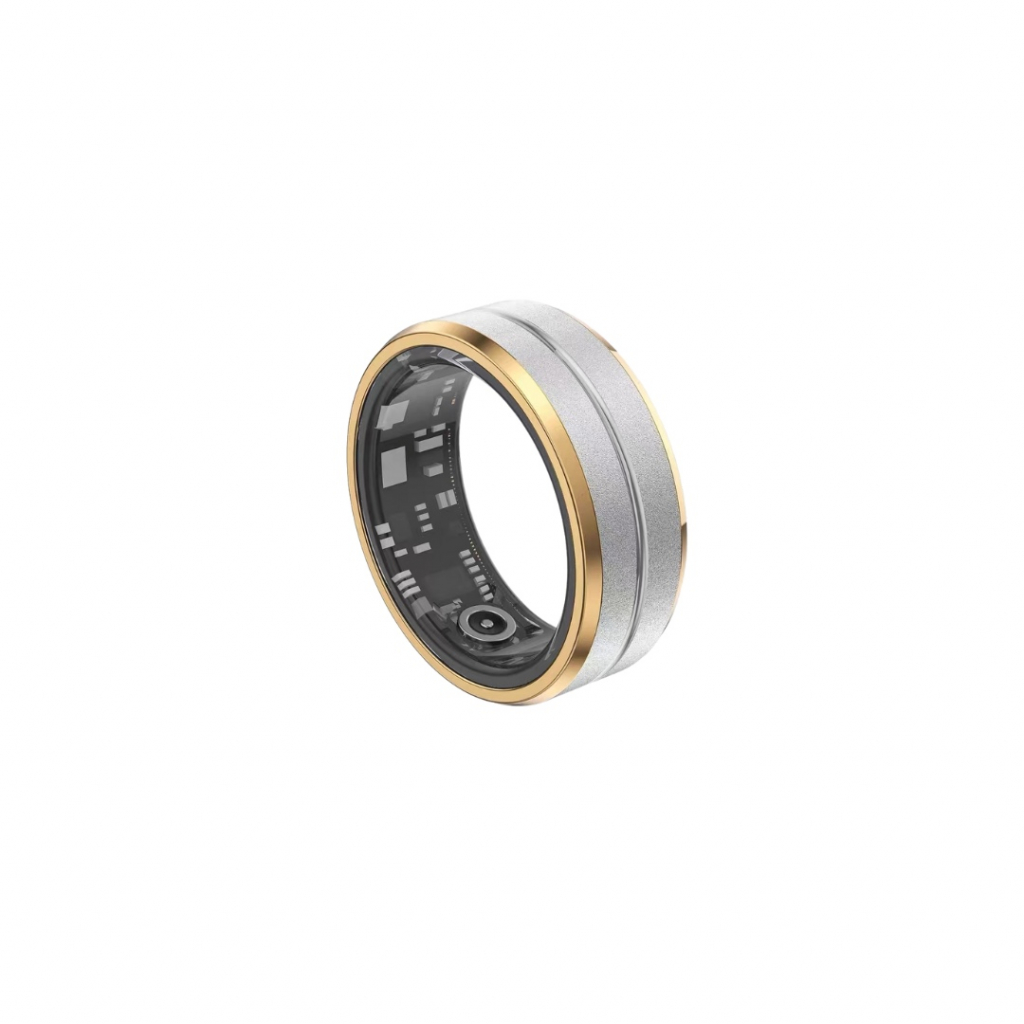
What "Best AI Ring" Really Depends On
If you are searching for the best AI ring, the honest answer is that "best" is a fit question rather than a single winner. The aiRing family includes two confirmed variants, aiRing Lite and aiRing Ultra, and the right choice depends on what you want the ring to do for you day to day. Both variants support bounded wellness tracking for sleep, heart rate, blood oxygen, temperature and activity, both state 5 ATM water resistance, both use Bluetooth 5.0 and magnetic charging with a stated charge time of no more than 1.5 hours, and both state a typical battery range of 4-6 days. Both also participate in the aiCare workflow, AIHNET's connected-health software platform that brings supported device data together so you can organize and review it over time.
The clearest confirmed difference is that Smart Touch and SOS controls are Ultra-only. If those controls matter to you, that single fact may settle the decision. If they do not, the two variants share the same confirmed core capabilities, and your choice comes down to how you want to wear and charge the ring and which review workflow you want in aiCare.
One scope note before you read on: this guide compares confirmed product facts. It also does not interpret readings or tell you what a measurement means for your health. Think of it as a buying-fit guide, not a performance ranking.
aiRing Lite vs aiRing Ultra: Confirmed Differences at a Glance
The table below consolidates what is confirmed for each variant. Most rows are shared traits; only the Smart Touch and SOS row differs. Actual battery runtime varies with settings and use, so treat the 4-6 day figure as a typical range rather than a guarantee.
| Trait | aiRing Lite | aiRing Ultra |
|---|---|---|
| Wellness tracking (sleep, heart rate, blood oxygen, temperature, activity) | Supported | Supported |
| 5 ATM water resistance | Stated | Stated |
| Bluetooth | 5.0 | 5.0 |
| Magnetic charging | 1.5 hours or less | 1.5 hours or less |
| Typical battery range | 4-6 days | 4-6 days |
| aiCare participation | Yes | Yes |
| Smart Touch and SOS controls | Not confirmed for this variant | Ultra-only confirmed feature |
What the Ring Tracks and What You Can Review Later
The aiRing family supports bounded wellness tracking for sleep, heart rate, blood oxygen, temperature and activity. Those readings flow into aiCare, which accepts and stores supported readings from aiRing and other supported AIHNET device families. In practice, that means the ring captures the readings and the app becomes the place where you look back at them.
aiCare provides a specific set of review views: latest reading by device, device history, day samples, calendar summaries, metric history and trend summaries. If you want to see how your sleep or activity looks across a week or a month, those calendar and trend views are the practical tools. If you want to check a single recent reading, the latest-by-device view is the quicker path.
It is worth being clear about what this workflow is and is not. If you have questions about a reading, that is a conversation for a qualified professional.
How an AI Ring Fits an Everyday Monitoring Routine
Day-to-day use of an aiRing follows a simple loop. You wear the ring, let supported readings accumulate, charge it magnetically when needed, and review your history and trends in aiCare. Because charging is stated at 1.5 hours or less, the charging habit is easy to fold into a routine rather than a chore you have to plan around.
Synchronization has a practical detail worth knowing: aiCare accepts timestamped arrays of aiRing readings in one request, which supports delayed or batched synchronization after readings reach the client. In plain terms, you do not need a perfectly live connection every minute; readings can arrive in batches and still be organized by time. Exact on-device offline storage capacity, duration and retention are not confirmed, so this guide does not promise a specific offline window.
A simple everyday loop
- Wear the ring Keep it on through your normal day and night so supported wellness readings can accumulate.
- Charge when needed Use magnetic charging; the stated charge time is 1.5 hours or less.
- Let readings sync Readings can be synchronized in timestamped batches, so delayed uploads are a supported workflow.
- Review in aiCare Use latest-by-device, device history, day samples, calendar summaries, metric history and trend summaries to look back over time.
Where a Ring Form Factor Helps and Where It Doesn't
A finger-worn ring is a distinct form factor, and the optical rationale is straightforward: finger placement is the basis for ring-based photoplethysmography (PPG). A published review of smart rings in clinical medicine describes that optical-contact rationale and the applications evaluated across differing ring models and settings, while also noting substantial limitations in validation and reporting.[PubMed Central]
What it does support is a qualitative point: the finger is a plausible optical site, and published results should be read in the context of the specific model and study design.[PubMed Central]
Practically, the form-factor question is often about fit rather than physiology. A ring can suit people who prefer something minimal on the finger and who are comfortable with a charging habit every few days. The stated 5 ATM water resistance also matters for daily life, though it is a rating rather than a universal water-damage guarantee. If comfort, charging rhythm and water exposure are the factors you care about, those are the right things to weigh.
Who Each Variant Suits
Mapping the confirmed differences to priorities is the simplest way to choose. Choose aiRing Ultra if the Ultra-only Smart Touch and SOS controls are features you specifically want.
What this guide will not do is claim that one variant is more accurate, safer or healthier than the other, because no such evidence is supplied. Unconfirmed details, such as exact offline storage, are omitted rather than guessed. If a specific detail matters to your decision, check the product documentation or ask support directly.
A Practical Checklist Before You Decide
Before you buy, run through a short checklist so the decision rests on your own priorities rather than on a ranking. The questions below are the ones the confirmed facts can actually help you answer.
| Check | Why it matters |
|---|---|
| Which wellness metrics do you want tracked? | Sleep, heart rate, blood oxygen, temperature and activity are the supported tracking areas for the family. |
| Do you need Smart Touch and SOS? | These are Ultra-only confirmed features; if you want them, they point to Ultra. |
| Is a typical 4-6 day battery and 1.5-hour-or-less charging acceptable? | Runtime varies with settings and use, so plan around a multi-day charging rhythm. |
| Does 5 ATM water resistance meet your use? | It is a stated rating, not a universal water-damage guarantee. |
| Do you want the aiCare review workflow? | aiCare provides latest-by-device, device history, day samples, calendar summaries, metric history and trend summaries. |
| Have you checked OS compatibility and privacy documentation? | These are not confirmed in the supplied evidence, so verify them separately with product documentation or support. |
Next steps
For current appointment, location, or contact information, visit the official website.
Frequently Asked Questions
Is aiRing Ultra better than aiRing Lite?
Not in any confirmed sense of accuracy or health outcome. The confirmed difference is that Smart Touch and SOS controls are Ultra-only. Choose Ultra if you want those controls; otherwise the shared capabilities are the same.
How long does the aiRing battery last and how long does charging take?
Both confirmed variants state a typical battery range of 4-6 days and magnetic charging with a stated charge time of no more than 1.5 hours. Actual runtime varies with settings and use, so treat these as typical figures rather than guarantees.
Can I wear the aiRing in water?
Both confirmed variants state 5 ATM water resistance. That is a rating rather than a universal water-damage guarantee, so check the product documentation if you have a specific activity in mind.
What can I see in the aiCare app?
aiCare provides latest reading by device, device history, day samples, calendar summaries, metric history and trend summaries for supported readings.
Does the aiRing diagnose or treat any condition?
No. This article does not offer individualized guidance based on a reading.
Does the aiRing work offline?
aiRing readings can be synchronized in timestamped batches, so delayed uploads after readings reach the app are a supported workflow. Exact on-device offline storage capacity, duration and retention are not confirmed, so this guide does not promise a specific offline window.
References
- Smart Ring in Clinical Medicine (2025): scoped form-factor reading — pmc.ncbi.nlm.nih.gov
- Official website — www.aihnet.com