
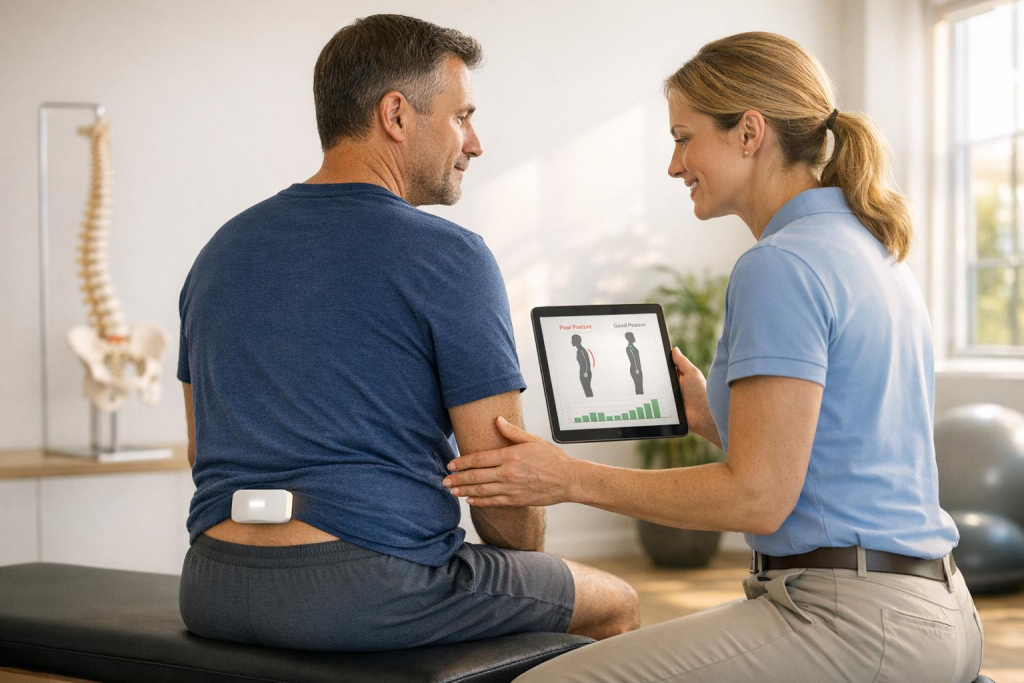
Back pain affects 80% of American adults and costs the U.S. over $400 billion annually in medical expenses and lost productivity. Managing back pain often comes down to two main approaches: AI-powered wearable devices and in-person physical therapy. Each offers unique benefits depending on your needs.
- AI-powered wearables provide real-time posture tracking, biofeedback, and personalized exercise plans. They’re convenient, accessible, and effective for remote care, especially for those with busy schedules or limited access to clinics.
- Physical therapy focuses on hands-on care, guided exercises, and education. It strengthens core muscles, improves posture, and addresses pain at its source with professional supervision.
Both methods show similar results in pain relief and recovery timelines, but they differ in cost, accessibility, and how care is delivered. Combining these approaches – using wearables for real-time data and therapists for expert guidance – can enhance recovery and long-term results.
Quick Comparison:
| Feature | AI-Powered Wearables | Physical Therapy |
|---|---|---|
| Monitoring | Continuous, real-time feedback | Periodic, in-person assessments |
| Customization | Algorithm-based adjustments | Therapist-guided adjustments |
| Accessibility | Remote, 24/7 availability | Requires clinic visits |
| Cost | Lower device costs | Higher session-based expenses |
| Dropout Rates | Lower (15.7%) | Higher (34.3%) |
For the best results, consider combining both methods. Wearables provide data-driven insights, while therapists offer hands-on expertise for a more personalized recovery plan.
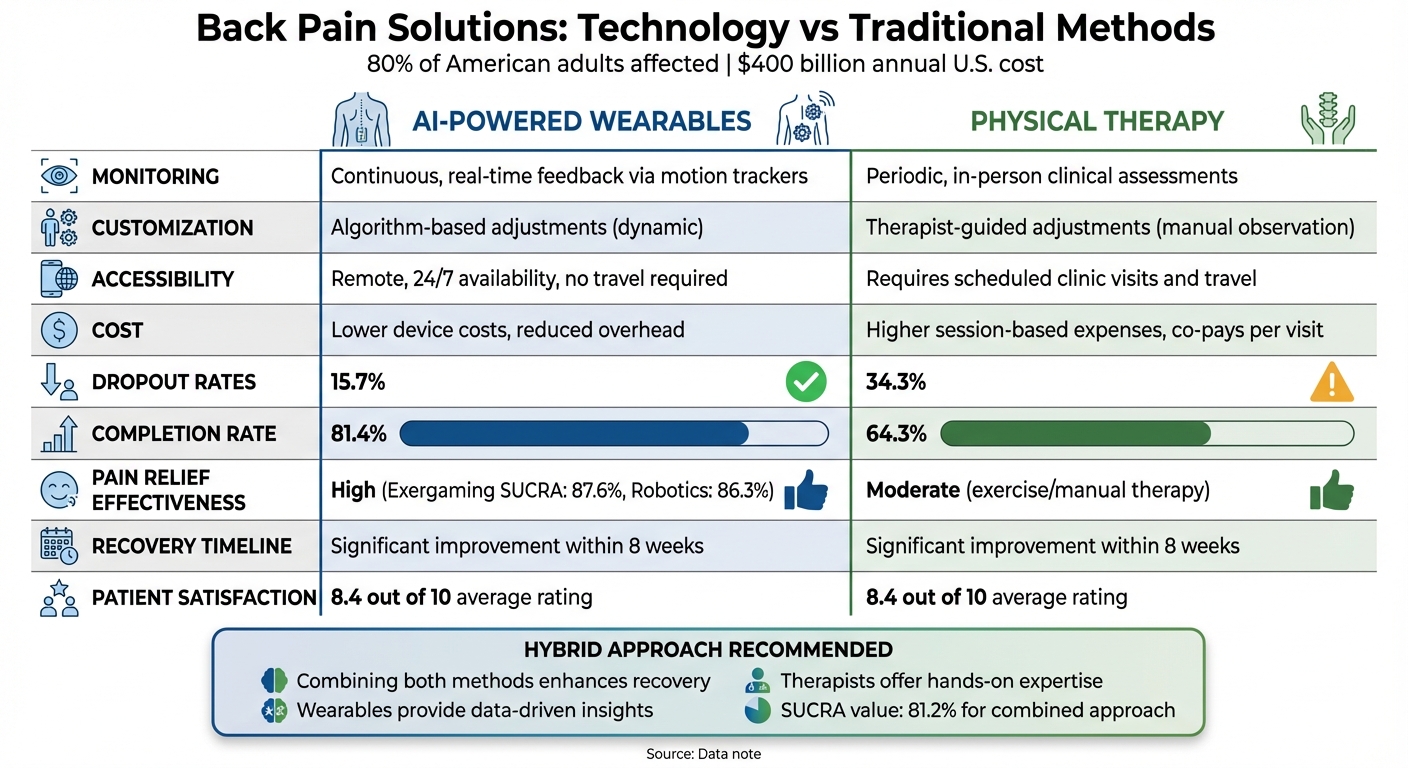
AI Wearables vs Physical Therapy for Back Pain: Complete Comparison Chart
Back Pain And Technology – The Medical Futurist
sbb-itb-44aa802
How AI-Powered Wearable Devices Help Manage Back Pain
AI-powered wearables are changing the way back pain is managed by providing continuous monitoring and instant feedback that traditional methods simply can’t match. These devices rely on advanced sensors and algorithms to keep an eye on your movements, analyze your posture in real time, and offer tailored guidance – all while enabling remote care. This approach opens the door to truly personalized treatment.
Real-Time Posture Tracking and Data Analysis
Modern wearables rely on IMUs (inertial measurement units), which include accelerometers, gyroscopes, and magnetometers, to assess spine position and curvature. By placing sensors at specific points along the spine – like T6 and S2 – they can calculate the angle between these points and monitor the Lumbar Lordotic Angle (LLA) in real time.
Take the aiSpine device, for example. It tracks your posture continuously and uses machine-learning algorithms to identify activities like sitting, lifting, or walking. If your posture dips below a preset threshold, the device sends you an alert – either through a vibration or a notification on your smartphone – so you can correct it before discomfort sets in.
In a 2025 study conducted at Seoul National University Hospital, researchers tested a biofeedback system on 10 men with low back pain. The system used two inertial sensors embedded in stretchable clothing and issued auditory alerts whenever the LLA dropped 15° below baseline. This feedback led to an increase in the LLA by 10.2° while sitting and 10.5° during mopping, showing how real-time corrections can help prevent chronic pain.
But these devices don’t stop at just monitoring – they also use your data to create customized treatment plans.
Customized Treatment Plans Based on Your Data
Unlike one-size-fits-all physical therapy routines, AI-powered wearables adapt your treatment plan based on your unique behavior and progress. By using case-based reasoning – an approach that draws from strategies proven effective for similar cases – the system tailors recommendations to your specific symptoms and activity patterns.
These devices track key metrics, such as how often you complete exercises, how long you maintain poor posture, and which movements cause discomfort. This information allows the system to adjust your weekly plan, tweaking exercise intensity and suggesting targeted stretches or strengthening exercises. In a 2025 network meta-analysis, this personalized strategy scored an impressive 87.6% for pain relief, far outperforming conventional care, which scored just 12.0%.
Many platforms also use gamification to keep users engaged. By offering rewards, unlocking levels, or setting personal challenges, these programs make the process more enjoyable. Gamified programs scored 99.6% for improving functional outcomes, compared to just 17.1% for traditional care. This engaging approach also helps reduce dropout rates – digital programs saw a dropout rate of 15.7%, compared to 34.3% for in-person therapy.
Remote Patient Monitoring and Telehealth Integration
AI-powered wearables take care beyond the clinic by enabling continuous remote monitoring. Healthcare providers can access data on your posture, exercise habits, and symptom changes through cloud-based platforms, allowing them to track your recovery without frequent in-person visits.
From June 2021 to October 2022, the Emory Orthopedic and Spine Center conducted a study with 140 participants experiencing chronic low back pain. The research compared a fully remote digital care program – featuring two inertial motion trackers and an AI-driven app – with high-intensity, in-person physiotherapy. Participants in the digital program exchanged an average of 19.0 text messages and 2.8 video or phone calls with their physical therapists over eight weeks. Both groups showed similar improvements in disability and pain levels, proving that remote AI-monitored care can be just as effective as traditional methods.
This remote capability is particularly helpful for people in rural areas, those with demanding schedules, or anyone who finds it hard to commit to regular therapy sessions. Rather than replacing your healthcare provider, this technology acts as an extension of their care, ensuring they can monitor your progress and step in when needed – even if you’re at work or home.
Physical Therapy and Manual Treatment Methods
Physical therapy stands out as a go-to option for managing chronic low back pain. It emphasizes hands-on care, guided exercises, and education to tackle the root causes of discomfort. Unlike quick fixes, these approaches focus on rebuilding strength, improving flexibility, and teaching proper body mechanics. This creates a solid base to help prevent future pain. While modern gadgets can provide feedback, traditional physical therapy lays the groundwork for long-lasting relief. Let’s dive into some key manual therapy techniques and their benefits.
Hands-On Therapy and Supervised Exercise Programs
Physical therapists rely on hands-on techniques like spinal manipulation, soft tissue mobilization, and joint adjustments, paired with exercise programs to address the real sources of your pain. While spinal manipulation might offer a small improvement in function, the real game-changer is customized exercise plans tailored to your body’s needs. These personalized programs have a much greater impact on reducing pain and disability compared to generic routines.
Programs such as motor control exercises, Pilates, and strength training provide moderate improvements in both pain and function. A big advantage of supervised exercise programs is having a trained therapist to monitor your form, correct mistakes, and adjust your plan as you progress – something you just can’t get from a YouTube video or an app. However, staying consistent with traditional therapy can sometimes be a challenge for patients.
Building Better Posture and Core Strength
Strengthening your core muscles plays a crucial role in stabilizing the spine and easing pressure on the lower back. These exercises target muscles that often remain underused in daily life, such as the deep abdominal muscles, pelvic floor, and back extensors. By engaging these muscle groups, you create a support system that keeps your spine properly aligned whether you’re sitting, standing, or lifting.
Therapists also teach techniques for safer lifting and better sleep positioning to minimize spinal stress. They encourage daily stretching routines to keep muscles loose and reduce the risk of putting unnecessary strain on spinal joints. While exercise has a moderate impact on reducing pain, its effect on improving function tends to be smaller but can last over time with consistent follow-up. A regular home exercise program is often seen as the cornerstone of managing chronic back pain, helping maintain spinal strength and ward off future injuries.
Alongside strengthening, prevention plays a critical role in achieving long-term relief.
Preventing Back Injuries Before They Happen
Starting physical therapy or manual therapy early can help cut down on costly medical interventions, like imaging tests (MRI/CT scans), injections, or medications. Research shows physical therapy can reduce sick leave by 43%, while chiropractic care lowers it by 40%.
The best prevention strategies combine exercise with education or health coaching. For instance, patients who underwent osteopathic manual therapy used far fewer medications – such as painkillers and muscle relaxants – compared to those who received standard care. Interestingly, around 80% of primary care patients with low back pain experience noticeable improvement within the first month, regardless of the specific treatment. However, about 33% of patients still struggle with moderate back pain a year after an acute episode, underlining the need for ongoing preventive care.
Comparing Wearable Devices and Physical Therapy
Deciding between AI-powered wearables and traditional physical therapy can feel like a tough call. Both approaches can effectively address back pain, but they differ in how they work, their costs, and how easily they can be accessed. Knowing these differences can help you figure out which option – or combination – works best for you.
Side-by-Side Feature and Outcome Comparison
A 2023 randomized controlled trial at Emory Orthopedic and Spine Center in Atlanta compared a digital care program using wearable motion trackers to high-intensity, in-person physical therapy. Over eight weeks, both groups experienced similar improvements. However, the digital program had a lower dropout rate – 15.7% compared to 34.3% for traditional therapy – showing how much more convenient it is for many people.
AI-driven tools like gamified exergaming scored a SUCRA value of 99.6% for functional outcomes across 13 rehabilitation strategies. For pain relief, therapeutic exergaming and robotic exoskeletons topped the charts with SUCRA values of 87.6% and 86.3%, respectively. Meanwhile, traditional physical therapy, which uses tailored exercises based on patient needs, also delivers excellent results. However, it relies on periodic check-ins instead of the constant, real-time feedback wearables can provide.
| Feature | AI-Powered Wearables / Digital Care | Traditional Physical Therapy |
|---|---|---|
| Diagnostic/Tracking | Real-time biofeedback via motion trackers | Periodic clinical assessments by a therapist |
| Adherence | Higher (approx. 81.4% completion rate) | Lower (approx. 64.3% completion rate) |
| Customization | Dynamic, algorithm-based adjustments | Manual adjustments based on therapist observation |
| Pain Relief | High (Exergaming/Robotics SUCRA >86%) | Moderate (exercise/manual therapy) |
| Access | Remote, 24/7 availability, no travel | Requires scheduled appointments and travel |
| Recovery Timeline | Significant improvement within 8 weeks | Significant improvement within 8 weeks |
The main distinction lies in delivery: wearables provide constant monitoring and instant feedback, while physical therapy offers hands-on expertise and human guidance. Both methods score highly in patient satisfaction, with an average rating of 8.4 out of 10. Together, they highlight the complementary strengths of digital tools and in-person care.
Cost and Access Factors
Cost and access are two areas where wearables and traditional physical therapy diverge further. Access to traditional physical therapy often depends on how close you are to a clinic. For those in rural areas or far from specialized centers, traveling to appointments can be a significant hurdle. Wearables eliminate this problem – you only need the device, a smartphone or tablet, and an internet connection. This makes quality care available to people regardless of where they live.
When it comes to cost, wearable technology often comes out ahead. Digital programs typically cost less than in-person sessions because they reduce overhead and eliminate travel expenses. By contrast, traditional physical therapy can involve higher co-pays that add up over multiple visits.
Insurance coverage adds another layer of complexity. Many insurers lean toward covering in-person care, while tech-based treatments can face limited approval. For instance, Medicare and Medicaid often exclude certain wearable-based therapies from their lists. However, digital programs’ lower dropout rates and reduced need for taking time off work can make the upfront device costs more manageable over time.
"This RCT demonstrates that a remote digital intervention for CLBP can promote the same levels of recovery as evidence-based in-person physiotherapy, being a potential avenue to ease the burden of CLBP."
– npj Digital Medicine
In short, wearables shine in terms of accessibility and convenience, especially for people with limited mobility, packed schedules, or few local care options. Meanwhile, traditional physical therapy offers hands-on expertise but can require more planning and come with higher costs. Together, these insights suggest that combining both approaches may be the best way to tackle back pain effectively.
Combining Wearable Technology with Physical Therapy
Blending wearable technology with traditional therapy is reshaping how back pain is managed. This combination offers a more tailored and effective approach, maximizing the potential of both methods.
Using Wearable Data to Improve Therapy Sessions
Physical therapists are now leveraging data from wearable devices to fine-tune therapy sessions. For example, at Emory Orthopedic and Spine Center, a trial conducted between June 2021 and October 2022 involved 140 patients with chronic low back pain. Participants wore two inertial trackers – on the thorax and lumbar spine – that transmitted detailed movement metrics. This allowed therapists to adjust exercises in real time, resulting in an impressive 81.4% therapy completion rate. The outcomes were on par with high-intensity, in-person care.
Wearable sensors also excel at detecting subtle movement deviations. At Zhujiang Hospital of Southern Medical University, researchers tested an AI-powered tool called "Yun-fu" from March to October 2023. This system used AI to pinpoint key body surface areas and provided real-time guidance during core exercises. Patients using the AI-assisted tool reported a 3.00-point drop in their most severe pain levels on the Numerical Rating Scale, compared to a 1.50-point reduction for those using standard video guidance.
These examples highlight how combining digital feedback with expert clinical guidance can refine both in-clinic and at-home therapy routines.
Combining Therapist Knowledge with AI Data
Wearable-guided therapy becomes even more effective when paired with a therapist’s expertise. This hybrid approach personalizes care by blending clinical insight with objective AI-driven data. In March 2023, a study at the Mayo Clinic explored this concept with 69 participants suffering from lower back pain. Over an 8-week program, one group received traditional clinical care alongside AI-guided core resistance training using Tonal Systems technology. The results were striking – patients showed significant improvements in isometric extensor endurance and self-reported outcomes compared to those using either method alone.
"AI-guided core-focused moderate resistance training led to improved patient-reported physical function and pain perception outcomes relative to baseline and, when combined with clinical care, to improved combined training with clinical care improved functional metrics relative to baseline." – ScienceDirect
Therapists can use AI-generated data to validate and adjust treatment plans, ensuring exercises are tailored to individual needs. At the same time, wearable devices help patients maintain proper form during home sessions, reducing the risk of injury and keeping them accountable. Hybrid therapy models that merge physical therapy with AI-driven feedback systems have shown better functional recovery outcomes, with a SUCRA value of 81.2% compared to conventional care alone.
Conclusion
Choosing the best treatment for back pain comes down to what works for you personally. Studies suggest that digital programs using AI-powered wearables can deliver similar results in pain relief and disability reduction as traditional in-person therapy.
If you’re juggling a hectic schedule, dealing with childcare, or living far from treatment centers, home-based digital programs can be a practical solution. Interestingly, these programs often see fewer dropouts compared to in-person therapy. On the other hand, if hands-on supervision is more your style, traditional physical therapy remains a solid choice. These differences pave the way for a hybrid approach that combines the best of both worlds.
By merging digital tools with in-person expertise, back pain management can become even more effective. For example, wearable devices can provide real-time feedback, while professional therapists can make precise, manual adjustments. This combination offers a more personalized and efficient path to recovery.
Ultimately, your decision should factor in how long you’ve been in pain, your mental health needs, and what resources are available to you. For chronic pain lasting over 12 weeks, a multimodal approach – one that includes exercise, education, and behavioral support – often delivers the best results. Whether you start with wearable tech, visit a physical therapist, or use both, staying committed to your treatment plan is key. Each approach, whether used alone or together, gives you the tools to take charge of your back pain and move toward recovery.
FAQs
How do AI-powered wearables create personalized back pain treatment plans?
AI-powered wearables bring cutting-edge tech right to your body, tracking things like posture, movements, and how your body responds physically. These devices keep a constant eye on your activity, spotting patterns and offering real-time feedback to help you manage your back health.
Using this information, AI algorithms craft customized treatment plans designed specifically for you. These plans might suggest posture adjustments, targeted exercises, or tweaks based on how you’re progressing. Plus, the system can anticipate potential injury risks and adjust recommendations ahead of time, making sure your treatment stays on track and effective as your needs change.
What are the benefits of using AI wearables alongside physical therapy for back pain?
Combining AI wearables with physical therapy offers a powerful approach to managing back pain. These devices provide real-time feedback on your posture and movements, helping you make small but consistent adjustments throughout the day. This goes hand in hand with physical therapy by reinforcing good habits between sessions and helping you stick to your treatment plan. Plus, wearables can track important data like pain levels and range of motion, giving therapists the insights they need to tailor your therapy for better results.
Another big plus? Boosted engagement and motivation. Wearables keep you on track by delivering instant feedback and showing your progress, which makes sticking to your exercises feel more rewarding. By combining the precision of AI technology with the personalized care of physical therapy, this approach creates a more effective way to tackle back pain.
Are AI-powered wearables a more affordable option than traditional physical therapy for back pain?
AI-powered wearables present an affordable and convenient way to manage back pain, offering a practical alternative to traditional physical therapy. These devices provide customized support, enabling users to track their posture and progress from home. This reduces the need for frequent, and often expensive, in-person therapy sessions.
Studies indicate that digital tools like AI wearables can achieve comparable, if not better, outcomes in alleviating pain and enhancing mobility. Beyond convenience, they can also help cut down on healthcare costs, such as those associated with diagnostic imaging or repeated therapy visits. This makes them a smart choice for managing back pain over the long term.