
What Does "Airing Out" a Room Actually Mean?
Airing out a room means exchanging the air inside your home with air from outside. In practice, that usually means opening a window, a door, or both for a period of time so that indoor air and outdoor air can move past each other. It is a household habit rather than a device, a treatment, or a medical procedure.
It helps to separate airing out from two other things people often mention in the same conversation. An air purifier does not bring in outdoor air; it circulates the air already inside a room and passes it through a filter. Air conditioning and heating are mainly about temperature, and they often affect humidity as well. Airing out is the only one of the three whose basic job is to swap indoor air for outdoor air.
This article is general indoor-air education for patients, caregivers, and anyone curious about everyday home habits. It does not address any specific medical condition, and it does not describe or evaluate any specific device.
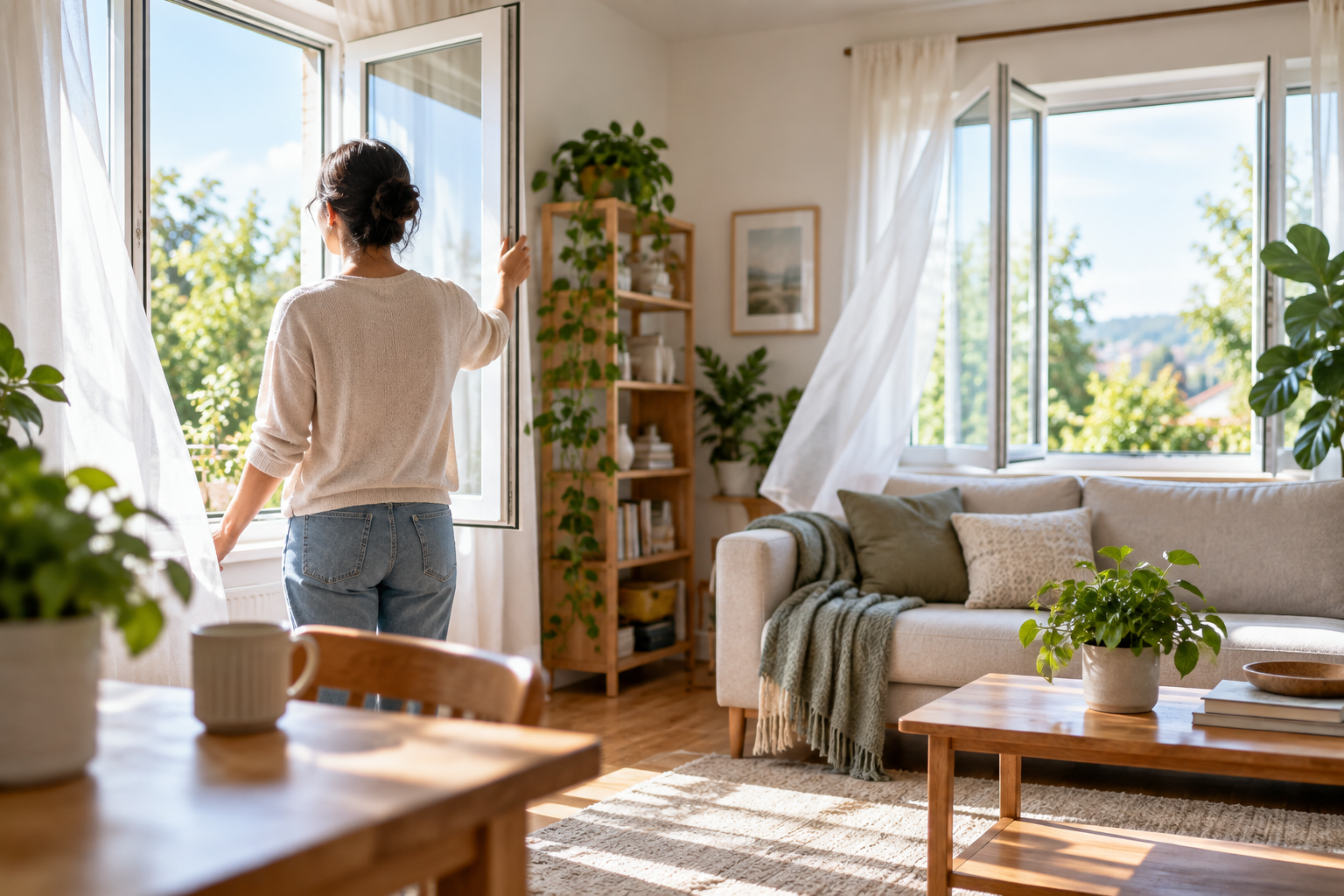
Why Indoor Air Gets Everyday Attention
Indoor air is not empty space. Over the course of a normal day, a home's air can carry cooking odors, moisture from showers and laundry, dust, and other everyday particles. None of that is a diagnosis, and none of it automatically means something is wrong. It simply explains why ventilation is one of the household habits people reach for when a room feels stuffy, damp, or stale.
For caregivers, the appeal is usually practical rather than clinical. Airing out is inexpensive, needs no equipment, and can be folded into routines that already exist, such as after cooking or while tidying up. Many people find that a room simply feels fresher afterward, which is a comfort observation rather than a health claim.
It is worth being explicit about the boundary here. This section does not diagnose, treat, or prevent any disease, and it does not replace advice from a clinician. If you have a specific health concern, a qualified clinician is the right person to ask, because your situation may involve factors this general article cannot see.
A Simple Airing Routine You Can Adapt
There is no single correct routine, because homes, climates, and households differ. What follows is a general pattern you can adjust rather than a set of instructions to follow exactly.
The idea is short, repeated airing rather than one long event. You open a window or door when outdoor conditions seem reasonable, let the room exchange air for a while, then close it again. You repeat that when the room starts to feel stuffy, after cooking, or whenever it fits your day. Some households prefer a quick pass in the morning and another in the evening; others air out room by room as they move through the house.
A few practical points tend to come up. Weather matters, so you may air out less on very hot, very cold, rainy, or windy days. Household members' comfort matters too, including whether anyone feels too warm or too cool near an open window. And if outdoor conditions where you live are poor, airing out may not be the right choice at that moment. These are general household suggestions, not medical instructions, and individual situations vary.
A general airing-out pattern you can adapt
- Pick a moment Choose a time when outdoor conditions seem reasonable for your home and the people in it.
- Open a window or door Open one opening, or two on opposite sides of a room if you can, so air can move through.
- Let the room exchange air Leave it open for a short period. There is no universal duration; use your own judgment about the room and the weather.
- Close up and repeat later Close the opening when you are done, and repeat the pattern later in the day or when the room feels stuffy again.
Airing Out vs. Air Purifiers vs. Air Conditioning
These three approaches are often discussed together, but they do different jobs. Airing out exchanges indoor air with outdoor air. An air purifier circulates and filters air that is already inside the room. Air conditioning and heating primarily manage temperature, and they often affect humidity as well.
Because their jobs differ, they are not really competitors. A household might air out on a mild day, run an air purifier in a closed room, and use air conditioning in hot weather, all in the same week. This comparison is general education about how the approaches differ. It is not a recommendation for any specific product, and it is not guidance for any specific health condition.
| Approach | What it mainly does | What it does not do |
|---|---|---|
| Airing out | Exchanges indoor air with outdoor air through an opening | Does not filter the air or control temperature |
| Air purifier | Circulates air already inside the room and passes it through a filter | Does not bring in outdoor air or control temperature |
| Air conditioning or heating | Manages temperature, and often humidity | Does not exchange indoor air with outdoor air by itself |
Practical Considerations and Common Questions
A few considerations come up again and again when households think about airing out. Outdoor conditions are the big one: weather, season, and local air quality all shape whether opening a window makes sense right now. Household composition matters too, since comfort preferences differ from person to person and room to room.
It also helps to keep expectations modest. Airing out is one household habit among several, alongside cleaning, managing moisture, and using filters where appropriate. No single habit does everything, and none of them is a substitute for personalized medical guidance.
To be clear about the scope of this article: it does not provide personalized medical advice. If you have specific health concerns, particularly about breathing, allergies, or a condition you are already managing, please consult a qualified clinician who can consider your individual situation.
Frequently Asked Questions
How long should I air out a room?
There is no single universal duration. How long makes sense depends on things like outdoor conditions, the size of the room, and your own household's preference. Short, repeated airing is a common approach that many households find easy to fit into a day. Treat any duration as a personal judgment call rather than a rule, and remember that this is general education, not personalized advice.
Is airing out a room the same as using an air purifier?
No. They are different in what they do. Airing out exchanges indoor air with outdoor air by opening a window or door. An air purifier circulates air that is already inside the room and passes it through a filter. The two can be used together, and this is general information rather than a product recommendation.
Can airing out my home help with allergies or breathing problems?
This article does not diagnose, treat, or manage any medical condition, so it cannot answer that question for you. If you have allergies, asthma, or another respiratory concern, a qualified clinician is the right person to ask for personalized guidance. Be cautious of any general article that promises a specific outcome from a household habit.
What if outdoor air quality is poor where I live?
Outdoor conditions vary a great deal by location and by day, and airing out may not be suitable at all times or in all places. It can help to check local air quality information before opening windows, and then use your own judgment. This is general education rather than a recommendation for your specific situation.
Does airing out a room replace other indoor air habits?
No. Airing out is one household habit among several, alongside things like cleaning, managing moisture, and using filters where appropriate. It is not a replacement for the others, and no single habit covers everything. Keep the framing practical and non-prescriptive, and ask a clinician about anything related to your health.