
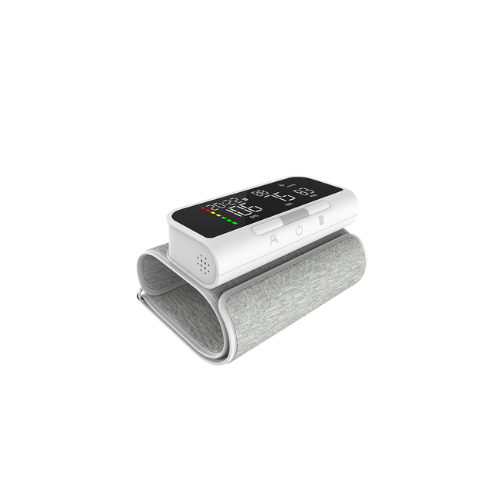
Why Cuff Size Matters for Upper-Arm Blood Pressure Monitors
Choosing the right cuff size for an upper-arm blood pressure monitor starts with one practical step: measure your upper-arm circumference and compare it with the cuff range the manufacturer states for that monitor. If your measurement falls inside the stated range, the supplied cuff is intended to fit and wrap as designed. If it falls outside the range, the cuff may not fit or wrap as intended, and it is worth checking the device documentation or asking a healthcare professional for guidance before relying on that setup.
It is also worth being precise about what cuff size guidance can and cannot do. A stated cuff range tells you whether the supplied cuff is designed to fit your arm. It does not interpret a reading or indicate what any measurement means for your health. Manufacturer-stated ranges and accuracy values are quoted as stated and should not be read as clinical accuracy claims or as applying to every user.
How to Measure Your Upper-Arm Circumference at Home
You can obtain the measurement you need with a flexible tape measure and a few minutes. This is a general, non-clinical measuring approach for comparing against a monitor's stated cuff range. It is not a health assessment, and this article does not tell you what your measurement means for your health.
Record the number you get and keep it with your device documentation. That single measurement is what you will compare against the cuff range printed for your monitor.
Measuring your upper-arm circumference
- Use a flexible tape measure A soft, flexible tape measure follows the curve of the arm more easily than a rigid ruler.
- Find the midpoint of the upper arm Locate the midpoint between the shoulder and the elbow.
- Wrap the tape around that midpoint Keep the tape snug but not tight, and make sure it sits level around the arm.
- Record the measurement Write down the number so you can compare it with your monitor's stated cuff range.
Confirmed aiBP Lite Cuff Range and Display Specifications
The table below collects the confirmed aiBP Lite specifications in one place so you can compare your arm measurement with the stated cuff range. These are manufacturer-stated specifications and should not be read as clinical accuracy claims or as applying to every user.
| Specification | Confirmed value |
|---|---|
| Supplied upper-arm cuff range | 22-42 cm |
| Display range – systolic (SYS) | 57-255 mmHg |
| Display range – diastolic (DIA) | 25-195 mmHg |
| Display range – pulse | 40-199 bpm |
| Manual-stated pressure accuracy | +/-3 mmHg |
| Manual-stated pulse-rate accuracy | +/-5% |
| Dimensions | 123 x 59 x 28 mm |
| Weight | Approximately 225 g |
| Battery and charging | 3.7V rechargeable lithium battery with Type-C charging port |
Checking Whether a Cuff Range Fits Your Arm
Once you have your upper-arm circumference, the fit check is a simple comparison. Take the measurement you recorded and compare it with the monitor's stated cuff range. For aiBP Lite, the confirmed supplied upper-arm cuff range is 22-42 cm, so a measurement inside that range falls within the stated range for the supplied cuff.
If your measurement falls outside a monitor's stated range, the cuff may not fit or wrap as intended. In that situation, check the device documentation or consult a healthcare professional for guidance. This article does not tell you which cuff to buy or provide individualized sizing advice.
Cuff Placement and Everyday Use with aiBP Lite
Cuff fit and cuff placement work together in an everyday routine. The general workflow is to place the cuff on the upper arm according to the device documentation, sit as instructed, and take a measurement. Cuff placement can affect how a reading is obtained, so following the device manual and any guidance from your healthcare professional matters more than any general rule of thumb.
aiBP Lite measures systolic pressure, diastolic pressure, and pulse rate at the upper arm. It supports two stored user profiles with 120 memories each, and it includes a guest mode without memory. Those confirmed features are about storing and organizing measurements for everyday use; they are not a substitute for clinical interpretation of results.
How aiBP Lite Connects with aiCare for Supported Data Workflows
aiBP Lite belongs to the aiCare ecosystem and connects with aiCare through the confirmed product workflow. In practical terms, that means the monitor's supported blood-pressure data can be part of a broader view of your health information over time.
Some technical details are not confirmed and are therefore not described here, including the exact Bluetooth profile, automatic or background sync behavior, reconnection behavior, and operating-system compatibility. This article does not claim automatic synchronization, universal phone support, or clinical interpretation of readings. If those details matter for your setup, check the product documentation or contact support.
What Cuff Size Guidance Can and Cannot Tell You
This article covers product education about cuff fit and confirmed specifications only. It does not diagnose a condition, determine treatment, interpret a reading, or provide individualized medical advice. Manufacturer-stated ranges and accuracy values are quoted as stated and are not guarantees of clinical accuracy for every user or circumstance.
For questions about your blood pressure or your monitoring plan, speak with your healthcare professional. For questions about the device itself, such as cuff fit, setup, or supported features, the product documentation and support are the right places to look.
Frequently Asked Questions
What cuff size does the aiBP Lite upper-arm blood pressure monitor use?
The supplied upper-arm cuff range for aiBP Lite is 22-42 cm, as a manufacturer-stated specification. That range describes the arm sizes the supplied cuff is designed to fit; it does not interpret a reading or indicate what any measurement means for your health.
How do I measure my upper-arm circumference to compare with a cuff range?
Use a flexible tape measure around the midpoint of the upper arm between the shoulder and elbow. Keep the tape snug but not tight, and record the number. You then compare that number with the cuff range stated for your monitor. This is a general measuring method, not individualized medical advice, and this article does not interpret the measurement.
What should I do if my arm measurement is outside the stated cuff range?
A cuff outside the stated range may not fit or wrap as intended. Check the device documentation or consult a healthcare professional for guidance. This article does not recommend a specific cuff or provide individualized sizing advice.
Does cuff size affect blood pressure readings?
Cuff fit and placement are among the factors that can affect how a home reading is obtained. A cuff that is too small or too large for the arm may not fit or wrap as intended. This article does not interpret readings or provide medical advice, and it does not claim that a specific cuff size guarantees accuracy or a health outcome.
Can aiBP Lite store readings for more than one person?
Yes. aiBP Lite supports two stored user profiles with 120 memories each, and it includes a guest mode without memory. These are confirmed product facts; unconfirmed sharing or sync behavior is not described here.
Does aiBP Lite connect to aiCare?
Yes.
References
- Home Blood Pressure Monitoring – PMC — pmc.ncbi.nlm.nih.gov