
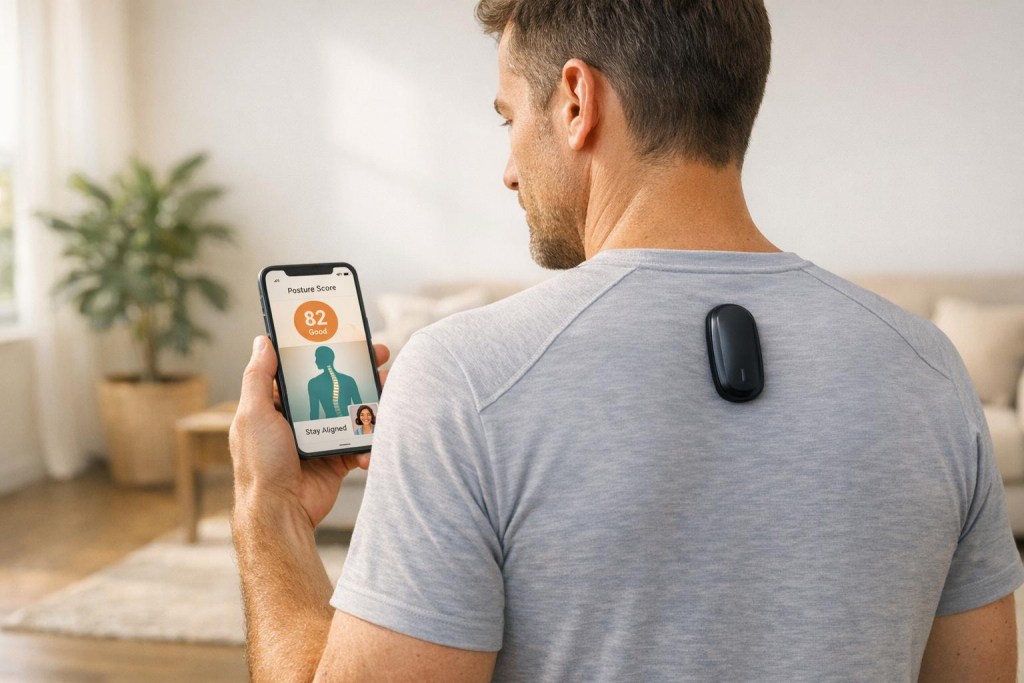
Chronic back pain is on the rise, with poor posture driven by increased screen time as a major contributor. Wearable devices are stepping in as a solution, offering real-time posture tracking, spinal monitoring, and feedback. These tools are transforming spine health management by moving care beyond clinic visits into everyday life.
Key approaches to scaling wearable tech for spine health include:
- Clinic-Embedded Programs: Devices integrated into patient care plans for continuous monitoring between visits.
- Employer Programs: Workplace wearables reduce back injuries and improve posture in physically demanding jobs.
- Remote Therapeutic Monitoring (RTM): Sensors track spinal data remotely, enabling clinicians to adjust care without in-person visits.
- Consumer-Led Models: Affordable wearables paired with apps empower individuals to self-monitor and improve posture.
- Integrated AI Platforms: Combining clinical precision with user-friendly tools, these systems offer scalable, data-driven spine care.
Each model has trade-offs in terms of cost, adherence, and scalability, but AI-driven platforms like AIH LLC’s aiSpine are setting the standard by bridging clinical oversight with consumer accessibility. These solutions make spine health management more efficient, accessible, and effective for diverse settings.
AI and Wearable Devices: Closing the Data Gap
sbb-itb-44aa802
1. Clinic-Embedded Spine Wearable Programs
When wearables are introduced directly into clinical settings, they become more than just high-tech gadgets – they integrate into the patient’s treatment journey. Patients leave the clinic equipped with a preconfigured device, proper training, and a direct connection to their care team. This setup bridges a crucial gap: monitoring patients between appointments.
One major benefit is the ability to collect continuous data in daily life. Traditional clinic visits only provide a brief glimpse of a patient’s posture or movement in a controlled environment. Wearables, on the other hand, track spinal curvature, movement patterns, and activity levels throughout the day. This constant flow of data helps improve patient adherence and provides a better foundation for measuring outcomes.
Take, for example, a 2023–2024 study conducted at Peking Union Medical College Hospital. The study involved 336 patients recovering from Anterior Cervical Discectomy and Fusion (ACDF) who participated in a 12-week digital rehabilitation program using wearable IMU sensors. Patients who completed the program saw a 13.3-point reduction in their NDI scores, compared to a 6.4-point reduction in non-compliant patients. Pain reduction was also notable, with VAS scores dropping by 4.0 points at 24 weeks, compared to 4.1 points in traditional care models.
However, scaling these programs comes with challenges, particularly in standardizing protocols, equipment, and data formats. A multicenter study involving seven hospitals, including Queen Mary Hospital and Shanghai Huashan Hospital, tackled this issue. By applying a pixel-intensity data transformation method, they standardized spine imaging across 3,899 radiographs. This enabled consistent AI-driven Cobb angle predictions, achieving an R² greater than 0.90 across all sites.
"An ideal sensor would be one that a participant agrees to wear but is unaware of, once in use. One that a participant has little to do to affix, remove, recharge or to transfer data." – Hodges, Journal of Spine Surgery
Another key factor is reimbursement. Integrating Remote Therapeutic Monitoring (RTM) into these programs ensures providers are compensated for their efforts in continuously monitoring musculoskeletal health, therapy adherence, and treatment responses – all without requiring in-person visits. Pairing RTM with automated alerts, such as notifications when no data is received for 48 hours, and periodic check-ins allows clinicians to address non-adherence early, preventing small issues from becoming major problems.
2. Employer and Occupational Health Programs
Low back pain (LBP) impacts 60–70% of the working population, leading to higher costs and lower productivity. For physically demanding jobs – like those in warehouses, nursing, or construction – the numbers are even more concerning. For example, 60.9% of nurses report experiencing LBP over a six-month period.
Workplace spine wearable programs aim to tackle this issue by bringing real-time monitoring into the workplace. These devices, worn during work hours, track spinal curvature, movement, and biomechanical load. When a worker bends incorrectly or stays in a strained posture for too long, the device provides immediate feedback – like a vibration or app alert. This type of extrinsic biofeedback is especially useful for workers with LBP, as they often struggle with reduced self-awareness. Studies show that postural feedback can alleviate low back pain in just one session, highlighting the potential for significant biomechanical improvements.
The benefits of wearables are measurable across several key physiological metrics:
| Metric | Impact of Wearable Use |
|---|---|
| Peak L5-S1 Flexion-Extension Moment | 14% reduction |
| Peak Shear Force | 10% reduction |
| Erector Spinae Muscle Activity | 6%–35% reduction |
| Perceived Lower Back Exertion | ~36% reduction |
| Oxygen Uptake (Energy Expenditure) | 9%–28% reduction |
Beyond these immediate benefits, advanced analytics take workplace safety to the next level. Machine learning models, such as Support Vector Machines (SVM), can classify safe and unsafe postures with incredible accuracy – 99.4% to be exact. This allows occupational health teams to shift from managing injuries after they occur to preventing them altogether. By identifying risky movements before they cause harm, these AI tools enable proactive interventions, helping companies reduce injury-related costs while keeping workers safer.
"The combination of wearable sensors and AI could help ergonomics in identifying the factors that promote occupational well-being, directing the targeted use of economic resources to implement ergonomic design." – Donisi et al., MDPI
However, long-term success depends on consistent use. The best programs reduce barriers by embedding sensors into work clothing, minimizing the need for recharging, and ensuring workers can move freely. Tiered reporting also plays a key role: providing employees with daily posture summaries, weekly trends, and monthly health snapshots keeps them engaged and motivated over time, preventing the program from losing momentum.
3. Remote Therapeutic Monitoring and Telehealth Models
Remote therapeutic monitoring (RTM) has redefined how spine care is delivered by using wearable sensors to track spinal movement. These sensors send data via Bluetooth to cloud-based clinician dashboards, enabling healthcare providers to monitor progress, identify potential issues early, and adjust treatment plans – all without requiring in-person appointments. This approach addresses common challenges like patient adherence and the need for scalable care solutions.
A 2023 prospective cohort study conducted at Peking Union Medical College Hospital found that patients participating in a digital rehabilitation program powered by RTM experienced a 4.0-point reduction in VAS pain scores over 24 weeks. This outcome matched the results of traditional in-person therapy, proving the effectiveness of remote care models.
"Remote spine posture monitoring allows healthcare providers to analyze non-physiologic factors affecting a patient’s spine health in real-time." – AIH Health
Adherence plays a critical role in achieving these results. The same study revealed that patients who failed to complete the digital program saw only a 1.3-point reduction in pain – less than one-third of the improvement observed in those who completed it. To encourage participation, effective RTM programs implement minimum usage requirements, such as at least four hours daily. Automated reminders are tiered, starting with app notifications and escalating to therapist phone check-ins if no data is received within 48 hours.
RTM also excels in scalability. Unlike traditional clinic-based or employer-driven care models, RTM eliminates physical space constraints while maintaining thorough patient monitoring. Platforms like AIH LLC’s aiHealth system can onboard large patient groups quickly, streamlining the process without adding strain to clinic resources. As Hodges pointed out in the Journal of Spine Surgery, wearable sensors enable spine care to move "towards truly personalised selection of intervention". This shift becomes far more feasible when the care infrastructure is digital and remote from the outset.
4. Consumer-Led, App-Centric Adoption
Unlike clinic-based or employer-supported programs, consumer-led models put individuals in the driver’s seat of their spine health. Here, users purchase wearable devices – such as the aiSpine posture monitor (priced between $64.00 and $69.00) – and pair them with an app to monitor spinal alignment. With an affordable entry point, this model has quickly gained traction, reflecting a shift toward empowering individuals to manage their own health.
One standout feature of this approach is real-time biofeedback, which gives users immediate corrective prompts whenever their posture deviates from alignment. This instant feedback helps users make small, consistent adjustments throughout the day, fostering long-term habits without the need for regular clinician intervention. By focusing on user-driven data collection and instant feedback, this model complements clinic-based and Remote Therapeutic Monitoring (RTM) strategies. Tools like the AIH Health App enhance the experience by generating detailed reports – daily, weekly, and monthly – so users can easily track posture trends over time.
"Our advanced smart spine posture monitor system enables real-time monitoring of your posture, precisely capturing every slight movement and adjustment you make." – AIH Health
One challenge for consumer-led programs has been maintaining long-term engagement. However, modern platforms now tackle this with features like personalized routines, customized goals, and even gamified training to keep users motivated. Additionally, these tools encourage users to log subjective factors like pain levels, stress, and sleep quality. This added layer of tracking is crucial, as studies show that even one night of poor sleep can significantly increase the risk of a low back pain flare-up.
Scalability is another major advantage of this model. By leveraging established app ecosystems, updates and improvements can reach thousands of users instantly. As consumer and clinical tools increasingly overlap, apps like AIH Health are bridging the gap by supporting RTM. This lets healthcare providers access patient data remotely, offering guidance without requiring in-person visits. Such integration allows consumer-led care to evolve seamlessly into professionally monitored treatment when needed.
5. Integrated AI Platform Model (featuring AIH LLC)
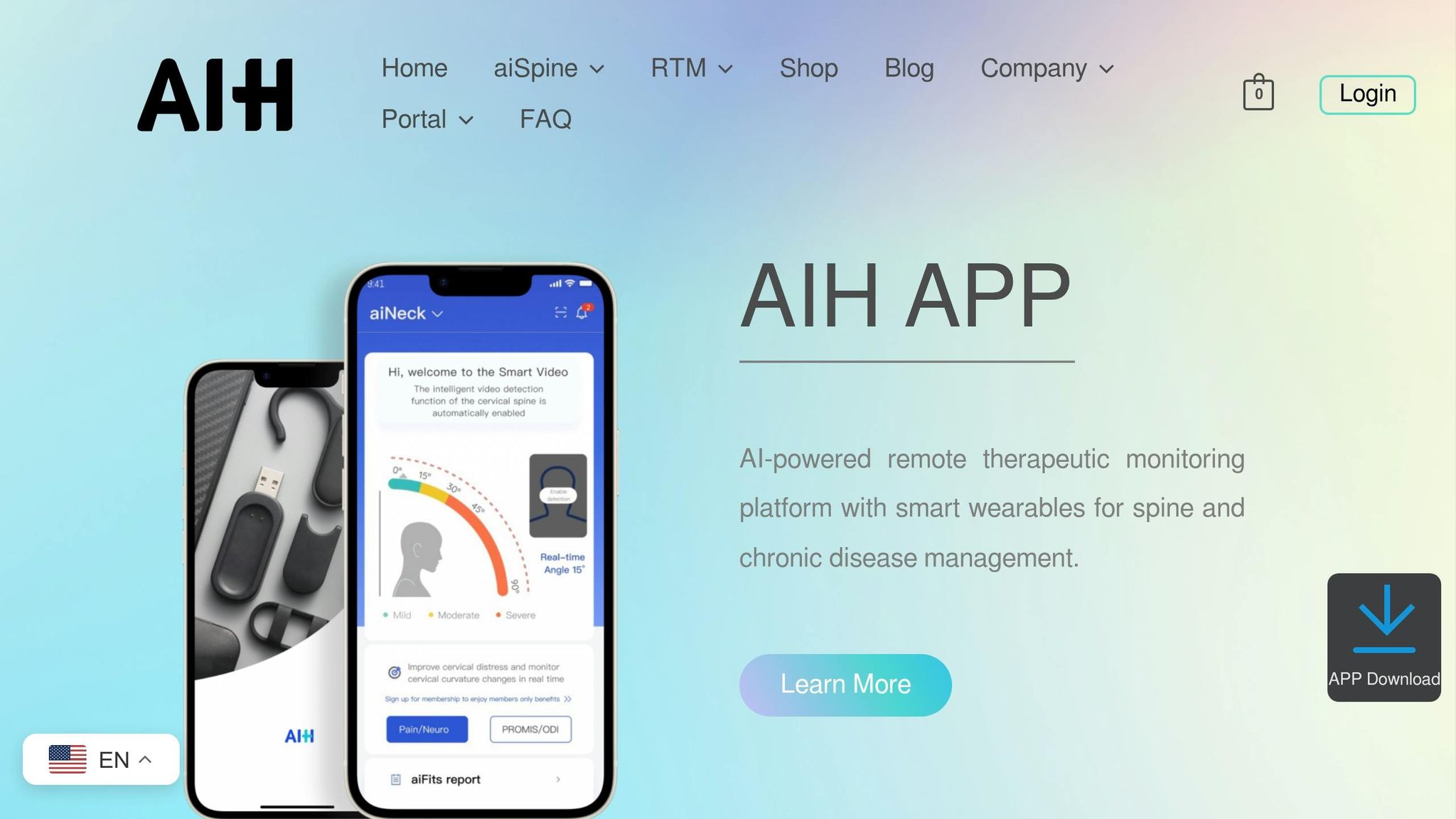
AIH LLC’s integrated AI platform brings together consumer apps and clinic-based programs into a single, connected system. This model combines clinical accuracy with user-friendly accessibility, creating a seamless ecosystem that includes the aiSpine device, the AIH Health App, and built-in Remote Therapeutic Monitoring (RTM). Unlike standalone tools or clinical-only solutions, this platform bridges the gap between personal use and professional oversight, advancing scalable spine health solutions.
For healthcare providers, the platform is designed to be simple and efficient. Clinicians can onboard patients directly through the AIH Health App, with the capability to scale quickly – entire patient populations can be registered in just a matter of days. To encourage adoption, the RTM platform is free for providers to start using. The aiSpine device collects detailed biomechanical data, such as spinal alignment, angle shifts, curvature, nerve pain levels, and even calorie burn. Clinicians gain a clear and comprehensive view of their patients’ conditions, with robust data privacy controls ensuring secure access. This wealth of data supports decision-making for a range of conditions, from minor muscle strains to more serious issues like herniated discs or cervical stenosis.
The platform also addresses long-term patient engagement through thoughtful hardware and software design. The aiSpine device offers flexible wearing options – it can be worn over the ear, clipped to glasses, or attached at the front or back – making it adaptable to various lifestyles. Meanwhile, the software provides real-time alerts, personalized trend analysis, and adaptive feedback, encouraging consistent use over time. This balance of convenience and intelligent support demonstrates how modern spine health solutions can scale effectively.
"By leveraging advanced sensor technology and intelligent algorithms, aiSpine provides real-time posture monitoring and corrective feedback, helping users prevent neck and lower back issues while fostering healthier habits." – AIH LLC
Pros and Cons of Each Scaling Model
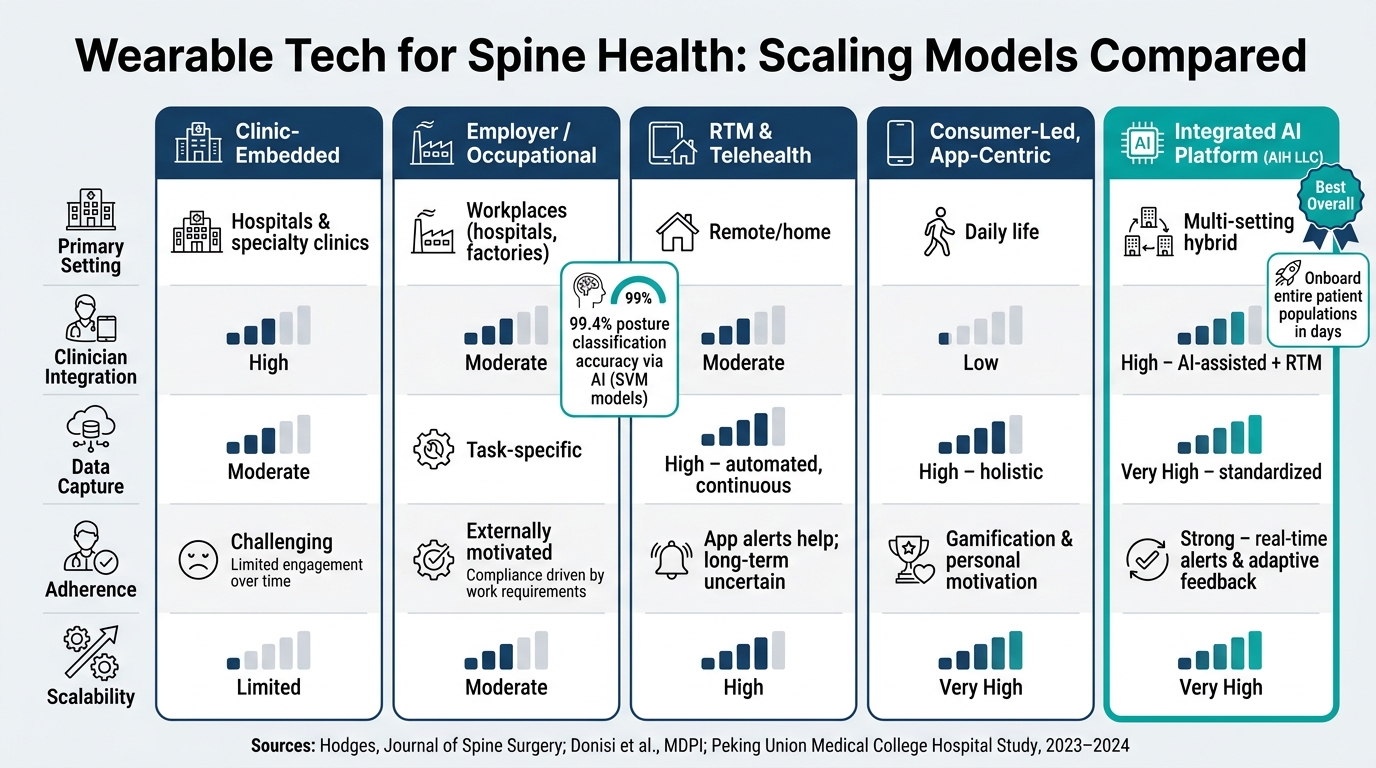
Wearable Tech for Spine Health: Scaling Models Compared
Every scaling model brings its own set of strengths and challenges. Here’s a breakdown of the key aspects of each approach, as summarized in the table below:
| Scaling Model | Primary Setting | Clinician Integration | Data Capture | Adherence | Scalability |
|---|---|---|---|---|---|
| Clinic-Embedded | Hospitals & specialty clinics | High – dashboards, EMR sync | Moderate – episodic imaging + sensors | Challenging – patients overestimate wear time | Limited by hardware cost and physical space |
| Employer/Occupational | Workplaces (hospitals, factories) | Moderate – occupational health specialists | Task-specific posture and movement | Externally motivated by workplace safety mandates | Moderate – requires hardware and uniform integration |
| RTM & Telehealth | Remote/home | Moderate – remote provider support | High – automated, continuous | App-based alerts help, but long-term durability is uncertain | High – no physical infrastructure needed |
| Consumer-Led, App-Centric | Daily life | Low – personal management | High – holistic activity, sleep, posture | Personal motivation and gamification | Very high – app distribution has near-unlimited reach |
| Integrated AI Platform (AIH LLC) | Multi-setting hybrid | High – AI-assisted, RTM built in | Very high – standardized across environments | Strong – real-time alerts, trend analysis, adaptive feedback | Very high – onboard entire patient populations in days |
Key Takeaways
Clinic-embedded programs excel in providing robust clinical oversight, thanks to their integration with tools like dashboards and electronic medical records (EMRs). However, adherence remains a major hurdle. Patients often overestimate how consistently they use wearable devices, which underscores the need for objective sensor data to ensure accuracy.
Employer-based models are particularly effective in environments with a high risk of injury, such as nursing units. For example, low back pain affects 60% to 70% of workers in these settings. While workplace safety mandates can drive adherence, scaling this model across multiple locations requires significant investments in hardware and uniform integration.
Consumer-led, app-centric approaches stand out for their accessibility. With features like gamification and personal motivation, these models can reach large audiences. However, self-management often struggles to maintain long-term behavioral changes, limiting its overall impact.
RTM and telehealth models offer a balance between accessibility and clinical oversight. Their reliance on automated, continuous data capture makes them ideal for remote monitoring. While app-based alerts can boost adherence in the short term, sustaining engagement over time remains uncertain.
Finally, the Integrated AI Platform model combines the strengths of all other approaches. By blending clinical rigor with consumer-friendly accessibility, it provides standardized data capture, real-time alerts, and adaptive feedback. This hybrid model’s scalability is unmatched, allowing entire patient populations to be onboarded in just days.
"A major barrier to treatment efficacy is adherence to care; wearable sensors might contribute to strategies to address this issue (e.g., enhanced motivation to promote adherence; identification of non-adherence)." – Hodges, Journal of Spine Surgery
This comparison highlights the trade-offs of each model, paving the way for a deeper discussion on how to balance scalability with clinical outcomes.
Conclusion
There’s no one-size-fits-all solution when it comes to scaling spine health monitoring. Each model serves a unique purpose, shaped by factors like patient location, care management, and the level of clinical oversight available. Considering these variables, a hybrid model stands out as the most practical and adaptable approach for achieving scalable and dependable spine health monitoring.
For U.S. healthcare systems aiming to expand their reach efficiently, blending continuous remote monitoring with AI-driven insights offers a promising path. Tools like AIH LLC’s aiSpine and aiHealth App are designed with this in mind. They deliver real-time posture alerts, track historical trends, and incorporate RTM workflows, enabling the remote management of large patient populations. Multicenter deployment data (R² > 0.90 across facilities) highlights how integrated AI platforms can effectively scale spine health solutions while maintaining reliability.
The data supports this direction. Consumer-driven models reach a wide audience but often need clinical reinforcement to promote lasting behavioral changes. On the other hand, employer-based programs excel in high-risk environments but face challenges with scaling due to hardware costs. Integrated AI platforms bridge these gaps by combining clinical-grade precision with the automation and accessibility necessary to keep patients engaged over time.
FAQs
Which spine wearable model is best for me – clinic, employer, RTM, or self-use?
The aiSpine by AIH LLC is designed to promote spinal health across different scenarios, whether for personal use or within clinical and remote therapeutic monitoring (RTM) environments.
For personal use, it offers round-the-clock posture tracking, haptic feedback, and tailored insights through the AIH Health App, helping users stay aware of and improve their posture. In clinical and RTM applications, it allows healthcare providers to monitor patient progress remotely, make treatment adjustments, and create detailed reports – minimizing the need for frequent in-person appointments.
How does Remote Therapeutic Monitoring (RTM) work with a posture wearable at home?
Remote Therapeutic Monitoring (RTM) with posture wearables blends advanced sensor technology with professional clinical oversight. Take the AIH LLC aiSpine, for example. This device uses Inertial Measurement Units (IMUs) to track spinal movements in real time.
When it detects posture deviations, the wearable provides instant haptic feedback, helping users correct their posture on the spot. Simultaneously, it transmits data to the AIH Health App, where it’s stored and analyzed.
Healthcare providers can then access this information remotely. This allows them to monitor patient progress, tailor treatment plans, and minimize the need for frequent in-person visits – all while ensuring continuous care.
What makes an integrated AI platform more scalable than a standalone wearable?
An integrated AI platform offers greater scalability by automating data analysis and delivering ongoing insights. Unlike standalone wearables that simply present raw data, platforms like the AIH Health App combine inputs from multiple sensors, filter out noise, and provide tailored feedback. This approach supports remote monitoring and trend analysis, cutting down on the need for frequent clinic visits. It also helps healthcare providers efficiently manage a wide range of patient needs.