
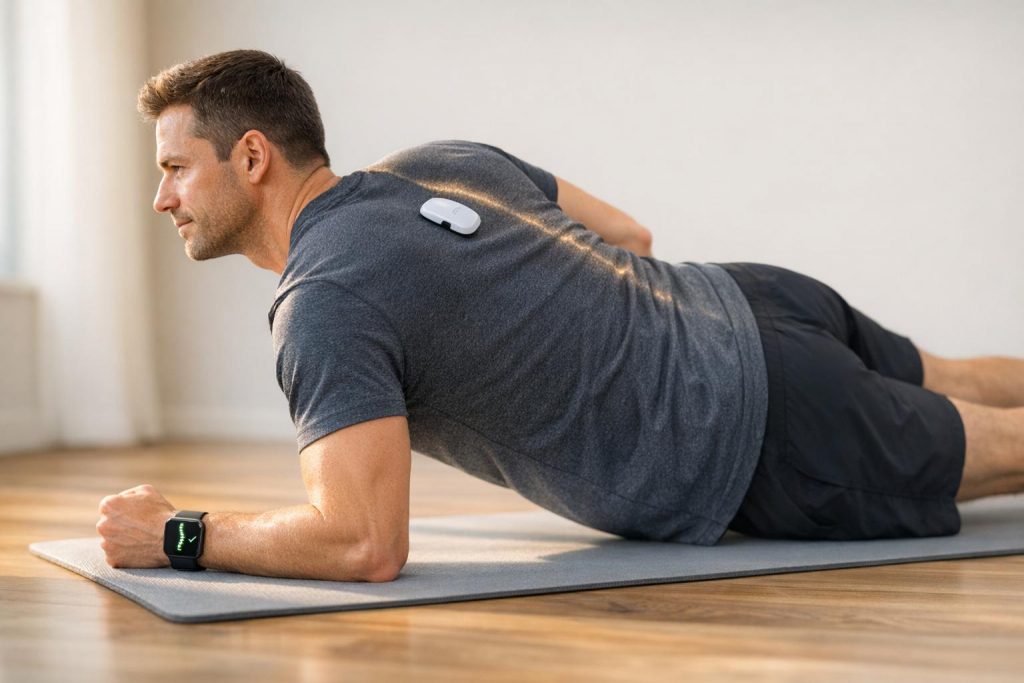
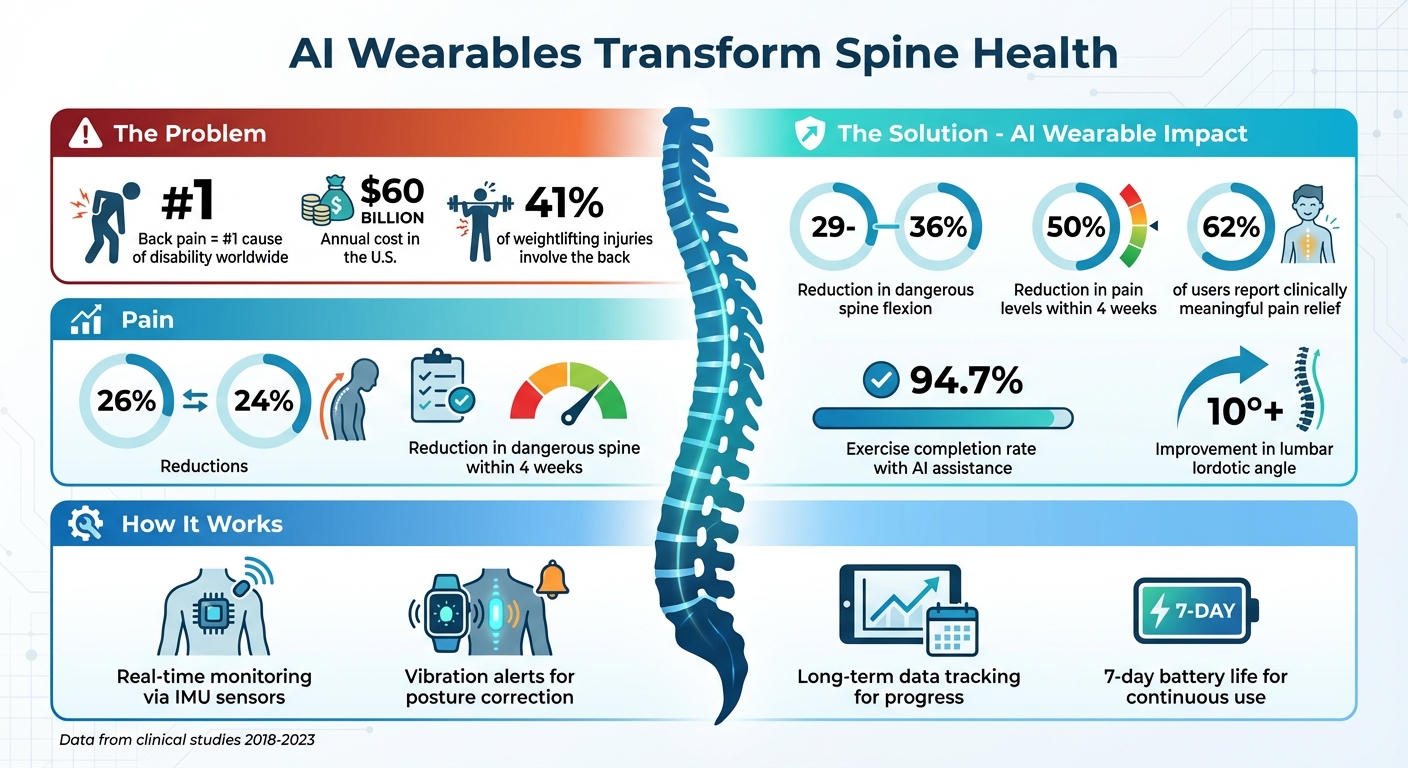
Back pain is the #1 cause of disability worldwide, costing the U.S. $60 billion annually. Poor posture during exercise, especially in movements like squats or deadlifts, is a leading factor. AI-powered wearables now offer real-time posture monitoring and correction via alerts like vibrations or sounds. These devices help users adjust movements instantly, preventing injuries and reducing chronic pain.
Key takeaways:
- 41% of weightlifting injuries involve the back due to improper techniques.
- AI wearables like aiSpine track spine alignment using sensors and provide instant feedback.
- Research shows a 29%-36% reduction in dangerous spine flexion with AI tools.
- Long-term data tracking improves posture habits and reduces pain over time.
AI wearables are reshaping spine health by combining real-time feedback with long-term progress tracking. They’re helping individuals exercise safely and avoid back injuries.
AI Wearables for Spine Health: Key Statistics and Benefits
How AI Wearables Improve Spine Health During Exercise
Real-Time Posture Monitoring and Feedback
AI wearables are designed to keep tabs on your spine’s alignment during movement, using IMUs (Inertial Measurement Units) that combine accelerometers, gyroscopes, and magnetometers. Typically, these systems feature two sensors: one placed on the upper back (near the T6 or T10 vertebrae) and another on the sacrum. Together, they measure the angle between the upper and lower spine in real time.
These devices compare your movements to your "neutral" spine position – essentially your personal baseline. If you move beyond a safe range, the wearable sends an alert immediately. Some advanced systems, like AIH LLC’s aiSpine, go a step further by leveraging artificial intelligence to analyze your movement patterns in-depth. This allows for a more detailed understanding of spinal dynamics during exercise, setting the foundation for targeted feedback.
Vibration Alerts for Posture Correction
When your posture strays into unsafe territory, quick feedback is key. Most spine wearables rely on haptic feedback, delivering gentle vibrations to signal you to adjust your posture. These vibrations are subtle and can be used in virtually any setting, making them a practical choice.
Devices often use specific vibration patterns to prompt corrections. For instance, a study of 981 users between 2018 and 2020 showed that the UpRight platform used two vibration pulses followed by a 10-second pause, repeating the cycle until the posture was corrected. This approach led to a 50% reduction in pain levels during the first four weeks of use. Another study focusing on nurses found that three short vibration pulses (300 milliseconds on, 200 milliseconds off) triggered when users exceeded 42% of their maximum range resulted in a 50% improvement in bending posture.
Some devices also add auditory cues for sustained deviations, enhancing the feedback loop. These immediate alerts play a crucial role in breaking bad habits and reinforcing proper posture.
Data Analysis for Long-Term Progress
AI wearables don’t just stop at real-time feedback – they also track your movement data over time to help you make lasting improvements. These devices monitor how often you exceed safe limits, how long you maintain good posture, and how your movement patterns evolve.
Studies show that users experience noticeable benefits within the first month. For example, 62% of participants reported clinically meaningful pain reduction (a drop of at least 2 points on a 0–10 scale) within four weeks. Over time, consistent use helps maintain proper posture and reduce pain levels. Data also revealed that longer training sessions in one week often predicted better posture the following week, which was linked to lower pain levels two weeks later.
Research Supporting AI Spine Health Devices
Research on AI Wearables for Posture Correction
A study conducted at Zhujiang Hospital explored the effectiveness of the Yun-fu AI application on 38 patients with chronic low back pain. Participants engaged in 30–45 minute multimodal exercises three times a week. After four weeks, the AI-supported group saw a 3.00-point reduction in peak pain scores on the Numerical Rating Scale (NRS), compared to a 1.50-point reduction in the group using video-only guidance. Additionally, the AI group showed measurable increases in the thickness of key core muscles, such as the transverse abdominus and multifidus, which play a critical role in spinal stability.
"AI human key point identification technology can accurately determine body surface key points and guide individuals during movement." – JMIR mHealth and uHealth
Real-time biofeedback has proven especially useful for activities requiring continuous flexion, like sitting or mopping. Research indicates these devices can improve the lumbar lordotic angle by more than 10°, helping users maintain the spine’s natural curve. However, the effectiveness of biofeedback varies depending on the activity. It is most beneficial for sustained postures and less effective for rapid, repetitive movements like squatting. These findings highlight the potential for expanded clinical trials to examine exercise adherence and recovery outcomes.
Clinical Trials on Exercise Adherence and Recovery
Clinical trials continue to support the role of AI wearables in improving exercise adherence and recovery. In the Yun-fu study, participants using AI assistance achieved a 94.7% completion rate over the four-week program. Similarly, a retrospective study of 981 users of the UpRight posture biofeedback platform (Dario Health) revealed that those who trained intensively – at least six hours weekly – experienced a 50% reduction in pain levels within the first four weeks. Furthermore, 62% of these users reported clinically meaningful pain relief, defined as a reduction of at least 2 points on the pain scale.
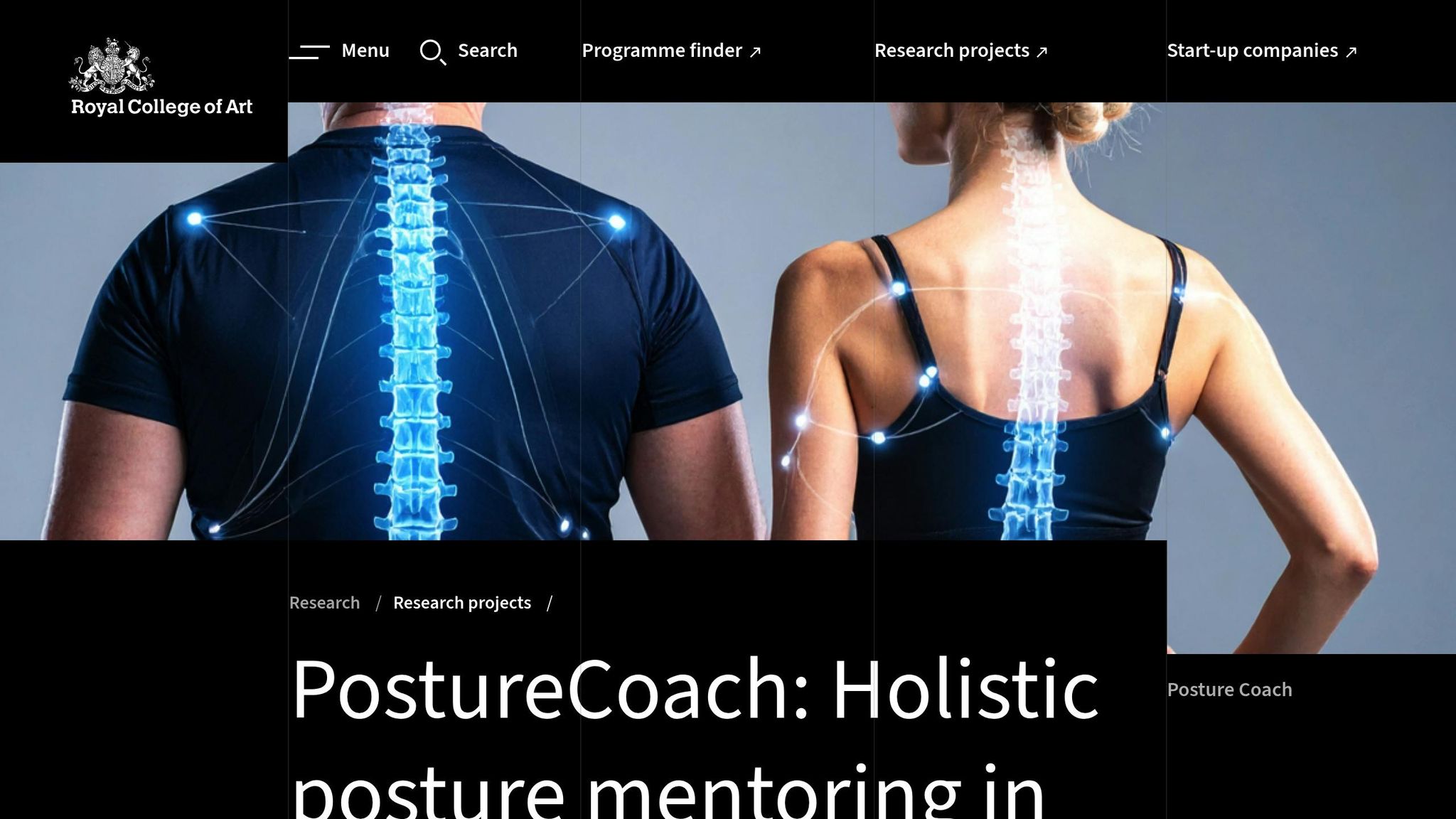
Additional research, such as a trial conducted at the Toronto Rehabilitation Institute, underscores the value of real-time feedback in reducing spine flexion during movement.
"The training program including PostureCoach has the potential to help caregivers learn to use safer postures that reduce the risk of back injury." – Mohammadhasan Owlia et al., Toronto Rehabilitation Institute
AIH LLC‘s aiSpine: Advanced Spine Health Technology
aiSpine Features for Spine Health
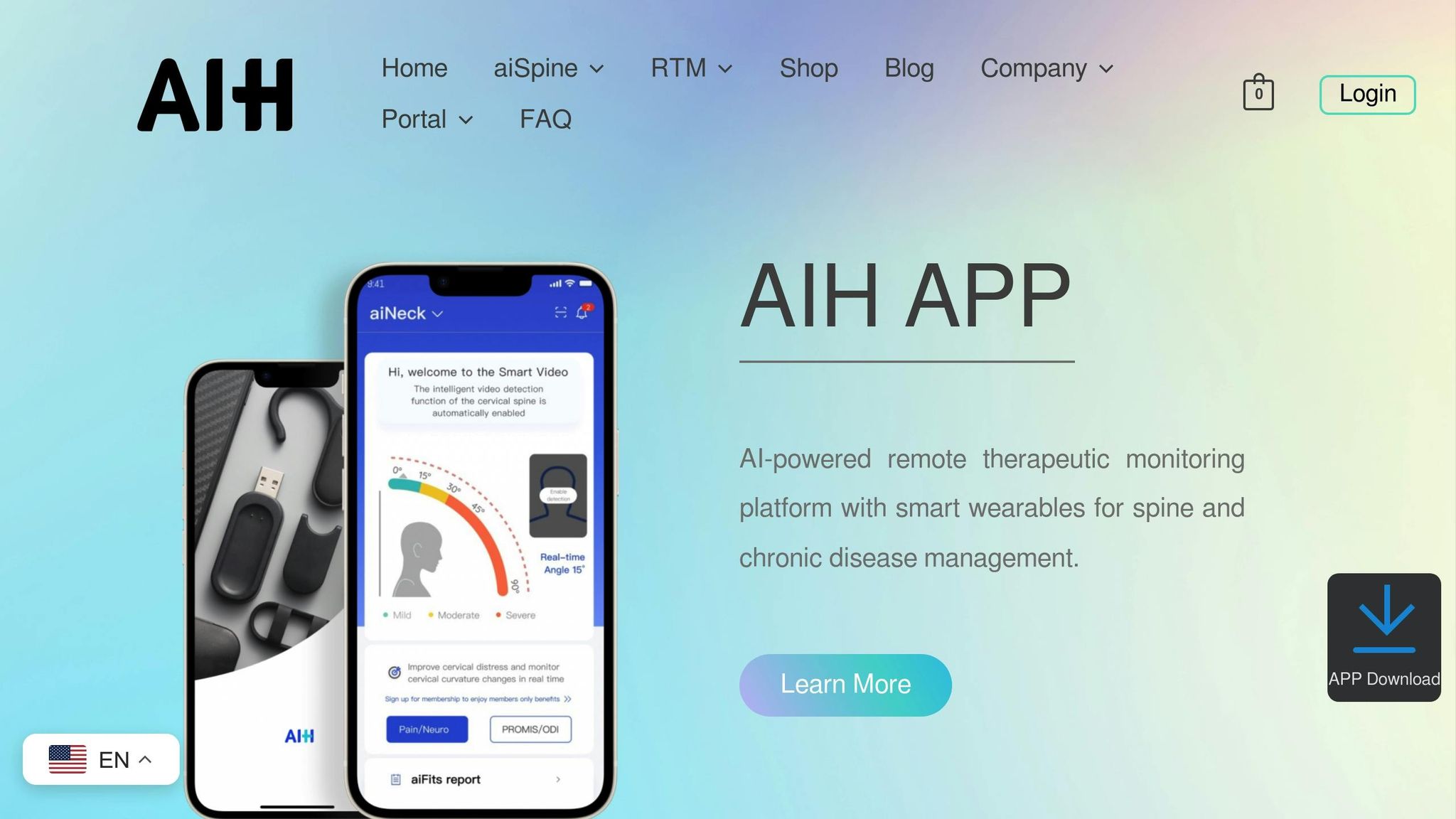
aiSpine is designed to take spine health monitoring to the next level, offering real-time feedback and advanced tracking capabilities. At its core, the device features a 9-axis IMU that continuously monitors angular and curvature changes in the neck and lower back during movement.
According to AIH LLC:
"aiSpine (Spine Posture Monitor) is an Artificial Intelligence (AI) driven device that prevents, monitors, and records angular and curvature changes in the neck and back."
The device is versatile, with four wearing options to match different activities: over-ear, glasses, front clip-on, and back clip-on. If your posture deviates from the ideal, it sends vibration alerts to encourage immediate correction. Plus, it connects seamlessly to the AIH Health App via Bluetooth, offering a 7-day battery life for uninterrupted tracking.
AIH LLC highlights:
"With live display you can view your spine health condition in real time directly on the AIH Health App. This feature allows you to track your posture trends, monitor progress, and receive actionable insights to optimize your health."
How aiSpine Supports Exercise and Recovery
aiSpine isn’t just about posture – it’s also a powerful tool for exercise optimization and recovery management. During workouts, the AIH Health App provides real-time spine alignment feedback, helping users fine-tune their posture instantly. The app even builds personalized posture models, tracks activity levels, and calculates calories burned, giving a clear picture of how exercises impact spine health.
For recovery, aiSpine supports Remote Therapeutic Monitoring (RTM), allowing healthcare providers to remotely track musculoskeletal conditions and therapy adherence. Users can access historical posture data to identify harmful habits and collaborate with their providers to make adjustments. This combination of real-time feedback and data-driven insights helps prevent issues like herniated discs or sciatica while promoting better spine health through tailored, AI-driven guidance.
sbb-itb-44aa802
Future Developments in AI Wearables for Spine Health
Using Predictive Analytics for Spine Care
The next wave of AI wearables is set to revolutionize spine health by predicting low back pain flare-ups before they occur. These advanced systems will combine data from various sensors monitoring sleep patterns, heart rate variability, stress levels, and even social engagement. By analyzing these interconnected biological, psychological, and social factors, AI can pinpoint the unique triggers that lead to pain episodes for each individual.
Paul W. Hodges, a Professor and NHMRC Senior Principal Research Fellow at the University of Queensland, highlights the transformative potential of this technology:
"Wearable sensors would lie at the core of analysis of the factors that could explain the fluctuation of the condition, and that are potentially modifiable by treatments."
Interestingly, research suggests that for some individuals, just one night of poor sleep quality – not necessarily the amount of sleep – can be a key predictor of an impending pain episode. With this insight, AI systems could send timely alerts, encouraging users to adjust their activities or focus on improving sleep habits when a flare-up seems likely. This proactive method represents a significant leap forward in spine care and could serve as a model for managing other chronic conditions as well.
New Applications for Chronic Spine Conditions
AI wearables are evolving far beyond their current role in exercise feedback. Future innovations will integrate wearable sensor data with omics data (like genomics and proteomics) to craft highly personalized treatment plans. By analyzing a combination of imaging, clinical history, and movement patterns, AI will help predict the most effective interventions for each patient.
Technical hurdles such as limited battery life and bulky sensors are being resolved, paving the way for more advanced applications. One exciting development is "movement phenotyping", a machine learning-based process that identifies subtle biomechanical changes that often precede injuries. This approach allows clinicians to monitor treatment progress over extended periods with objective data, reducing the reliance on patient memory or self-reporting. With these advancements, the potential for long-term, data-driven spine care is becoming a reality.
PostureCoach: An AI-Enabled Platform for Personalised Posture Analysis | AiDLab
Conclusion
Real-time biofeedback has been shown to decrease end-range lumbar spine flexion by up to 36%, with 62% of users reporting meaningful pain relief. This combination of immediate feedback and long-term data tracking fosters lasting improvements. Real-time alerts allow users to correct their posture in the moment, which is particularly helpful during prolonged activities like sitting or standing. For example, biofeedback can increase the lumbar lordotic angle by more than 10° during these tasks. At the same time, continuous data collection supports personalized exercise plans tailored to an individual’s unique biomechanical needs and progress.
These benefits come together seamlessly in AIH LLC’s aiSpine. As mentioned earlier, this system offers what can be described as "occupational coaching", a method research has shown to be more effective than traditional training for promoting safer movement patterns.
Looking ahead, advancements in predictive analytics could take these benefits even further. By analyzing comprehensive health data, future systems may be able to forecast potential pain flare-ups or detect subtle biomechanical changes that signal a risk of injury. This forward-thinking approach is already showing promise in proactive pain and injury prevention.
FAQs
How do AI wearables help correct posture during exercise?
AI wearables are changing the way we approach posture during exercise. Equipped with advanced sensors and motion analysis, these devices monitor your spinal alignment in real time. The best part? They offer instant feedback, helping you make quick adjustments to maintain proper posture throughout your workout.
By keeping tabs on your movements, these AI-powered gadgets can spot imbalances or poor posture and guide you toward better habits. The result? Improved exercise performance and a healthier spine over the long haul.
What are the long-term advantages of using AI wearables for maintaining spine health?
Using AI wearables for spine health can lead to a range of lasting benefits. These devices improve posture awareness, guiding users toward healthier habits over time. They also deliver in-depth spinal movement insights, making it easier to adjust daily activities and exercise routines for better alignment.
Over time, consistent use of these wearables can help reduce back pain by providing real-time feedback that encourages proper posture and alignment. Beyond pain relief, these tools play a role in preventive spine care, supporting overall health and lowering the chances of developing long-term issues.
Can AI wearables help prevent back pain and improve spine health?
AI-powered wearables are making strides in helping people maintain spine health and avoid back pain. These devices track posture and movement in real time, offering personalized feedback to guide users in correcting bad habits that could strain the spine.
Beyond immediate corrections, these wearables can also detect patterns and identify risk factors linked to back pain. This allows for early intervention, promoting healthier movement and reducing the likelihood of recurring issues over time.