
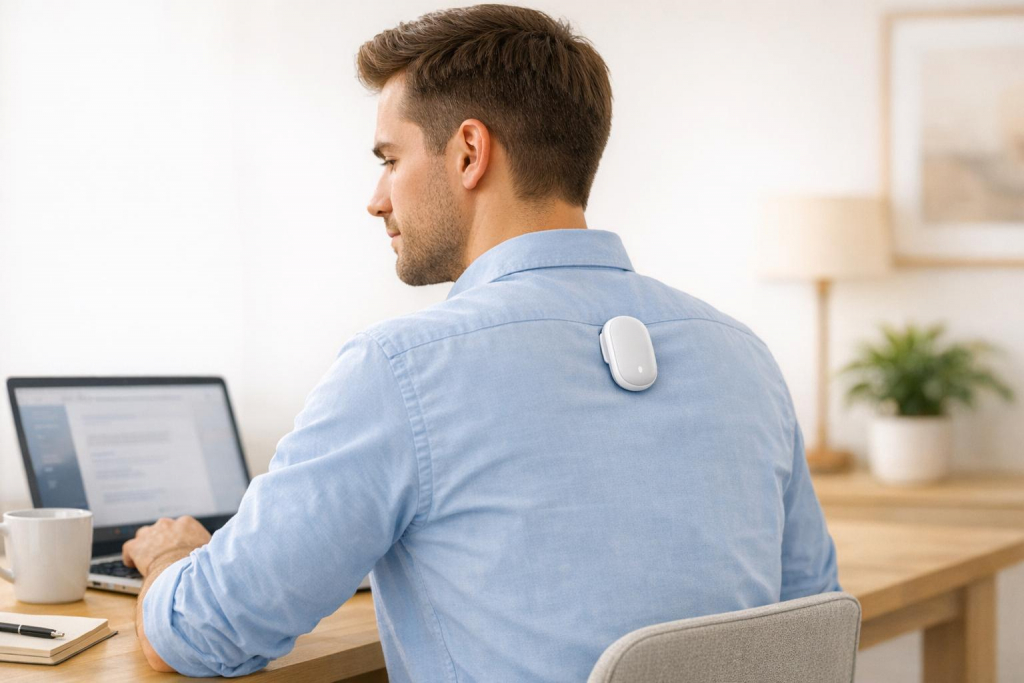
Your posture might be harming your health more than you realize. Poor alignment can lead to chronic pain, muscle fatigue, tension headaches, and even long-term spinal damage. If you spend hours at a desk, experience discomfort, or struggle to maintain good posture, a posture monitoring device could help. These gadgets provide real-time feedback to correct slouching, reduce strain, and build healthier habits.
Key Indicators You Might Need One:
- Chronic back, neck, or shoulder pain.
- Persistent slouching and poor posture habits.
- Long hours sitting at a desk or using screens.
- "Tech neck" or forward head posture from device use.
- Muscle fatigue or tension in your upper body.
- Frequent tension headaches or migraines.
- Recovering from a posture-related injury or surgery.
- Difficulty maintaining proper posture during exercise.
- Concern about preventing future spinal health issues.
- Need reminders to stay aligned throughout the day.
Why It Matters:
Posture monitoring devices train your body to hold proper alignment, reducing pain and preventing further damage. They’re lightweight, discreet, and easy to integrate into daily life. By syncing with apps, they track your progress and help you build long-term habits for better spinal health. If you recognize any of these signs, it might be time to explore this solution.
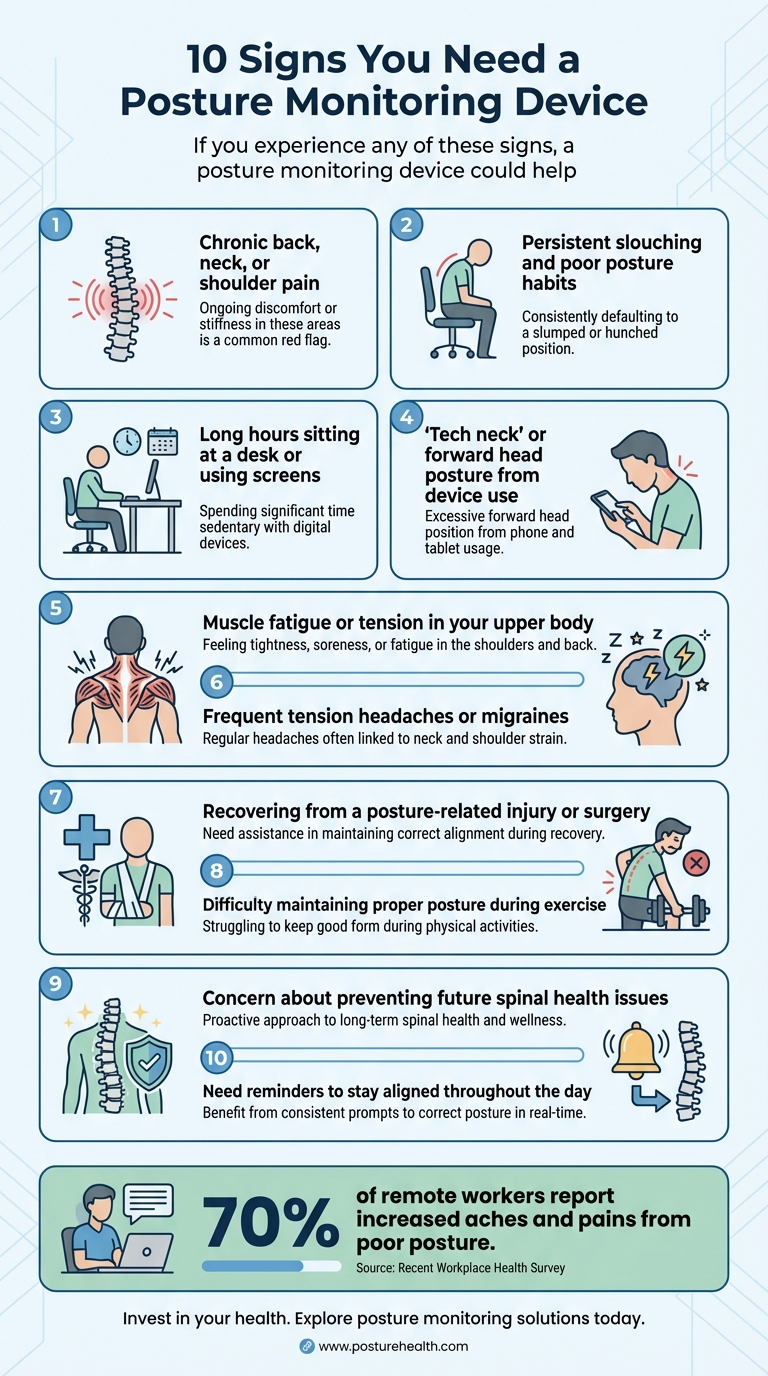
10 Signs You Need a Posture Monitoring Device
Meet the Device That Will Fix Your Poor Posture – UPRIGHT GO video by Futurism

1. You Have Chronic Back, Neck, or Shoulder Pain
Living with chronic back, neck, or shoulder pain? Poor posture could be making it worse. When you slouch, your muscles strain to compensate for misalignment, which can lead to joint inflammation, arthritis, and long-term damage. The longer this cycle continues, the more harm it causes. That’s where posture monitoring devices come in – they tackle these problems head-on.
How Posture Monitoring Devices Make a Difference
These devices provide real-time feedback to help you correct your alignment. A study conducted in May 2021 by Yi-Liang Kuo and Yi-Ju Tsai at National Cheng Kung University tested the Lumo Lift wearable sensor on 21 healthy young adults during a one-hour typing task. The results? Participants reduced neck flexion by an average of 2.8° and thoracic kyphosis (hunching) by 1.9° compared to typing without the device. Over time, these tools help train your muscles to maintain proper posture, even after you stop using them.
Designed for Comfort and Ease
Posture devices are not only effective – they’re also designed to fit seamlessly into your daily life. For example:
- Upright Go: This device, priced between $45.00 and $60.00, sticks to your upper back or can be worn as a necklace.
- Etalon Posture Bra: Doubling as a high-support sports bra, this option ranges from $139.00 to $199.00 and uses adjustable straps to evenly distribute weight across your back and shoulders.
Physician Matthew Smith from Northwestern University highlights their purpose:
"The goal is not to wear this forever. The goal is to be able to change your posture on your own from here on out".
Why It Matters for Your Spine
The impact of poor posture is more serious than you might think. Even a slight forward tilt can significantly increase the load on your spine. Between 17.7% and 63.0% of office workers reported neck pain in the past year, and back and neck pain accounted for a staggering $134.5 billion in U.S. healthcare costs in 2016. Taking steps to improve your posture now can save you from joining these statistics down the road.
2. You Slouch or Have Poor Posture Habits
Struggling with chronic pain? Poor posture might be part of the problem. If you often find yourself hunched over a keyboard or slouched in a chair, you’re not alone. A staggering 70% of people working from home report increased aches and pains in areas like the back, neck, shoulders, and joints. Even more concerning, 13% of these individuals rely on painkillers to manage the discomfort caused by bad posture.
How Posture Correction Devices Help
Posture monitoring devices, like the aiSpine, offer an effective way to tackle posture issues. These gadgets provide real-time feedback when you start to slouch. aiSpine, for example, uses gentle vibrations to alert you about misalignment, helping you build muscle memory for proper posture. Over time, this makes good posture feel natural – even when you’re not actively thinking about it. Dr. Spencer Blackman from One Medical highlights the benefits:
"The automated reminders that these apps and gadgets provide can help you stay aware of your posture and avoid some of the aches and pains associated with chronic slouching".
The device pairs with the AIH Health App, which sends timely digital reminders to keep you on track.
Designed for Comfort and Convenience
aiSpine is crafted with comfort and usability in mind. Its slim, lightweight design fits discreetly under clothing, making it easy to incorporate into your daily routine. You can even adjust the vibration intensity and sensitivity through the AIH Health App, ensuring alerts are personalized to your needs. To ease into the habit, experts recommend starting with just 5 to 10 minutes of use per day. This gradual approach helps you build muscle endurance without feeling overwhelmed. As Matthew Smith, a physician at Northwestern University, explains:
"I would compare it to when you were a kid and your mom poked you to sit up straight at the dinner table".
These small, consistent adjustments can lead to lasting improvements in posture and overall spinal health.
Long-Term Benefits of Better Posture
The benefits of correcting poor posture go beyond immediate pain relief. Chronic slouching can lead to serious issues like neck inflammation and arthritis. By training your muscles to support the spine’s natural curves, devices like aiSpine help prevent long-term joint damage. Proper posture also reduces pressure on internal organs, aids digestion, and improves breathing. It’s worth noting that musculoskeletal disorders cost the U.S. healthcare system approximately $380.9 billion in 2016 alone. Taking proactive steps now can save you from bigger health challenges down the road.
3. You Sit at a Desk or Screen for Long Hours
Spending much of your workday in front of a computer can take a toll on your spine. Research shows that anywhere from 17.7% to 63.0% of office workers experience neck pain within a year. On top of that, many office workers spend up to 75% of their day sitting, with more than half of that time in a static position. This sedentary lifestyle not only affects posture but also contributes to rising healthcare costs. Clearly, finding ways to improve posture during long workdays is essential.
How Wearables Help with Posture Correction
Wearable posture monitors tackle the challenges of desk work by offering real-time feedback to help you adjust your posture. Unlike ergonomic chairs that provide passive support, these devices actively remind you to sit up straight the moment you start to slouch. A May 2021 study by Yi-Liang Kuo and Yi-Ju Tsai from National Cheng Kung University tested this concept. They had 21 young adults complete a one-hour typing task while using a sensor that vibrated when their posture faltered. The results? The device significantly reduced neck flexion (p < 0.001), thoracic kyphotic angles (p = 0.033), and pelvic plane angles (p = 0.021) compared to typing without the sensor. These findings show how even short bursts of feedback can combat the bad posture habits that often develop during desk work. Devices like the aiSpine work similarly, using gentle vibrations to help you maintain your spine’s natural curves. This is especially important since most people start to slouch within just 10 minutes without some form of external reminder.
As Yi-Liang Kuo explains:
"The wearable sensor can be set up to vibrate whenever the user slouches. As a result, the user can actively correct his or her posture."
Connecting with Health Apps for Better Results
Many posture devices now go beyond simple feedback by syncing with health apps. For example, the aiSpine not only sends subtle vibration alerts when your posture slips but also integrates with apps to track alignment throughout the day. These tools encourage taking short breaks every 30 minutes to keep your joints flexible. The AIH Health App, which pairs with the aiSpine, even logs your "posture hours" – the time you spend maintaining proper alignment – and provides a history of your progress.
Long-term Impact on Spinal Health
Over time, these small, consistent adjustments can make a big difference. By reducing chronic strain and preventing inflammation in overworked neck and back muscles, posture monitoring devices help protect your spinal health for the long haul.
4. You Have Tech Neck or Forward Head Posture
Spending hours glued to your phone or leaning into your screen can wreak havoc on your neck. When your head is properly aligned, it weighs about 10 pounds. But for every inch it tilts forward, the strain on your spine nearly doubles. The scary part? This strain often goes unnoticed until it causes real damage. Dr. K. Daniel Riew, a cervical spine surgeon at NewYork-Presbyterian/Weill Cornell Medical Center, captures the issue perfectly:
"When you look down just 45 degrees, your neck muscles are doing the work of lifting an almost 50-pound bag of potatoes".
With the average American spending around seven hours a day staring at screens, it’s no surprise that 7 out of 10 remote workers report more pain in their back, neck, and shoulders.
Effectiveness in Posture Correction
The strain caused by tech neck calls for precise solutions. Posture monitoring devices offer just that by providing real-time feedback when your head tilts forward. Tools like the aiSpine use gentle vibrations to nudge you back into alignment when you slouch or push your chin forward, helping to ease the load on your neck muscles. Some software even uses your computer’s webcam to keep tabs on your head position and alert you if it drops below the ideal level. Devices like UpRight are designed for short, manageable training sessions – 15 to 60 minutes a day is enough to train your muscles without overexerting them.
Ease of Use and Comfort
These posture-correcting gadgets are designed to fit effortlessly into your daily routine. Small and lightweight, they work discreetly, often connecting via Bluetooth and offering long battery life. For instance, the aiSpine delivers subtle alerts without interrupting your day, encouraging natural muscle engagement. Experts recommend starting with 15–20 minutes a day and gradually increasing the time to avoid muscle soreness as your body adjusts. This user-friendly approach makes it easier to address tech neck while protecting your long-term spinal health.
Long-Term Benefits for Spinal Health
The benefits of proper posture go far beyond easing neck pain. Keeping your head aligned helps prevent early wear and tear on spinal discs, as well as bulging or ruptured discs. It also reduces the risk of arthritis in your spinal joints, which can result from chronic inflammation caused by overworked muscles. Andrew Bang, a chiropractor at Cleveland Clinic, emphasizes the long-term risks:
"Having poor posture may lead to aches and pains, but having it over the long term is when you get real damage".
Improving your posture can also enhance your breathing, digestion, and circulation while cutting down on tension headaches. It’s a small adjustment with big payoffs for your overall health.
5. You Feel Constant Muscle Fatigue or Tension in Your Upper Body
That persistent tightness in your shoulders, the dull ache between your shoulder blades, or the constant exhaustion in your neck muscles – these aren’t just minor inconveniences. They’re signals that your posture might be overworking your muscles. When you slouch or lean forward, your neck and back muscles have to work harder than they should, leading to chronic fatigue. Dr. Justin Dearing, a functional neurologist and chiropractor, sheds light on this:
"If we’re curled up into a ball all the time on our computer and phone, we’re signaling to the brain that we’re hiding from a tiger and we need stress hormones… This increases muscle tension everywhere, specifically in the neck and shoulders".
This isn’t just anecdotal. Research shows that poor posture not only strains your muscles but also triggers inflammation as your immune system tries to repair the overworked tissue. Over time, this can even lead to arthritis.
How Posture Correction Helps
Posture monitoring devices can help alleviate muscle fatigue by giving you real-time feedback to adjust your alignment before tension sets in. Studies show these devices can significantly reduce neck flexion and muscle strain. By encouraging an upright posture, they reduce unnecessary stress on your spine and help prevent muscle overuse.
Designed for Comfort and Simplicity
Modern posture sensors are built to fit effortlessly into your daily life. They’re lightweight, discreet, and sync with smartphone apps to track your posture habits over time . For example, the aiSpine uses gentle vibrations to alert you when you slouch, encouraging your muscles to naturally engage. Experts recommend starting with short sessions of 30 to 60 minutes to build muscle memory without overexertion. A 2020 study involving 26 college students found that those using the UpRight device reported feeling more energized and less fatigued than those who didn’t use a device. Just be mindful to avoid overcorrecting, as that can lead to additional tension.
Long-Term Rewards for Your Spine
Addressing muscle fatigue early with these devices can make a big difference for your long-term spinal health. Training your muscles to maintain proper alignment can help prevent issues like spinal deformities, bulging discs, chronic inflammation, and arthritis. It also improves breathing and oxygen flow . Better posture even promotes healthy blood and cerebrospinal fluid circulation to the brain, which can enhance cognitive function. Investing in these small tools now can lead to lasting comfort and better overall health.
sbb-itb-44aa802
6. You Get Tension Headaches or Migraines from Poor Posture
If you often feel headaches starting at the base of your skull and spreading toward your forehead or behind your eyes, your posture might be to blame. Studies show that 14% of adults experience tension-type headaches weekly. Slouching or leaning forward puts stress on your neck and upper back muscles, causing them to tighten or spasm – this is what leads to tension headaches. Dr. Matt Tanneberg, DC, CSCS, Owner of Body Check Chiropractic & Sports Rehabilitation, explains:
"Having poor posture puts strain on the muscles of the neck and upper back, causing them to defensively tense up or go into spasm. Headaches that relate to poor posture are called tension headaches."
Here’s a startling fact: while your head weighs about 10 lbs when properly aligned, tilting it forward by just one inch adds an extra 10 lbs of pressure on your spine. With 75% of people spending hours daily hunched over smartphones, it’s no wonder "tech neck" headaches are becoming more common. In some cases, this forward head posture can even compress the occipital nerve at the base of your skull, leading to occipital neuralgia – a specific type of headache. Addressing these posture-related issues is key to reducing neck strain and preventing headache triggers.
How Posture Correction Helps
Posture monitoring devices can help retrain your muscles to hold proper alignment. Research shows that using these devices reduces neck flexion and thoracic kyphosis, which alleviates the strain on muscles and nerves responsible for headaches. Dr. Tanneberg points out that consistent use of these tools helps your neck and upper back muscles naturally settle into a neutral position, reducing tension and discomfort.
Smart Integration with Health Apps
Many posture devices now sync with health apps, offering real-time feedback. They alert you with a gentle vibration when you start to slouch, helping you recognize patterns that could be contributing to your headaches. A simple chin tuck – pulling your chin toward your throat – can also help identify poor posture. If this movement eases your headache, it’s a sign that forward head posture might be the root cause.
Protecting Your Spine for the Long Haul
Beyond just relieving headaches, maintaining proper posture has long-term benefits for your spinal health. Chronic forward head posture can lead to nerve compression, joint inflammation, and even arthritis in your cervical spine. Consistently improving your posture reduces wear and tear on your spinal joints and helps prevent these more serious issues. Dr. Andrew Bang, Chiropractor at Cleveland Clinic, cautions:
"Having poor posture may lead to aches and pains, but having it over the long term is when you get real damage."
To build better posture habits, start small – try short, 30-minute sessions with a posture correction device. Over time, this helps your muscles develop the memory needed to hold proper alignment naturally. The result? Fewer tension headaches and less neck strain in the long run.
7. You’re Recovering from a Posture-Related Injury or Surgery
Recovering from a back injury or spinal surgery can be tricky because your natural sense of safe posture often takes a hit. Around 90% of low back pain cases stem from non-specific causes like prolonged strain due to poor posture. This makes it challenging to notice when you’re slipping into harmful positions during recovery. That’s where posture monitoring devices come in. These handy tools provide real-time feedback – like gentle vibrations or alerts – when you move outside your safe range. This guidance is invaluable, helping you stay on track and regain optimal alignment.
How These Devices Help Correct Posture
Posture devices use Inertial Measurement Units (IMUs) to track your spine’s movements, such as flexion, lateral bending, and twisting, with an impressive accuracy of within 2 degrees. In one standout study from April 2021, researchers from the University of Pisa and the University of Florence tested a three-sensor platform on surgeons during actual laparoscopic procedures. The system successfully identified high-risk positions in real time, proving its potential to prevent musculoskeletal strain during recovery. For anyone recovering from an injury, this precise tracking allows both you and your physical therapist to monitor progress and pinpoint everyday activities that could pose risks.
Designed for Comfort and Simplicity
When you’re recovering, comfort and ease of use are key. Posture monitoring devices are built with this in mind, featuring discreet sensors that either integrate into clothing or stick to your lower back. Take the aiSpine device, for example – it’s designed for short, focused training sessions (usually 15 minutes to an hour daily) to activate the muscles needed for proper alignment without creating dependency. Dr. Christopher Castro, a physiatrist at the Orthopedic Institute of New Jersey, highlights:
"The best way to correct posture is by optimizing how we sit and stand… If the neck still bothers them, I may suggest a posture aid briefly, as long use can weaken muscles."
Additionally, many devices connect with apps that include recovery-specific features, like reminders for 10-minute breaks to ease muscle tension and improve circulation during healing.
Seamless Integration with Health Apps
Posture devices don’t just stand alone – they pair effortlessly with health tracking apps via Bluetooth. Tools like aiSpine allow you to gather long-term data about your posture habits, such as how much time you spend in proper alignment versus harmful positions. These apps can even calculate ergonomic risk scores. This data is incredibly useful for physical therapy, giving therapists concrete insights to tailor your recovery plan.
Long-Term Benefits for Your Spine
Using a posture monitoring device during recovery doesn’t just help you heal; it can also protect you from future issues. Consistent use reduces the risk of chronic inflammation, which can lead to arthritis in your spinal joints. The key is to treat these devices as temporary training aids rather than permanent fixes. Research shows that new posture habits can form in just three weeks and stabilize within three months. Pairing device use with core-strengthening exercises – like planks – can further reinforce your spine’s muscular support, ensuring long-term benefits even after your recovery is complete. These tools not only assist in healing but also lay the foundation for better spinal health moving forward.
8. You Can’t Maintain Proper Posture During Physical Activity
Whether you’re running, lifting weights, or playing sports, keeping your body properly aligned is key to avoiding injuries. Dynamic posture monitoring can be a game-changer, helping you stay aligned while you move. If you catch yourself slouching during a workout, leaning too far forward while jogging, or losing form during a set, a posture monitoring device can provide real-time feedback to get you back on track. Let’s explore how these devices work to support your alignment during physical activity.
Effectiveness in Posture Correction
Posture monitoring devices are equipped with advanced motion sensors that track your alignment as you move. These sensors, placed strategically on your torso, provide instant feedback when you’re out of alignment. Some devices even differentiate between activities like walking and running, sending gentle vibration alerts to help you correct your posture immediately. Over time, this feedback helps you build muscle memory, making proper posture second nature.
For example, a 2016 study involving 11 participants performing deadlifts highlighted the precision of these sensors (Pearson’s correlation: 0.9997), showing how effectively they detect even slight misalignments that could lead to injuries if ignored.
Ease of Use and Comfort
Comfort is critical when you’re exercising, and many posture-correcting devices are designed with this in mind. Smart garments, such as posture-correcting vests or athletic wear with built-in sensors, offer flexibility and mobility. These garments often use elastic panels that provide subtle cues to help you maintain proper alignment without restricting your movement.
One study demonstrated the reliability of a smart garment equipped with a three-axis accelerometer and a two-axis gyroscope, maintaining measurement accuracy within 5 degrees for over 90% of daily activities. These garments are also breathable and designed to fit securely, reducing the likelihood of errors in measurements.
Dr. Sharad Rajpal, a spine and neurosurgeon at AdventHealth, puts it this way:
"Think of posture-correcting clothing as training wheels: they are helpful at first, but not the end goal."
To avoid becoming overly dependent on these devices, it’s best to use them during short training sessions – around 1 to 3 hours per day – so your core muscles continue to develop the strength needed to support your spine naturally.
Integration with Health Tracking Apps
Beyond their role in posture correction, many of these devices integrate seamlessly with health apps. They often track additional metrics like steps, calories burned, and sleep patterns, giving you a more complete picture of your overall health. When paired with digital health platforms, these devices can even monitor your breathing during exercise, encouraging deeper, more effective diaphragmatic breathing. This not only supports core stability but also boosts energy levels.
Why is this important? Poor posture can compress your diaphragm, limiting lung capacity and causing shallow breathing, which leads to fatigue. By combining posture data with other health metrics, you can identify patterns and make adjustments to your workouts to reduce the risk of injury.
Long-Term Benefits for Spinal Health
Good alignment during physical activity does more than just improve your form – it helps prevent injuries and reduces strain on your joints, muscles, and spine. Poor posture while moving can lead to problems like patellofemoral pain, where the kneecap doesn’t glide smoothly over the femur due to misalignment. Using a posture monitoring device can help protect your spine from long-term damage and aligns with the broader goal of minimizing complications from poor posture. As noted by the Mayo Clinic Staff:
"Proper body alignment can help prevent excess strain on your joints, muscles and spine – alleviating pain and reducing the likelihood of injury."
For the best outcomes, combine these devices with exercises that strengthen your core, like planks and bridges, as well as upper-back stretches like shoulder blade squeezes. This combination helps you develop the muscle strength needed to maintain good posture naturally, even without the device.
9. You Want to Prevent Long-Term Spinal Health Problems
Protecting your spine is about more than just avoiding discomfort – it’s an investment in your overall health. Posture monitoring devices can play a big role in this. These gadgets use real-time biofeedback, like gentle vibrations or app notifications, to remind you to correct your posture and engage your muscles when needed. This kind of active correction can help prevent serious issues over time, such as misaligned vertebrae, disc damage, and nerve compression.
Back pain is a costly problem in the U.S., with Americans spending $60 billion annually on related healthcare expenses. One way to reduce this burden? Focus on maintaining your spine’s natural "S" curve, which includes the cervical, thoracic, and lumbar curves. Proper alignment minimizes stress on your joints and may even lower your chances of developing arthritis.
To make the most of posture training, combine short daily sessions (about 30–60 minutes) with exercises that build core strength, like planks or shoulder blade squeezes. These movements naturally support better alignment and stronger muscles. Many posture devices also sync with smartphone apps, allowing you to track your habits and pinpoint problem times – like during long hours at your desk or on long car rides – when your posture tends to slip.
Orthopedic spine surgeon Dr. Brandon Hirsch emphasizes the importance of your body’s natural support system:
"The real posture correctors are the many muscles and tendons that attach to the spine and the shoulder blades."
Over time, consistent use of these devices can help you develop permanent good posture habits. This might even reduce your risk of conditions like scoliosis, lordosis, and kyphosis. Some advanced systems boast posture classification accuracy of 89%, offering reliable feedback to keep your spine healthy for the long haul.
10. You Need Real-Time Reminders to Correct Your Posture
Struggling to remember to sit up straight or adjust your stance? A posture monitoring device with real-time alerts could be the answer. Unlike traditional back braces, these devices use gentle vibrations or beeps to nudge you into activating your muscles and self-correcting. This kind of active feedback not only helps you adjust in the moment but also improves your body’s awareness, reducing the time spent in harmful positions.
Effectiveness in Posture Correction
Real-time alerts are a game-changer for building better posture habits. They work by training your muscles through consistent feedback. When you receive an alert, it prompts immediate action, encouraging proper alignment. Research suggests that users often develop lasting habits within just three weeks and achieve more stable posture after about three months. To ease into it, try wearing the device for 30–60 minutes during activities that challenge your posture, like working at a desk or sitting in meetings, to avoid overworking your muscles.
Ease of Use and Comfort
Today’s posture sensors are designed with comfort and convenience in mind. They’re small, lightweight, and discreet, attaching to your upper back with hypoallergenic adhesive or clipping onto your clothing. These options make it easy to find a device that fits seamlessly into your daily routine without causing any disruptions.
Integration with Health Tracking Apps
Many posture monitors now sync with smartphone apps, giving you detailed insights into your posture habits. Through these apps, you can track your progress, adjust the device’s sensitivity, and analyze patterns over time. This feature is particularly helpful if you’re dealing with tension headaches or fatigue, as it can help you identify when poor posture might be contributing to these issues.
Long-Term Benefits for Spinal Health
While these devices provide immediate corrections, their ultimate goal is to promote long-term improvements. They’re not meant to be a crutch but a tool to help you build muscle memory for proper alignment. As the BodySpec Team explains:
"The goal is to train awareness, not outsource posture permanently."
Conclusion
If you’ve noticed any of these signs, it’s time to take steps to safeguard your spine. Whether you’re grappling with chronic pain, spending long hours hunched over a screen, or struggling to remember to check your posture during the day, a posture monitoring device might be a practical solution to explore.
Start by evaluating your alignment. Posture impacts far more than just back pain. Try a simple wall test: stand with your heels about three inches away from the wall. If your alignment feels noticeably off, it could signal that your spinal curves need attention. Another option is to stand in front of a full-length mirror and check if your ears are level, your shoulders are even, and your hips are aligned.
Poor posture doesn’t just affect your back – it’s linked to a range of health issues. As Dr. Shashank J. Davé, a physiatrist at Indiana University Health, explains:
"The human body functions optimally when all individual muscles and joints are in proper alignment, including the spine. With years of poor posture, muscles start to fatigue due to overuse, and the joints they move also become progressively dysfunctional".
Before investing in a posture monitoring device, start with manual posture checks. If those don’t help and you find yourself slouching despite your best efforts, it might be time to consider technology. For individuals with specific conditions like scoliosis or those recovering from surgery, consulting a physical therapist is essential to develop a tailored plan before relying on a device.
Building better posture habits requires mindfulness and movement. As Meghan Markowski, a physical therapist at Brigham and Women’s Hospital, emphasizes:
"We don’t want people in fixed postures for hours at a time. Be vigilant, and good posture will contribute to many aspects of health".
FAQs
How do posture monitoring devices help improve your posture?
Posture monitoring devices rely on motion sensors to keep tabs on the angle of your spine during the day. When they notice slouching or poor alignment, they gently vibrate to nudge you into a better position.
Many of these devices pair with a companion app that tracks your posture patterns and provides insights. The app often creates a tailored plan to help you gradually retrain your muscles and improve alignment. By encouraging consistent adjustments, these tools can ease back strain and contribute to better spinal health over time.
Can posture monitoring devices help prevent long-term back and spine problems?
Yes, posture monitoring devices can make a big difference in preventing long-term back and spine problems. These gadgets work by keeping you aware of your posture throughout the day, nudging you to correct slouching or misalignment. Over time, these small adjustments can ease the strain on your spine, help balance your muscles, and lower the chances of developing chronic pain or other complications.
For people who spend long hours sitting – whether at a desk or recovering from posture-related injuries – these devices can be especially helpful. Adding a posture monitor to your daily routine is a simple yet effective way to support your spinal health and overall wellness.
What are the benefits of using a posture monitoring device during recovery?
Using a posture monitoring device during recovery can make a noticeable difference in how effectively you heal. These devices offer real-time feedback, helping you maintain proper spinal alignment with each movement. This not only supports your recovery but also minimizes the risk of developing bad habits that could slow healing or even cause new injuries.
Another advantage is their ability to continuously track posture data. This gives your healthcare provider clear, objective information to assess your progress and fine-tune your recovery plan. With this tailored approach, you’re more likely to see quicker improvements and better overall results.
On top of that, posture monitors can alert you when you’re slouching or placing too much strain on your body. By addressing these issues early, they can help ease discomfort like stiffness or headaches and reduce the likelihood of long-term complications. In short, these devices can be a practical ally in achieving a safer and smoother recovery.