
The short answer
Body fat scales do not measure body fat directly. They estimate it indirectly, usually through bioelectrical impedance analysis (BIA), which sends a very small alternating current through the body and uses the measured resistance, along with other variables, to predict body composition. Because these estimates rely on statistical equations developed for specific reference populations, they tend to have larger predictive errors than direct or criterion methods such as dual-energy X-ray absorptiometry (DXA). For an individual, that means a single body fat percentage reading should not be treated as an exact value. The more reliable use of a body fat scale is tracking changes over time under consistent conditions, while recognizing that day-to-day fluctuations can reflect hydration, recent food or drink, and other factors rather than true changes in fat mass.[source]
What the evidence supports
A 2008 review of body composition methods explains that BIA analyzers do not measure a biological quantity directly. Instead, the impedance index is used in regression equations to predict body composition, and those equations are useful only for people who closely match the reference population in body size and shape. The review also notes that BIA is useful for describing mean body composition in groups, but large errors for an individual limit its clinical application, especially among people with obesity. This is the core reason accuracy expectations should be modest for any single reading.[source]
The same review points out that all body composition methods rest on assumptions about tissue density, water and electrolyte concentrations, and biological relationships. These assumptions are less reliable in people with obesity or chronic disease. The review also states that there is no single universally recommended method for body composition assessment. Together, these points support a practical expectation: a consumer body fat scale can be a convenient tracking tool, but it is not a substitute for a clinical assessment or a diagnostic measurement.[source]
Practical considerations
If you use a body fat scale for everyday monitoring, consistency matters more than any single number. Measuring at roughly the same time of day, under similar hydration conditions, and without comparing readings taken in very different circumstances can make trends easier to interpret. The review notes that BIA prediction equations are population-specific and that factors such as hydration and body water distribution affect the estimate. This does not mean the scale is useless; it means the reading is an estimate whose value comes from the pattern over time, not from one isolated data point.[source]
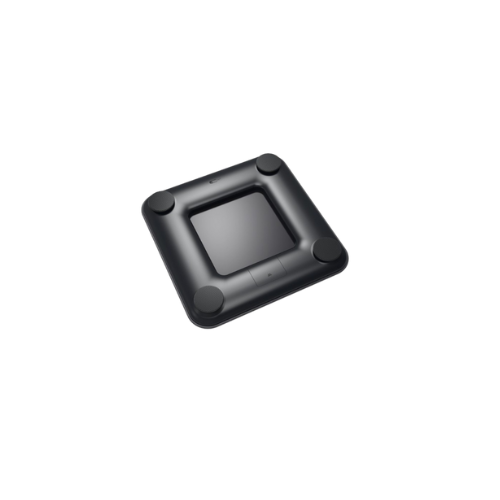
For readers using a connected scale such as the aiScale Max, the confirmed product documentation describes a Bluetooth setup and a Wi-Fi upload workflow through the aiCare ecosystem. The scale measures weight and presents the body-composition parameters listed in its manual, and it supports stored history and automatic user-profile identification as described by the manual. The confirmed documentation does not establish clinical accuracy or medical benefit, and the scale should not be used to diagnose or treat any condition.
| Method type | How it works | Key limitation noted in the review |
|---|---|---|
| Bioelectrical impedance (BIA) | Estimates body composition from resistance to a small current using population-specific equations | Large individual errors; equations apply only to people matching the reference population |
| DXA | Uses two low-energy X-ray levels to estimate fat, lean, and bone tissue | Assumptions vary by manufacturer; not always suitable for people with obesity |
| Anthropometry (e.g., BMI, circumference) | Uses body size and shape measurements as indices of fatness | Does not directly measure body fat; relationships change with weight gain or loss |
Limits and responsible use
A body fat scale cannot tell you whether a reading is clinically meaningful for you, and it cannot replace a medical evaluation. The 2008 review emphasizes that indirect methods like BIA have larger predictive errors than direct methods and are affected by sample specificity and disease conditions. For that reason, treat scale readings as descriptive information rather than a diagnosis or a treatment target. If you have health concerns about your body composition or weight, discuss them with a qualified healthcare professional rather than adjusting anything based on a scale reading alone.[source]
For product-specific questions about the aiScale Max, such as setup details or which parameters are listed in the manual, the confirmed source is the product manual and official support documentation. This article does not establish accuracy specifications, medical-device status, or health outcomes for any scale. When a detail is not confirmed in the available documentation, it is better to check the manual or contact support than to assume a capability.
Next steps
For current appointment, location, or contact information, visit the official website.[source]
References
- Body Composition Methods: Comparisons and Interpretation – PMC — pmc.ncbi.nlm.nih.gov
- Official website — www.aihnet.com