
The short answer
If you are asking how a pulse oximeter connects to a phone, the confirmed answer for aiOxy is Bluetooth. The supplied manual states Bluetooth 4.2, and aiOxy connects with aiCare through Bluetooth for supported SpO2 and pulse-data workflows. aiCare is AIHNET's connected-health software platform, and aiOxy belongs to the aiCare ecosystem. The connection is a data pathway between a confirmed device and a confirmed app, not a medical interpretation service. A Bluetooth connection by itself does not tell you whether every sync is automatic, how long records stay in the app, or how account sharing works; those are separate questions, and the confirmed material does not answer them. What the confirmed material does support is narrower and more useful: aiOxy is a spot-check oximeter that measures SpO2 and pulse rate, displays a perfusion index, and can connect with aiCare over Bluetooth for supported SpO2 and pulse-data workflows.
What the confirmed details actually cover
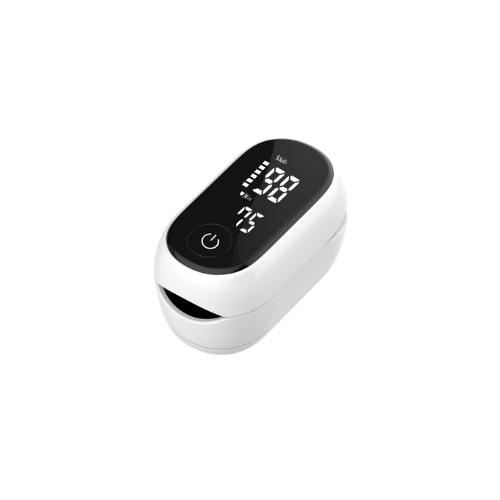
The confirmed product facts describe a small, battery-powered spot-check device. The confirmed AIHNET product name is aiOxy, and it maps to manufacturer model AOJ-70B. The stated dimensions are 63.4 x 36.0 x 33.6 mm, and the stated weight is 38.1 g without batteries. It uses two AAA batteries. The manual states SpO2 measurement 0-100%, display 35-100%, and accuracy +/-2% at 70-100%; below 70% is unspecified. The stated pulse-rate range is 25-250 bpm with stated accuracy +/-2 bpm, and the stated perfusion-index range is 0-50%. The device displays an OLED reading view with pulse waveform or bar-graph signal information, and it spot-checks SpO2 and pulse rate and displays perfusion index. On the connectivity side, the supplied manual states Bluetooth 4.2, and aiOxy connects with aiCare through Bluetooth for supported SpO2 and pulse-data workflows. aiCare receives, organizes, and presents connected health data from supported AIHNET devices, and it helps users organize and view supported health information over time. The aiCare service includes account and profile, device management, health summary and history, and source and capture provenance, with mobile applications for Android and iOS. Supported data categories include blood oxygen and heart rate, alongside categories such as activity, blood glucose, blood pressure, body temperature, sleep, and weight and body composition. Those category names describe what the platform is built to handle; they are not a statement that aiOxy itself measures all of them.
It is worth separating two ideas that often get merged in search results. A smartphone-based oximetry study can show that a phone with dedicated biosensor hardware and a proprietary app produced readings within a stated accuracy threshold in a controlled hypoxia test, but that is a study of a specific phone and app, not a description of how a separate oximeter pairs with a companion app. In that study, the Samsung S9+ smartphone used dedicated pulse-oximetry hardware with 660 nM red and 910 nM infrared LEDs and a photodetector on a low-noise analog channel, and the app processed sensor data to calculate and display saturation and heart rate. The reported root mean square deviation was 2.6% across more than 257 data points from 12 volunteers, which the authors describe as within the FDA/ISO requirement of less than 3.5% RMSD for clinical pulse oximetry. The same paper notes that the oximetry function was designed for spot checks only, with the user holding a finger in place for roughly 30 seconds for a single reading, and that the app included a share function for approved providers and stored historical data. Those details are specific to the tested Samsung S9+ smartphone system. They are useful context for understanding why hardware and app design matter in connected oximetry, but they should not be read as a claim about aiOxy or aiCare, and they do not establish accuracy or clinical use for aiOxy.[source]
Practical considerations for a connected spot-check routine
The practical value of a connected oximeter comes from reducing manual transcription and keeping supported readings together in one place. aiCare is described as bringing supported AIHNET device data together into one health-data experience, and it helps users organize and view supported health information over time. For a spot-check device, that framing is the realistic one: you take a reading, the supported SpO2 and pulse data can move to the app over Bluetooth, and the app organizes it with other supported data. What the confirmed material does not describe is an automatic schedule, a reminder system, a specific number of readings per day, or a clinical alerting workflow. If those details matter to you, they are questions for the product documentation or support rather than something this article can confirm. The same caution applies to app retention and account sharing: a Bluetooth connection does not answer how long records are kept or who else can see them. The table below summarizes what is confirmed about the connection and what remains outside the confirmed scope.
For readers who want the broader product context first, the aiOxy guide on this site covers the device itself, and the product page lists the current aiOxy details. This article stays focused on the connectivity question so the two do not repeat each other.
| Topic | What is confirmed | What is not confirmed here |
|---|---|---|
| Wireless link | Bluetooth 4.2 per the supplied manual | Pairing steps, range, and reconnection behavior |
| App | aiOxy connects with aiCare through Bluetooth for supported SpO2 and pulse-data workflows | Automatic versus manual sync timing is not confirmed in the supplied material |
| Data types | Supported SpO2 and pulse data; aiCare handles blood oxygen and heart rate categories | Whether every aiCare category applies to aiOxy |
| Record keeping | aiCare organizes and presents supported health data over time | Retention period and account sharing rules |
| Measurement mode | Spot-checks SpO2 and pulse rate; displays perfusion index | Continuous monitoring or scheduled measurement |
Limits and responsible use
A connected oximeter is a measurement and record-keeping tool, not a diagnostic or treatment system. The confirmed facts describe what aiOxy measures and how it connects; they do not establish that any particular reading is normal, concerning, or actionable for you. The study cited above also lists boundaries that are worth keeping in mind when reading any oximetry accuracy claim: it tested healthy volunteers at stable oxygen saturations of roughly 70% to 100%, provided no data below 70%, and did not address accuracy under reduced peripheral blood flow, hemoglobinopathies, elevated carboxyhemoglobin or methemoglobin, or use in children. It also states that the tested system was designed for spot checks only, with no evidence supporting continuous pulse oximetry. Those limitations belong to that study and that device, but they illustrate the general principle that a specification or a connection feature is not the same as a clinical conclusion. If you have questions about what a reading means for your health, or about how to use a pulse oximeter in your own situation, those are conversations for a qualified healthcare professional. This article is educational product information and does not provide diagnosis, treatment instructions, or emergency guidance.[source]
Frequently Asked Questions
Does aiOxy connect to a phone by Bluetooth?
Yes. The supplied manual states Bluetooth 4.2, and aiOxy connects with aiCare through Bluetooth for supported SpO2 and pulse-data workflows.
Which app does aiOxy work with?
aiOxy belongs to the aiCare ecosystem and connects with aiCare, which is AIHNET's connected-health software platform. aiCare has mobile applications for Android and iOS.
Does the Bluetooth connection mean syncing is automatic?
The confirmed material describes a Bluetooth connection for supported SpO2 and pulse-data workflows, but it does not state whether synchronization is automatic or manual. Automatic synchronization is not confirmed by the supplied product knowledge, and the confirmed Bluetooth connection does not settle that question.
What data can move from aiOxy to aiCare?
The confirmed workflow covers supported SpO2 and pulse data. aiCare also handles categories such as blood oxygen and heart rate, but that does not mean aiOxy measures every category aiCare supports.
Can aiOxy be used for continuous monitoring?
The confirmed facts describe aiOxy as a spot-check device that measures SpO2 and pulse rate and displays perfusion index. Continuous monitoring is not part of the confirmed description.
Does a Bluetooth connection tell me how long my records are stored or who can see them?
No. A Bluetooth connection answers how data can move, not how long aiCare retains records or how account sharing works. Those details are not confirmed in the material used for this article.