
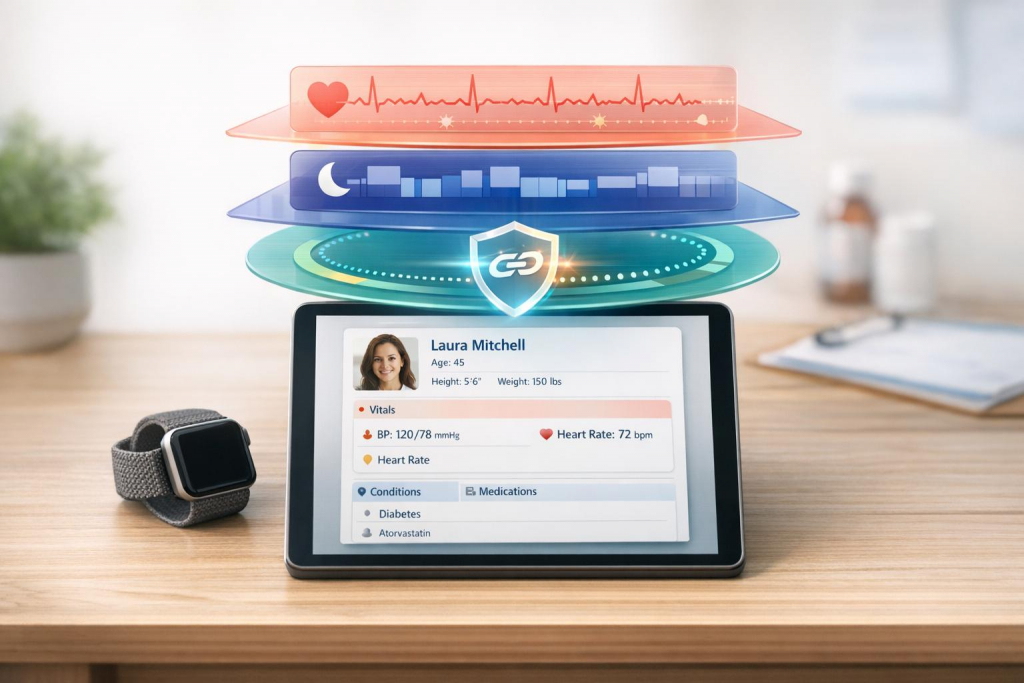
Wearable devices are reshaping how we monitor health by collecting continuous data on metrics like heart rate, sleep, and activity levels. When paired with health profiles, this data offers a clearer view of overall well-being, helping manage chronic conditions and enabling preventive care. These devices use advanced sensors and secure data transfer methods to ensure accuracy and privacy.
Key takeaways:
- Market Growth: Over 1.1 billion wearables were in use globally by 2022, with the market projected to hit $54 billion by 2031.
- Benefits: Continuous monitoring reveals trends missed in clinic visits, aids chronic disease management, and even detects illnesses early.
- Data Integration: Wearables use advanced frameworks like HL7 FHIR to standardize data, making it compatible with healthcare systems.
- AI Analysis: AI identifies patterns, personalizes insights, and reduces unnecessary alerts.
- Security: Data is encrypted and protected through compliance with HIPAA regulations, ensuring user trust.
From Apple Watch to Epic: How Wearable Data Maps to FHIR Observations
sbb-itb-44aa802
How Wearables Collect and Transfer Health Data
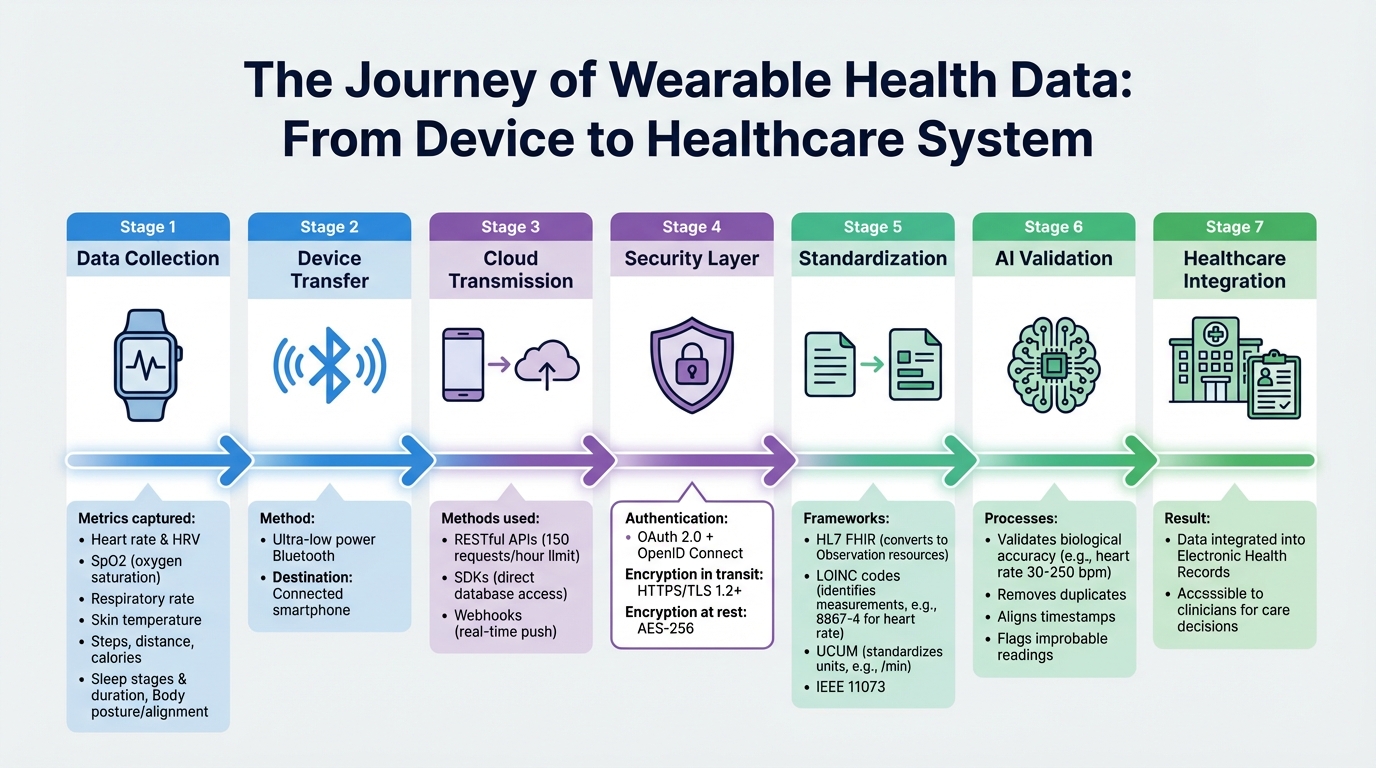
How Wearable Health Data Flows from Device to Healthcare System
Wearable devices rely on advanced sensors to gather real-time health information and send it securely to digital health platforms. These sensors are designed to capture key metrics like heart rhythm and body posture, which are then transmitted through secure wireless connections. Once collected, this data becomes an essential part of a broader health profile. Each sensor is tailored to monitor specific health parameters, ensuring a detailed and accurate record.
Health Metrics Measured by Wearable Devices
Today’s wearables can track a variety of health indicators thanks to specialized sensors and smart algorithms. For example, devices like smart rings use AI to monitor vital signs such as heart rate, oxygen saturation (SpO2), respiratory rate, and even skin temperature. Posture-focused wearables, on the other hand, track body alignment to detect any changes. Physical activity is another area of focus – these devices count steps, measure distance, log activity duration, and calculate calories burned, offering a complete view of your daily movement.
Sleep tracking is another standout feature. Wearables analyze heart rate variability (HRV) and movement to assess sleep stages and duration. Additionally, HRV data can help estimate stress levels, giving insights into how your body handles daily challenges.
Methods for Data Transfer and Integration
Once the data is collected, it’s transmitted through sophisticated digital channels. Wearables typically use ultra-low power Bluetooth to send data to a connected smartphone. From there, the smartphone relays the information to health platforms using various technical methods. RESTful APIs are commonly employed, allowing health apps to retrieve data via standard HTTP requests. For instance, some platforms may limit API usage to 150 requests per hour per user.
Additionally, Software Development Kits (SDKs) provided by mobile operating systems allow apps to pull data directly from a device’s local health database. For more immediate updates, webhooks are often used. Instead of waiting for a manual request, the wearable’s cloud server pushes data to the health platform as soon as it syncs.
Security is a priority throughout the process. Frameworks like OAuth 2.0 and OpenID Connect (OIDC) ensure secure user authentication and allow third-party apps to access data without sharing passwords. OAuth 2.0 uses "scopes" to define what data an app can access, ensuring only necessary information is shared. Data in transit is safeguarded with HTTPS/TLS 1.2+ encryption, while data stored on servers is protected using AES-256 encryption. Once received, the data is often standardized using protocols like HL7 FHIR and IEEE 11073, enabling compatibility across different healthcare systems.
This robust infrastructure ensures your health data moves seamlessly from your wearable device to your health profile, all while prioritizing security and integrity.
Converting Wearable Data into Useful Health Information
Wearable devices churn out numbers like "72, 68, 75, 71", but without context, these readings are just noise. To make them useful for health decisions, two key steps are essential: first, standardizing the data so healthcare systems can interpret it, and second, using AI to identify patterns that matter. Let’s break this process down.
Standardizing Data for Healthcare Systems
For wearable data to integrate with medical records, it needs to be translated into a format healthcare providers can understand. That’s where HL7 FHIR (Fast Healthcare Interoperability Resources) comes into play. This framework converts raw device measurements into standardized "Observation" resources that work seamlessly with Electronic Health Record (EHR) systems.
Two coding systems play a critical role here:
- LOINC: This identifies what’s being measured. For example, heart rate is always labeled with the code 8867-4, whether it’s from an Apple Watch or a hospital-grade monitor.
- UCUM: This ensures consistent units. Heart rate, for instance, is always recorded as beats per minute (/min), avoiding variations like "bpm" or "beats/m."
Integration platforms act as translators, gathering data from various wearable brands and converting it into FHIR-compliant formats that hospitals can accept.
Before wearable data lands in your medical record, AI systems step in to validate it. They check for biological accuracy – flagging improbable readings like a heart rate of 300 beats per minute as likely errors caused by motion. Typically, heart rates are considered valid within a range of 30–250 bpm. The system also removes duplicate entries and aligns timestamps to ensure the data makes sense.
In 2025, researchers Somayeh Abedian and Eugene Yesakov demonstrated this process with a Garmin Vívoactive 4 smartwatch. They used tools like the Fitrockr hub and Kodjin FHIR server to map metrics such as heart rate, steps, and stress levels into FHIR Observation resources. The project even included a participant-controlled portal, allowing users to approve each data transfer.
Once standardized, the data is ready for AI to work its magic, uncovering health trends tailored to the individual.
Using AI to Generate Personalized Health Recommendations
With standardized data in hand, AI takes over to refine it into meaningful health insights. This technology acts as a filter, smoothing out random fluctuations in readings and focusing on trends that matter. Instead of comparing your data to population averages, AI establishes your personal baseline and flags significant deviations.
The Mayo Clinic demonstrated this approach in 2025 using Apple Watch ECG data. Their AI system analyzes these recordings to detect asymptomatic left-ventricular dysfunction, a condition that might otherwise go unnoticed. Patients can securely send their data to the clinic’s EHR via an app, where clinicians review trends rather than raw data, making it easier to catch potential issues early.
Google Research took this a step further with its Personal Health Insights Agent (PHIA), also introduced in 2025. PHIA uses code generation to answer complex health questions. For example, it can analyze your data to answer, "Do I sleep better after exercising?" Instead of relying on pre-programmed logic, it writes Python code to evaluate the data. Tested on 650 hours of expert-reviewed data, PHIA achieved 84% accuracy with numerical health questions and received 83% approval from experts for its sleep and exercise recommendations.
This tailored approach also helps reduce notification overload. Instead of bombarding users with generic alerts, AI compares current signals to your unique historical data. Alerts only trigger when something truly changes, providing actionable advice like, "Your resting heart rate is 12% higher than your 30-day average; consider checking in with your doctor." This shift from raw numbers to meaningful insights makes it easier to take action without feeling overwhelmed.
Security and Compliance Requirements for Data Integration
When wearable data is introduced into healthcare systems, it transitions into Protected Health Information (PHI) and must adhere to HIPAA regulations. Complying with these rules isn’t just about avoiding penalties – it’s about establishing systems that patients can trust.
Meeting HIPAA Requirements
HIPAA’s security framework is divided into three categories: administrative, physical, and technical safeguards. On the administrative side, organizations must conduct risk analyses to identify vulnerabilities and implement strategies to manage them. A designated Security Official oversees these measures, and all related documentation must be retained for at least six years.
Physical safeguards focus on controlling access to servers and workstations that store wearable data. This includes ensuring that any device containing ePHI is properly wiped before being reused or discarded. Technical safeguards, on the other hand, enforce unique user identification, automatic logoff after inactivity, and encryption for data both at rest and in transit. Every interaction with wearable data is logged in an audit trail.
One often-overlooked rule involves third-party vendors. If a company like a cloud service provider or an AI analytics firm handles ePHI on your behalf, they are classified as Business Associates and must sign a Business Associate Agreement (BAA). Even vendors that store encrypted data without access to decryption keys fall under this category. As the Department of Health and Human Services (HHS) states, "Lacking an encryption key does not exempt a CSP from business associate status and obligations under the HIPAA Rules".
User behavior also plays a role in security risks. A study revealed that 97% of people accept privacy policies – meant to take 30 minutes to read – in just 51 seconds. Additionally, an evaluation of 17 wearable manufacturers showed that 76% received ‘High Risk’ ratings for transparency reporting and 65% for vulnerability disclosure.
These foundational safeguards are further strengthened by advanced security techniques, which help counter modern threats.
Advanced Security Measures for Patient Data Protection
Beyond HIPAA compliance, wearable data integrations employ multiple layers of defense to safeguard sensitive health information. Multi-factor authentication (MFA) adds an extra layer of security, requiring a secondary verification step, like a fingerprint or PIN, before granting access. Secure API gateways manage authentication, throttle traffic, and use TLS 1.2+ and AES-256 encryption to protect data during transmission and while stored. Credentials and API keys are stored in managed vaults with automated rotation to enhance security. A hybrid control-plane architecture keeps health data on local networks while managing orchestration via the cloud, addressing concerns about data sovereignty.
Fine-grained Identity and Access Management (IAM) ensures that users – whether clinicians, researchers, or billing specialists – can only access data relevant to their roles. For example, a cardiologist might need heart rate data but shouldn’t have access to sleep metrics or step counts. This least-privilege access approach minimizes exposure if credentials are compromised.
At the device level, secure boot processes and digitally signed firmware updates protect against unauthorized modifications. Integrity controls use checksums to detect tampering during data transmission. Organizations should also adopt data minimization, collecting only the metrics necessary for clinical purposes, to reduce potential vulnerabilities.
To monitor and respond to threats, immutable audit logs are essential. These logs capture details like caller identity, accessed endpoints, timestamps, and response codes, creating a permanent, unalterable record. Regular credential rotation, performed every quarter, ensures ongoing security in the face of evolving threats.
| HIPAA Safeguard | Advanced Implementation for Wearables |
|---|---|
| Access Control | OAuth 2.0 tokens with role-based scopes (e.g., clinician, billing) |
| Transmission Security | Enforced HTTPS/TLS 1.2+ with disabled weak cipher suites |
| Encryption at Rest | AES-256 keys managed in secure, external vault |
| Audit Controls | Immutable logging of caller ID, endpoint, timestamp, and response |
| Integrity Controls | Checksums applied to JSON payloads to detect tampering |
| Device Security | Secure boot processes and digitally signed firmware updates |
AIH LLC: AI-Powered Wearable Health Solutions
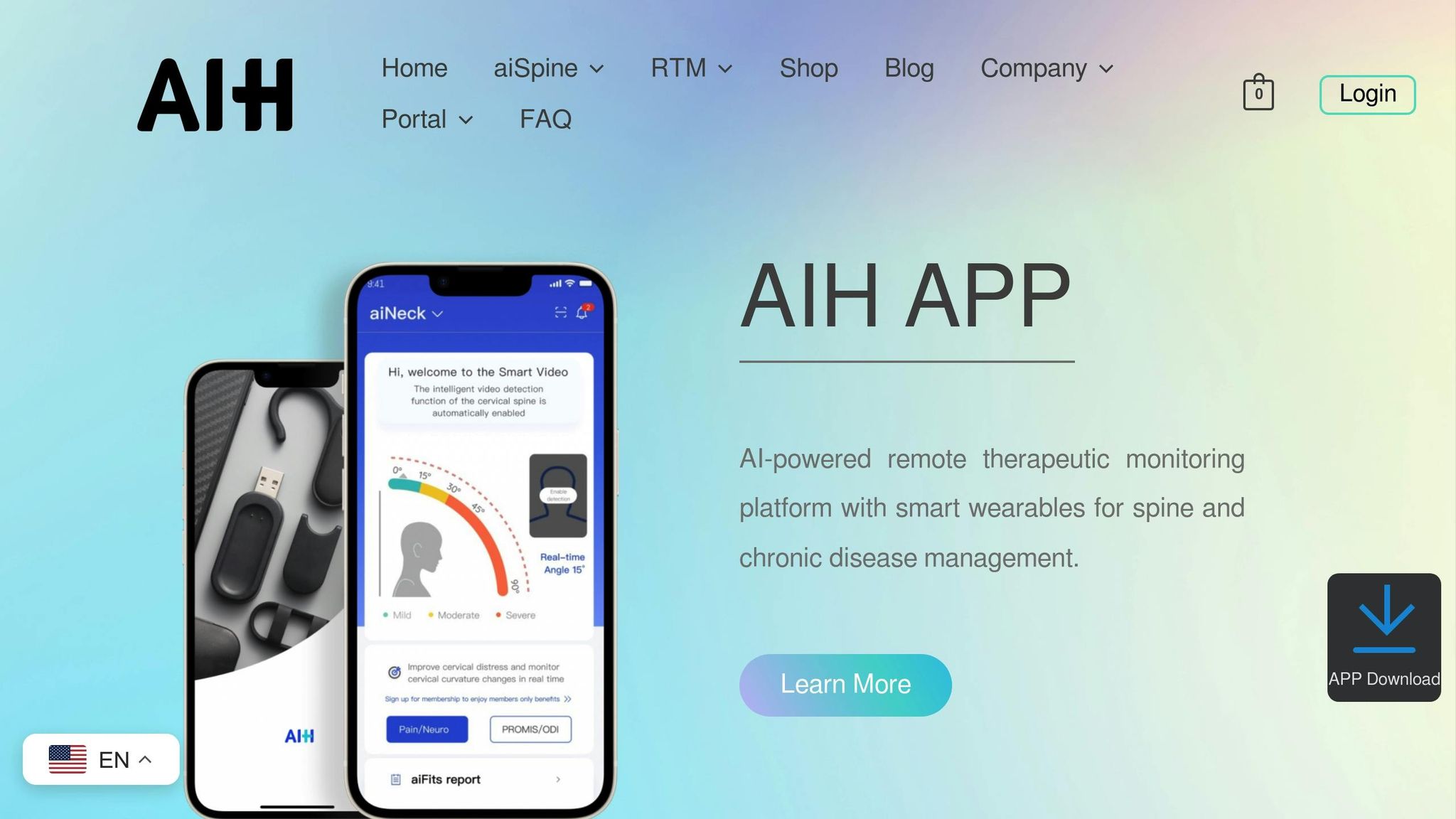
AIH LLC offers a cutting-edge platform that combines AI-driven wearable devices with a unified health app, focusing on spine health and chronic disease management.
aiSpine and aiRing: Smart Monitoring Devices
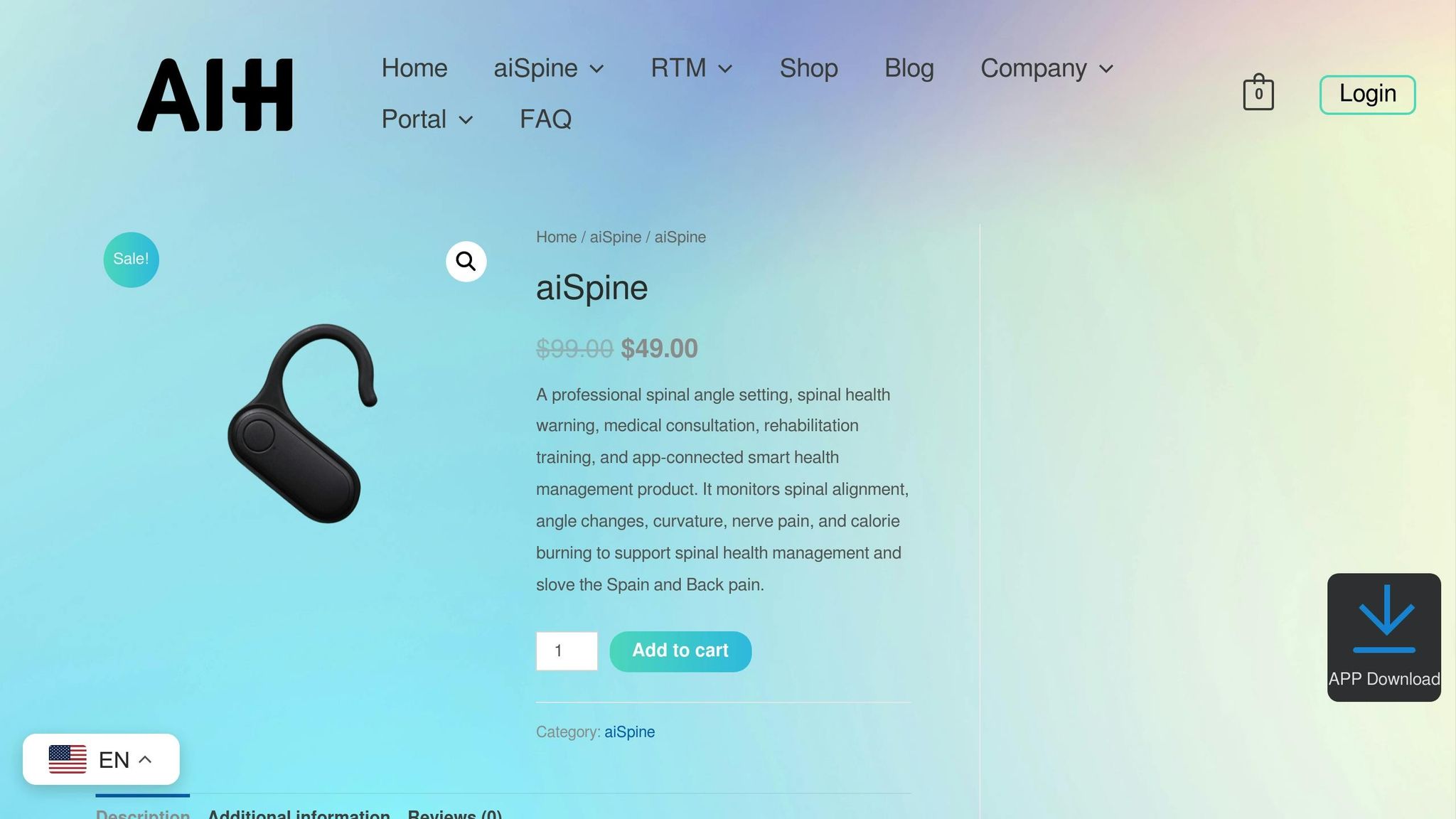
aiSpine is designed to track cervical and lumbar posture using a 9-axis IMU sensor. It monitors angular deviations, activity levels, and even calorie burn. The device can be worn in different ways and provides vibration alerts to encourage timely posture corrections. With Bluetooth 4.0 connectivity and a battery life of up to seven days on standby, it seamlessly syncs data with the AIH Health App.
aiRing, a finger-worn device, tracks vital signs through embedded sensors. Its features include ultra-low power Bluetooth, a waterproof build, and intuitive touch controls. It also supports connectivity with multiple devices. Both aiSpine and aiRing feed their data into the AIH Health App, creating a unified, real-time health monitoring ecosystem.
Real-Time Insights and Personalized Feedback
The AIH Health App brings together data from both devices, offering live metrics on spine health alongside historical trends. Advanced AI algorithms analyze this data to provide tailored feedback, distinguishing between normal fluctuations (like an elevated heart rate during exercise) and potential health concerns.
"Our platform enables medical experts to access advanced diagnostic and treatment technologies, empowering them to apply the most effective therapeutic methods." – AIH LLC
This system goes beyond basic monitoring. It tracks musculoskeletal and respiratory health, therapy adherence, and patient responses to treatments. By doing so, healthcare providers can remotely adjust care plans based on real-time data. With 80% of wearable users open to sharing their health information with clinicians, this approach shifts the focus from reactive care to proactive health management, paving the way for continuous health improvement.
Conclusion: The Future of Integrated Wearable Health Data
The integration of wearable data with health profiles is transforming healthcare by enabling early detection of potential issues before they escalate into emergencies. With 96% of U.S. hospitals now utilizing Electronic Health Record (EHR) technology, the foundation exists to bring this vision to life. However, the key challenge lies in unifying fragmented data sources into a system that clinicians can effectively use. This infrastructure sets the stage for advanced AI systems to convert raw data into actionable, proactive care strategies.
"The integration of Artificial Intelligence, Electronic Health Records (EHRs), and wearable technologies holds substantial potential for transforming healthcare from a reactive, disease-focused model to a proactive, patient-centered paradigm." – Deepa Fernandes Prabhu, Center for Decision Support Systems and Informatics
AIH LLC is already demonstrating how this shift can work in practice through its cutting-edge wearable devices, such as the aiSpine and aiRing. These devices gather data, use AI to differentiate between normal variations and genuine health concerns, and deliver actionable insights via the AIH Health App. With healthcare data skyrocketing from 153 exabytes in 2013 to 2,314 exabytes in 2020, the sheer volume can overwhelm providers. Intelligent processing ensures this data becomes a tool for better care rather than an unmanageable burden. By seamlessly integrating wearable data into personalized health profiles, AIH LLC exemplifies the move toward a more engaged and proactive healthcare model.
The concept of participatory care is gaining traction. Studies reveal that 98% of patients are open to sharing their wearable health data with researchers, and 68.57% believe AI-powered devices could reduce the need for frequent office visits. AIH LLC’s Remote Therapeutic Monitoring platform takes advantage of this willingness by giving healthcare providers real-time insights into spine health, vital signs, and therapy adherence. This allows care plans to be adjusted instantly based on up-to-date patient data.
As standards like FHIR enhance interoperability and AI-powered analytics grow more advanced, integrated wearable systems will shift healthcare from reactive treatments to predictive, preventative care. This evolution aligns with the broader trend toward patient-centered healthcare, where individuals are empowered to maintain healthier lifestyles with continuous, personalized support. AIH LLC’s technology embodies this future, offering a system where health profiles evolve alongside the individual, giving care teams the tools they need to keep patients healthy instead of merely treating illness.
FAQs
How can I connect my wearable data to my EHR?
Connecting wearable data to an Electronic Health Record (EHR) involves using standards like HL7 FHIR to enable secure, real-time data sharing. Here’s how it works:
- Set up FHIR-compatible APIs: These APIs act as the bridge between wearable devices and the EHR system, ensuring data can flow smoothly.
- Use middleware to normalize data: Middleware ensures that data from various wearables is standardized, making it compatible with the EHR.
- Implement OAuth for secure authentication: This step protects sensitive health data by managing access securely.
- Ensure HIPAA compliance: Following HIPAA guidelines safeguards patient information throughout the integration process.
By following these steps, wearable data can be seamlessly incorporated into EHRs, enhancing patient monitoring and enabling better care coordination.
How does AI decide what’s “normal” for me?
AI figures out what’s “normal” for you by analyzing data from wearable devices. It looks at metrics like your heart rate, activity levels, and sleep patterns, then compares them to your own historical data to create personalized benchmarks. Over time, it tracks changes and spots deviations from your usual patterns. This way, it delivers health insights and alerts tailored specifically to you, rather than relying on standard averages that might not fit everyone.
Who can see my wearable health data?
Your wearable health data is typically visible only to you and the people you choose to share it with, such as healthcare providers or trusted third parties. This sharing depends on the privacy settings you select and the consent you provide. However, in the U.S., some third parties – like advertisers or researchers – might gain access to this data due to limited regulations and often vague policies. It’s crucial to regularly check and adjust your privacy settings to manage how your data is shared.