
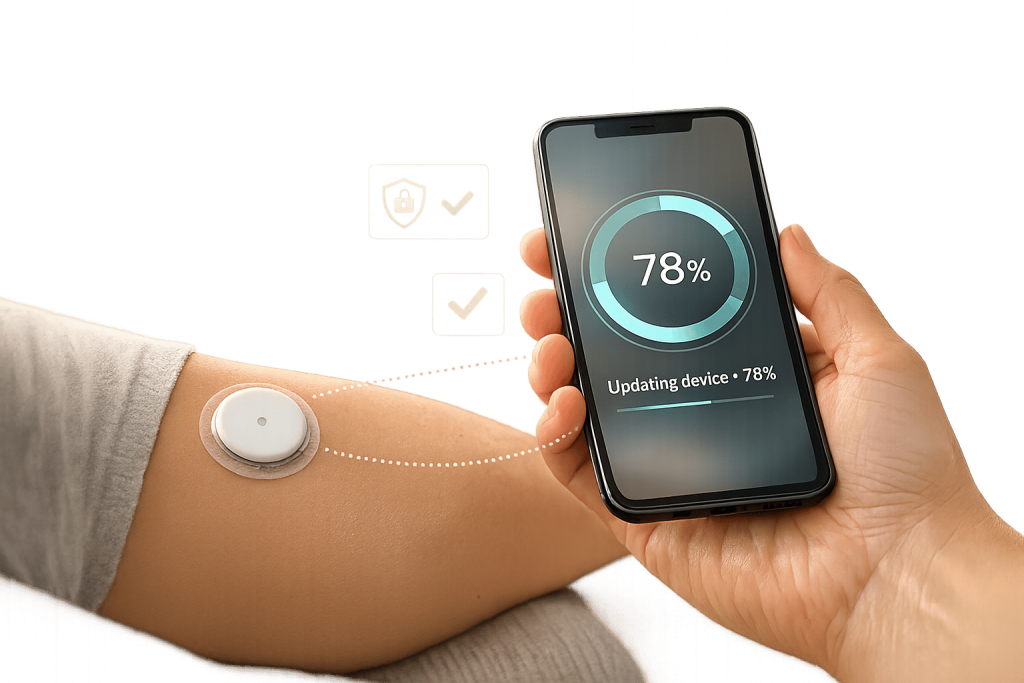
Over-the-air (OTA) updates are reshaping how medical devices handle chronic disease monitoring. These updates allow devices to improve functionality, fix bugs, and enhance security without requiring physical intervention. This is crucial for ensuring accurate and secure health data, especially as the Internet of Medical Things (IoMT) market grows rapidly, projected to hit $814.28 billion by 2032.
Key takeaways:
- Accuracy: OTA updates recalibrate sensors and refine algorithms to maintain precise readings over time.
- Security: With 53% of medical devices having known vulnerabilities, OTA updates deliver timely patches to protect sensitive health data.
- Compliance: Regulatory standards like FDA 510(k) and HIPAA now demand devices remain updateable to meet evolving safety requirements.
- New Features: Devices can gain advanced functionalities, like ECG monitoring, through OTA updates without hardware replacement.
Companies like AIH LLC leverage OTA technology in devices like the aiSpine and aiRing to ensure reliability, security, and user convenience. These updates help medical devices stay effective and relevant as healthcare needs evolve.
OTA Updates Explained: Secure Remote Firmware Management for IoT Devices
sbb-itb-44aa802
Problems with Static Firmware in Chronic Disease Monitoring Devices
Static firmware essentially traps devices in their original state, which can undermine their reliability over time – especially for chronic disease monitoring. Let’s dive into how this impacts sensor accuracy, security, and clinical relevance.
How Sensor Accuracy Declines Without Updates
Over time, sensors lose their accuracy if their firmware isn’t updated. For example, the algorithms that convert raw data – like the light readings from a pulse oximeter – into metrics such as SpO2 or heart rate variability (HRV) can drift. Without updates, there’s no way to recalibrate or improve these measurements.
Static firmware also locks devices into older methods of sensor fusion, even when better techniques become available. As Alexandra Reed, Senior Editor at MyBody.Cloud, puts it:
"Updates are not just cosmetic – they’re data events that change how your body is measured and interpreted."
This means that if a wearable device starts giving results that don’t match medical-grade equipment, it can’t receive the necessary updates to realign its accuracy. This issue isn’t just about calibration; it’s also about staying secure.
Security Risks in Devices with Fixed Firmware
Devices with fixed firmware are stuck with the security protocols they shipped with, leaving them vulnerable to new threats. Cybersecurity risks evolve constantly, and without updates, these devices remain exposed. In healthcare, this isn’t just about stolen data – it can have life-altering consequences.
Take recent examples: In January 2025, the FDA issued safety alerts for the Contec CMS8000 and Epsimed MN-120 patient monitors due to vulnerabilities that allowed unauthorized remote access and data leaks. Around the same time, Frederick Health experienced a ransomware attack that compromised 934,000 patient records. These incidents highlight the risks of devices that lack the ability to receive timely patches.
Older devices often don’t include safeguards like code signing or secure boot mechanisms, leaving entire networks at risk. Manual patching, which is slow and inconsistent, only adds to the problem. In some cases, certain devices in a network get updated while others don’t, creating weak links that hackers can exploit.
Falling Behind on AI Models and Clinical Standards
Medical knowledge and clinical standards don’t stand still. For example, thresholds for conditions like heart failure decompensation or COPD exacerbations are regularly updated as new research emerges. Devices with static firmware, however, continue to rely on outdated clinical logic.
The same problem applies to on-device AI. Many monitoring devices now use machine learning models to filter noise and improve data reliability. But these models can suffer from data drift, where their accuracy diminishes as real-world conditions deviate from the data they were originally trained on. Without over-the-air (OTA) updates, these models can’t be retrained or replaced. This is a critical issue, considering that early adopters of AI-enabled monitoring have seen hospitalizations drop by 10% to 25%. Such improvements depend entirely on keeping AI models up to date.
The regulatory landscape is also changing. The FDA now requires lifecycle oversight for medical devices, making static firmware not just a technical challenge but a compliance issue as well.
How OTA Updates Address These Problems
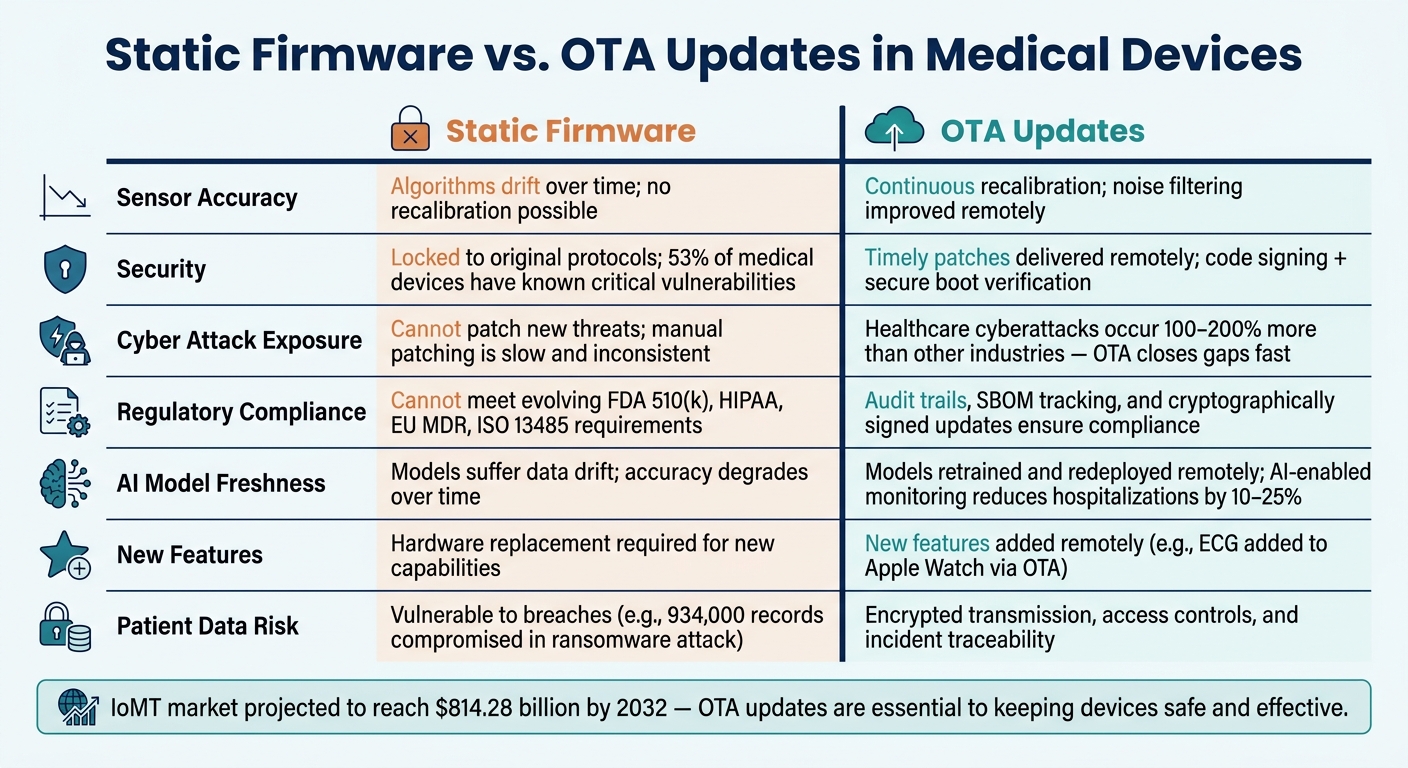
Static Firmware vs. OTA Updates: Key Differences for Medical Devices
OTA updates tackle the challenges of static firmware – like security vulnerabilities and outdated analytics – by delivering fixes and improvements remotely. This approach directly addresses issues such as sensor accuracy, security, and compliance concerns. It keeps devices up-to-date, enhances functionality, and strengthens protection against cyber threats.
Better Accuracy Through Ongoing Calibration
With OTA updates, sensors can be recalibrated and analytical models refreshed. This process improves noise filtering and helps detect early signs of chronic conditions, ensuring more reliable monitoring for patients dealing with long-term health issues.
Stronger Security and Regulatory Compliance
OTA updates bolster security by implementing code signing and public key encryption to verify firmware authenticity. If a verification fails, secure boot mechanisms automatically restore the device to its last reliable firmware version.
This is especially important in healthcare, where cyberattacks occur 100% to 200% more frequently than in other industries. Alarmingly, about 53% of medical devices have known critical vulnerabilities. Regulatory requirements, such as FDA 524B and the EU Cyber Resilience Act, now demand updateability and traceability. OTA systems meet these demands by creating audit trails and maintaining a comprehensive Software Bill of Materials (SBOM) for every firmware version.
| Regulation | Key OTA Requirement |
|---|---|
| US FDA 510(k) | Cryptographically signed updates with full documentation |
| HIPAA | Access control, audit mechanisms, and transmission security |
| EU NIS2 Directive | Cyber risk management and incident reporting |
| EU MDR | Post-market surveillance and audit logging |
| ISO 13485 | Medical device manufacturing and security standards |
These security measures not only protect devices but also pave the way for future software upgrades.
Adding New Features Without Replacing Hardware
OTA updates allow devices to gain new features and diagnostic tools without needing hardware upgrades. A great example of this is Apple’s introduction of the ECG app to the Apple Watch through an OTA update after the device had already been released.
"Medical devices are viewed like high-end consumer devices. Doctors just want them to work like an iPad. They don’t care about how the software update works; they just want the device to update correctly."
– Medical Doctor, Smart Medical Device OEM
This kind of seamless improvement over time is exactly what a well-designed OTA system delivers. It ensures devices remain functional, secure, and up-to-date without requiring physical intervention.
How AIH LLC Uses OTA Updates in Its Devices
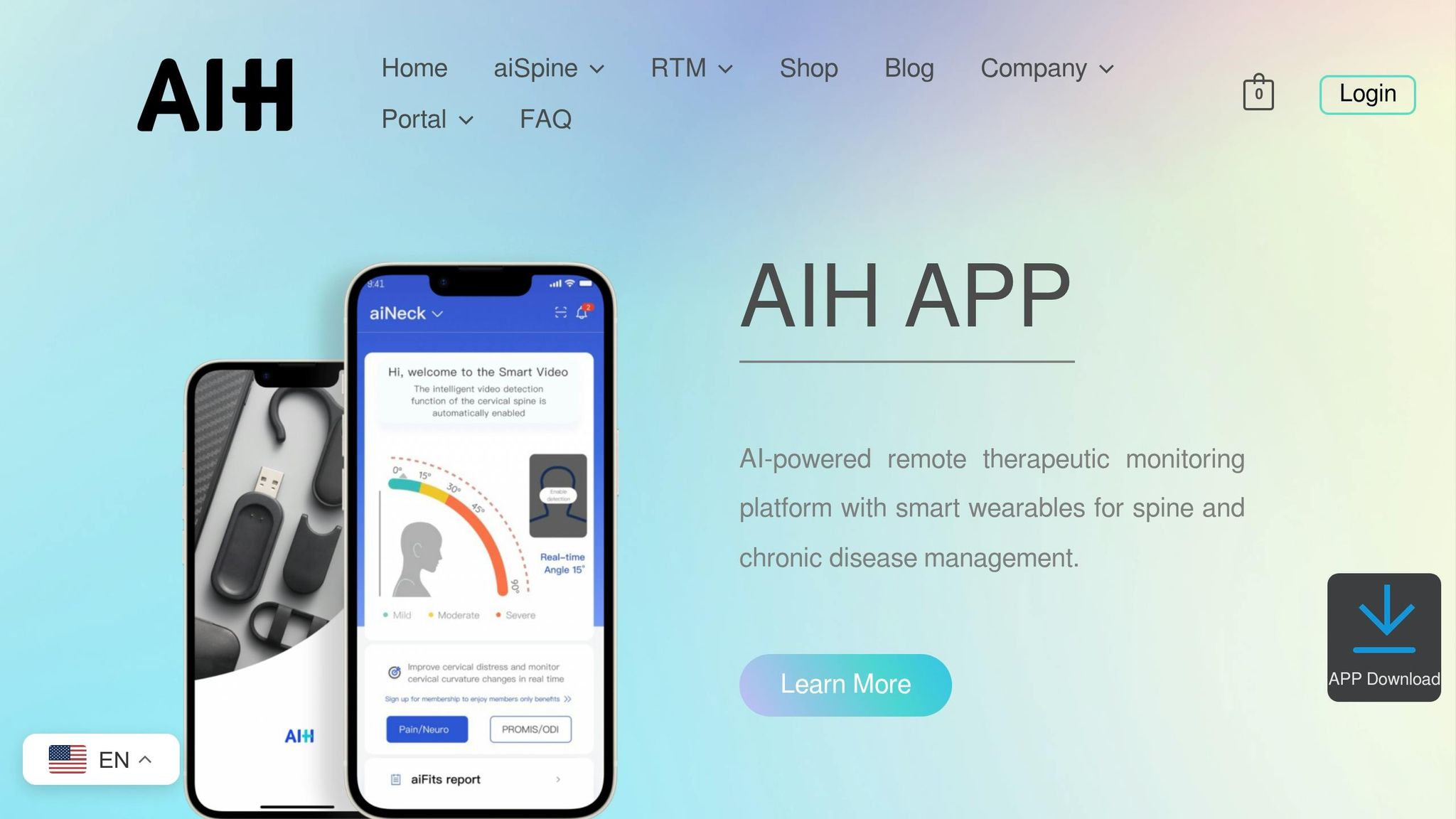
AIH LLC incorporates Over-the-Air (OTA) updates into its devices to deliver improvements without requiring users to visit a clinic. This approach ensures that devices like the aiSpine, aiRing, and AIH Health App are always equipped with the latest features and performance upgrades.
OTA Updates for aiSpine Posture Monitoring

The aiSpine is designed to monitor spinal alignment and posture habits over time. Through OTA updates, enhanced AI models are deployed to improve the detection of posture deviations. This approach addresses issues like sensor drift and outdated clinical logic that can occur with static firmware.
The aiSpine uses an A/B partition system, which allows it to revert to the previous firmware version automatically if an update fails. Additionally, it employs delta updates, which only transmit modified segments of the code. This makes the process more efficient, especially for users with slower internet connections.
OTA Updates for aiRing Vital Signs Monitoring
The aiRing monitors essential metrics, including heart rate and blood oxygen levels. OTA updates help refine algorithms and fix bugs, ensuring more accurate measurements. This is particularly important for resolving data drift issues that can affect static firmware.
The device is designed to pause updates during active measurements and will only install updates when the battery level is sufficient. These measures ensure that data collection remains reliable and uninterrupted. Automatic updates also provide users with the latest security enhancements and performance upgrades.
AIH Health App and Cloud Integration
The AIH Health App acts as the hub connecting users, their devices, and the cloud. It downloads firmware updates from AIH LLC’s cloud platform and transfers them to devices like the aiSpine and aiRing via Bluetooth. A device shadow system tracks firmware versions and pending updates for each unit, ensuring smooth and synchronized updates across all devices.
This seamless integration enhances the accuracy and security of AIH LLC’s device ecosystem.
"OTA updates are a convenient way to keep your device up-to-date with the latest features, improvements, and performance optimizations." – CONNEQT Health
Conclusion: Why OTA Updates Are Key to Long-Term Health Monitoring
The future of chronic disease monitoring hinges on the ability to adapt, and that’s where OTA updates come in. Managing chronic conditions demands constant vigilance, and relying on static firmware just doesn’t cut it. Devices need to evolve alongside the needs of patients and clinicians.
The stakes are high. Firmware that isn’t updated becomes a weak spot, exposing devices to new cybersecurity threats. OTA updates address these risks by delivering timely patches, improving functionality, and keeping devices reliable – all without the need for expensive hardware upgrades.
These updates do more than just protect; they also unlock new capabilities. A great example is Apple adding ECG functionality to existing Apple Watch models through an OTA update. This shows how a device you already own can gain advanced features over time. The same concept applies to wearable devices used for chronic disease monitoring, ensuring they remain relevant and effective in the long run.
FAQs
How often should medical wearables get OTA updates?
Medical wearables need regular over-the-air (OTA) updates to stay secure, reliable, and compliant. Although there’s no universal update schedule, frequent updates are crucial for tackling emerging vulnerabilities and improving device performance. These updates are especially important for devices used in chronic disease monitoring, as they help ensure accurate readings and smooth functionality.
Can an OTA update make my device less accurate or stop working?
While it’s uncommon, an OTA update might occasionally affect a device’s accuracy or functionality if it includes bugs or software conflicts. That said, most updates are built with strong safeguards to ensure they’re reliable and minimize the risk of problems. Keeping your device updated is crucial for maintaining both performance and security.
Will OTA updates interrupt monitoring or drain the battery?
Over-the-air (OTA) updates aim to keep disruptions to a minimum. By taking a few precautions – like making sure your device is fully charged and connected to a stable network – you can typically avoid interruptions to monitoring or major battery drain. That said, you might notice a slight, temporary increase in power usage while the update is being installed. These simple steps help maintain dependable performance without compromising battery life.