
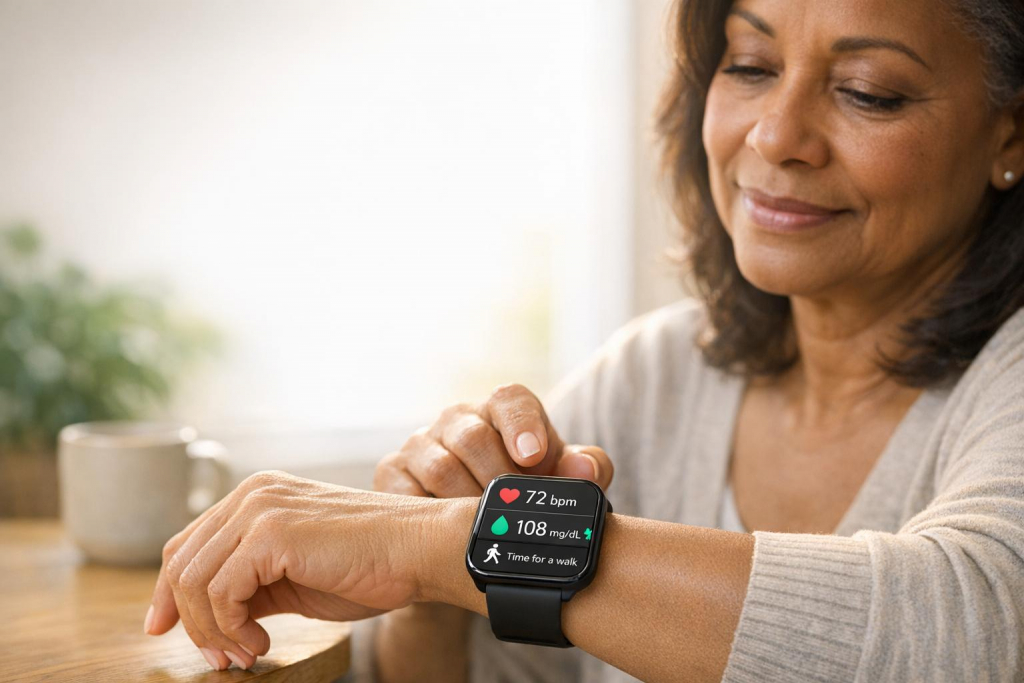
AI-powered wearables are transforming chronic disease care, offering continuous health monitoring, early detection, and personalized recommendations. These devices have shown measurable improvements in patient outcomes, such as reducing hospitalizations by 25% and boosting treatment adherence by 30%. Key advancements include:
- Real-time monitoring: AI algorithms analyze data like heart rate, blood pressure, and glucose levels to detect irregularities instantly.
- Personalized feedback: Machine learning tailors health insights and lifestyle recommendations to individual users.
- Risk prediction: AI forecasts potential health crises, enabling timely interventions.
- Integration with healthcare: Wearables connect with electronic health records (EHRs), allowing providers to monitor patients remotely and adjust treatments as needed.
With AI wearables, healthcare is shifting from reactive to proactive, empowering patients to manage their health while reducing costs and improving care quality.
Medicine Without Walls: Wearables, AI, and the Future of Chronic (Inflammatory) Disease Monitoring
sbb-itb-44aa802
How AI Improves Wearable Devices for Chronic Disease Management
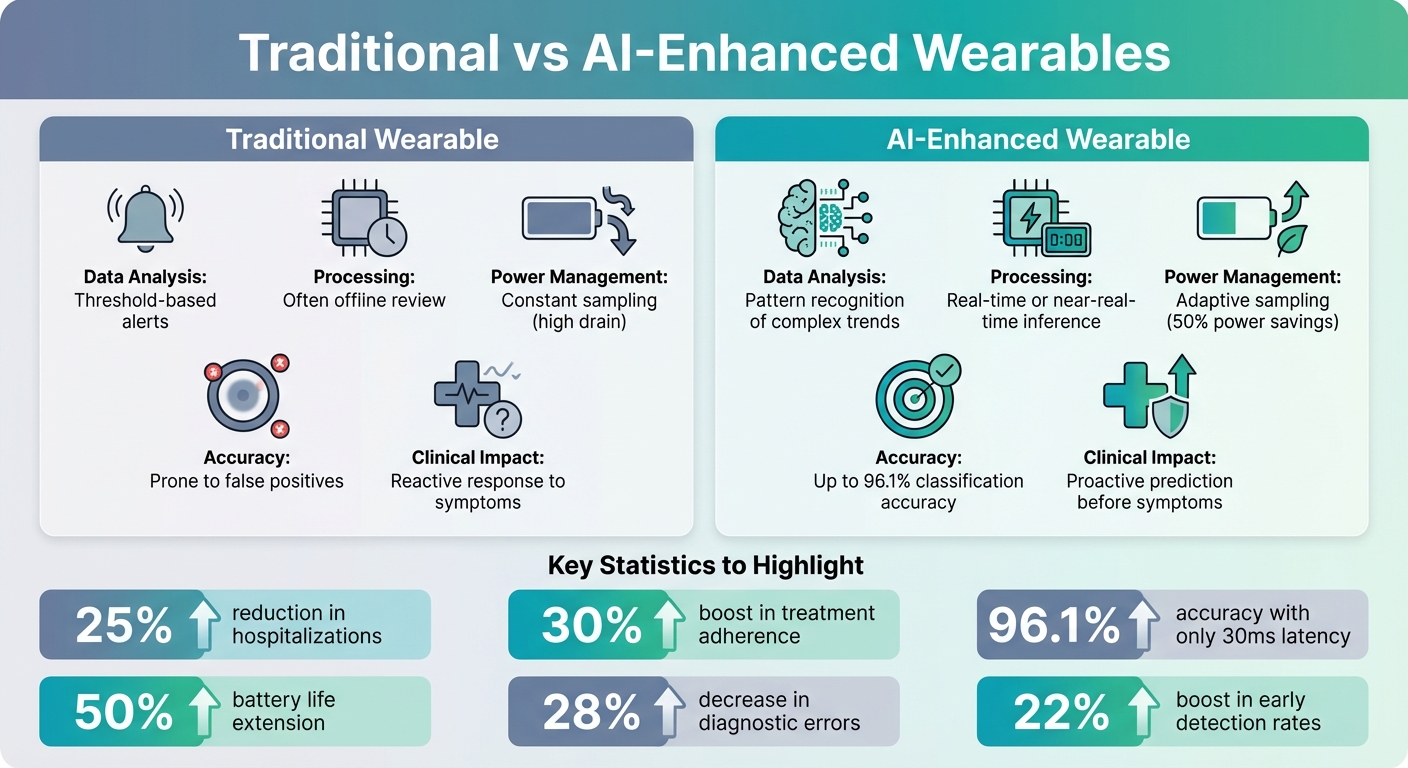
Traditional vs AI-Enhanced Wearables: Key Differences in Chronic Disease Management
AI has turned wearable devices into more than just data trackers – they’re now intelligent health companions. These advanced devices continuously analyze data like ECG readings, blood pressure, and heart rate, identifying even the smallest changes in health.
The technology powering these wearables is impressive. Many devices now use edge computing combined with lightweight deep learning models, delivering up to 96.1% accuracy with only 30 ms latency. On top of that, reinforcement learning-based adaptive sampling can extend battery life by as much as 50% – a game-changer for users needing constant monitoring.
Real-Time Data Monitoring and Analysis
Continuous monitoring offers a complete picture of a user’s health. AI algorithms not only filter out sensor noise but also combine data from multiple sources – like heart rate, movement, and blood oxygen levels – for a more thorough understanding. This "multimodal sensor fusion" detects patterns that single-sensor systems often miss.
These improvements are measurable. For example, AI-driven algorithms can estimate blood pressure from ECG data with a mean error as low as 0.89 mm Hg. This level of precision has led to a 28% decrease in diagnostic errors and a 22% boost in early detection rates for chronic disease patients.
"Detection and prediction of cardiovascular conditions are essential for timely intervention and improved patient outcomes."
- Ali Abedi, PhD, KITE Research Institute
AI’s speed is another key advantage. When a wearable detects an irregular heartbeat or a sudden spike in blood pressure, its AI system can instantly analyze the data. By comparing it to baseline patterns and risk indicators, the device enables timely interventions during critical moments.
But AI doesn’t stop at real-time monitoring; it also customizes health insights for individual users.
Personalized Health Insights and Feedback
AI takes personalized care to a new level by analyzing how users respond to medications, meals, exercise, and sleep. Machine learning algorithms identify unique health patterns and provide tailored recommendations. For instance, a 2021 study by Chiang et al. used smartwatches to gather ECG, sleep, and activity data. The system then suggested lifestyle adjustments, leading to reductions in systolic blood pressure by 3.8 mm Hg and diastolic pressure by 2.3 mm Hg.
AI also plays a role in fine-tuning treatments. In 2020, LeMoyne et al. developed a wearable system for Parkinson’s disease management. Using a multilayer neural network, the system adjusted deep brain stimulation currents – ranging from 1.0 mA to 4.0 mA – based on the user’s tremor response. This approach achieved 95% classification accuracy for its interventions.
Beyond physical adjustments, conversational AI and coaching systems provide behavioral support. These tools use "nudge" techniques to improve medication adherence and encourage lifestyle changes, making health management more accessible and effective.
AI’s ability to predict future health risks adds another layer of care.
Early Alerts and Risk Prediction
One of AI’s most transformative capabilities is its predictive analytics. Instead of just identifying current issues, AI systems can forecast potential health events by analyzing ongoing data patterns. For example, machine learning models have predicted intraoperative hypotension up to 15 minutes in advance with an AUC of 0.95. Similarly, gradient-boosted models used in hospital wards have anticipated stage-2 acute kidney injury 24 minutes before clinical criteria were met.
For diabetes patients, AI has shown promise in predicting hypoglycemia. By combining data from mobile devices and Continuous Glucose Monitors, Random Forest algorithms have achieved an accuracy of 0.814, with a sensitivity of 0.815 and a specificity of 0.824 for next-day hypoglycemia predictions. Such early warnings allow users to take preventive measures, like adjusting insulin doses.
"Real-time detection and prediction of cardiovascular events… is particularly essential because it provides actionable insights during critical windows when interventions can have the greatest impact."
- Ali Abedi et al., JMIR mHealth and uHealth
Wearables equipped with AI can distinguish between detecting current conditions and predicting future risks. When a risk is identified, these devices can immediately alert both the user and their healthcare provider. This reduces the time it takes to act – often referred to as the "signal-to-action" window. For example, a 2022 study by Coughlin et al. found that patients using AI-enabled blood pressure monitors adhered to their medication schedules 25% more consistently, resulting in a 30% drop in hypertension-related complications.
| Feature | Traditional Wearable | AI-Enhanced Wearable |
|---|---|---|
| Data Analysis | Threshold-based alerts | Pattern recognition of complex trends |
| Processing | Often offline review | Real-time or near-real-time inference |
| Power Management | Constant sampling (high drain) | Adaptive sampling (50% power savings) |
| Accuracy | Prone to false positives | Up to 96.1% classification accuracy |
| Clinical Impact | Reactive response to symptoms | Proactive prediction before symptoms |
Companies like AIH LLC are at the forefront of these advancements. By integrating edge computing, adaptive sampling, and predictive analytics, they’re transforming wearable devices into indispensable tools for managing chronic diseases. These innovations are redefining what’s possible in personalized and proactive healthcare.
AI Applications for Specific Chronic Conditions
AI-powered wearables are making waves in healthcare by offering tailored monitoring and interventions for various chronic conditions.
Diabetes Management
Managing diabetes has taken a leap forward with AI-integrated wearables and continuous glucose monitors (CGMs). These devices provide real-time glucose tracking, enabling users to make immediate adjustments to insulin, diet, or exercise. Advanced machine learning models, like LSTM and GRU, analyze this data to predict glucose fluctuations, helping to avoid dangerous episodes of hypoglycemia and hyperglycemia.
A standout example comes from Physicians East in North Carolina, where the d-Nav AI insulin titration program was tested with 600 patients with Type 2 Diabetes between October 2022 and September 2023. The results? A drop in mean HbA1c levels from 8.6% to 7.3%, along with an improvement in Time in Range from 47.7% to 65.4% for patients using CGMs.
"AI-powered systems can analyze vast amounts of data, identify patterns, and make predictions, enabling them to support clinical decision-making, predict outcomes, and personalize treatment approaches."
- Raphael A Fraser, Division of Population Health, Jacobs School of Medicine and Biomedical Sciences
Other studies underscore AI’s potential in diabetes care. For instance, research using the FreeStyle Libre system showed how AI-driven time series analysis could tailor dietary recommendations for better glycemic control. At Duke University, another study employed the Empatica E4 wearable device to classify carbohydrate meal content by analyzing post-meal heart rate responses from nine participants over nine days.
This combination of approaches has improved glucose estimation accuracy, with a Root Mean Square Error (RMSE) of 12.81, compared to 14.28 when using CGM data alone. With diabetes affecting over 800 million people globally – a number projected to hit 1.3 billion by 2050 – AI tools are becoming indispensable for early intervention and customized care.
AI’s role isn’t limited to metabolic health; it’s also reshaping cardiovascular monitoring.
Cardiovascular Health Monitoring
AI-enabled wearables are transforming heart health by shifting care from reactive to proactive, offering continuous monitoring outside clinical settings. Cardiovascular diseases remain the leading cause of death worldwide, claiming approximately 18 million lives annually.
These wearables use advanced sensors, such as Photoplethysmography (PPG), Electrocardiogram (ECG), Seismocardiogram (SCG), and Ballistocardiogram (BCG), to track vital signs like heart rate and blood pressure. Deep learning models then analyze these signals to detect early signs of arrhythmias, myocardial ischemia, or heart failure.
Large-scale studies, such as the Apple Heart and Huawei Heart Studies, have demonstrated the accuracy of these devices. They detected atrial fibrillation with positive predictive values of 84% and 91.6%, respectively.
"Identifying risks at an early stage allows for timely intervention, lifestyle modifications, and treatment, which can dramatically reduce the likelihood of severe outcomes."
- Ali Abedi et al., Researchers
AI’s predictive power also extends to preventing hospital readmissions. The LINK-HF Study used a multisensor chest patch (Vital Connect) to monitor 100 heart failure patients. The AI system predicted rehospitalization with 76-88% sensitivity and 85% specificity, giving alerts an average of 6.5 days before readmission.
In addition, real-time heartbeat monitoring using Support Vector Machine algorithms has achieved up to 96% accuracy in categorizing heartbeats into normal, supraventricular, and ventricular ectopic rhythms.
Musculoskeletal and Spine Health
For chronic spine conditions, AI-driven wearables like the aiSpine device from AIH LLC are making a difference. Using strain gauges and IMUs, the device continuously monitors posture and offers corrective feedback.
"The integration of machine learning in these devices enables the real-time monitoring and interpretation of health-related data, leading to actionable insights and personalized recommendations for users’ health management."
- Ali Olyanasab, Institute for Integrated Circuits, Johannes Kepler University Linz
The aiSpine device provides real-time feedback through vibrations when it detects poor posture, helping users develop better habits. It also tracks long-term trends via the AIH Health App, which analyzes historical data to show progress over time. With multiple wearing modes, Bluetooth 4.0 connectivity, and a 7-day standby battery, the device is designed for convenience, whether you’re at work, exercising, or relaxing at home.
Additionally, digital pain coaches complement these wearables by offering personalized exercises and behavioral strategies, further enhancing musculoskeletal health.
Integration with Healthcare Systems and Remote Monitoring
AI-powered wearables are changing the game by connecting home monitoring with clinical care. Instead of relying on occasional clinic visits, healthcare providers now have access to continuous, real-time data streams. This shift allows for a more comprehensive view of a patient’s health, particularly for managing chronic conditions, offering insights that go beyond the limited snapshots captured during office visits.
Data Sharing with Healthcare Providers
To make wearable data useful for healthcare providers, it needs to integrate securely and seamlessly with electronic health records (EHRs). The SMART on FHIR framework (Substitutable Medical Applications, Reusable Technologies on Fast Healthcare Interoperability Resources) has become the go-to standard for enabling secure API-based EHR access across systems.
Platforms like Apple HealthKit and cloud services such as Microsoft Azure Health Data Services and Amazon AWS HealthLake are leading the charge in aggregating wearable data and integrating it into clinical workflows. For example, the AIH Health App facilitates secure data sharing between devices like aiSpine and aiRing and healthcare providers, enabling informed clinical decisions.
The benefits are clear. In September 2025, researchers from the All of Us Research Program showed that combining wearable and EHR data improved the predictive accuracy for major health conditions. Specifically, there was a 12.6% improvement in AUROC for diabetes and a 9.7% boost for hypertension compared to using EHR data alone. This integration fills the gaps left by in-clinic measurements, offering a more holistic view of patient health.
Of course, security is non-negotiable. Under HIPAA § 164.312(e), entities handling electronic protected health information are required to use encryption to safeguard data. Modern wearable platforms ensure data protection through advanced encryption from collection to secure storage. These measures are critical for building trust and enabling effective remote care.
Remote Therapeutic Monitoring
Remote therapeutic monitoring takes healthcare beyond episodic care, offering continuous oversight and enabling timely treatment adjustments. This approach is particularly valuable for conditions that require frequent monitoring and intervention.
One standout example is the SMART-CARE Study, launched in December 2025 at three Italian tertiary centers, including the University of Salerno. The study enrolled 300 adults with chronic heart failure, equipping them with CE-certified devices to monitor metrics like SpO₂, heart rate variability, and respiratory rate. Using Genetic Programming algorithms, the AI platform predicted clinical deterioration, aiming to reduce hospitalizations by 20% over six months.
"The integration of AI into healthcare systems is aiding providers in delivering efficient and patient-centric care to chronic patients from the comfort of their homes."
- Sudeep Bath, Sales & Tech Leader
The financial implications are also striking. Chronic diseases account for roughly 90% of healthcare spending in the United States. AI-powered remote monitoring has shown it can cut hospital readmissions by up to 30%. AIH LLC’s remote monitoring services, which utilize data from aiSpine and aiRing devices, empower clinicians to make proactive treatment adjustments, often preventing minor issues from escalating into emergencies.
| Benefit Category | Impact on Chronic Disease Management |
|---|---|
| Clinical Outcomes | Fewer hospitalizations, earlier detection of complications, better stability in vital signs |
| Patient Experience | Greater independence, fewer clinic visits, real-time health updates |
| Provider Workflow | Streamlined data analysis, prioritized alerts for high-risk cases, remote treatment capabilities |
| Economic Impact | Reduced readmission costs, better use of hospital resources |
Regulatory and Clinical Considerations for AI Wearables
Understanding the regulatory framework is crucial for bringing AI-powered wearables to market in the United States. On January 6, 2026, the FDA issued two key guidance documents – "Clinical Decision Support Software" and "General Wellness: Policy for Low Risk Devices" – to clarify the rules surrounding AI-enabled health tools.
"The industry wants clear guidance, markets want predictability, and investors want predictability and that’s what we are going to give them."
- Martin Makary, FDA Commissioner
These updates reflect a move toward easing regulations for low-risk devices. For example, non-invasive wearables using optical sensors to measure physiological metrics like blood pressure or glucose can now be categorized as "general wellness" products – so long as they steer clear of diagnostic or treatment claims. Notifications can alert users to seek professional advice if their readings fall outside normal ranges, but these devices cannot identify diseases, label outputs as "pathological", or provide clinical thresholds. This evolving framework balances accessibility with safety, while setting clear expectations for FDA approval processes and clinical validation.
FDA Approval and Compliance
The FDA uses a risk-based classification system to determine whether a product qualifies as a "medical device." Under Section 520(o) of the FD&C Act, certain software functions are excluded if they do not analyze medical images, interpret medical data, or directly support healthcare provider recommendations.
For AI-enabled Clinical Decision Support (CDS), transparency is key. The software must allow healthcare providers to independently review the logic behind its recommendations. "Black-box" models that lack this transparency face stricter oversight. According to the 2026 guidance, AI software can now provide a single recommendation, as long as it is the only clinically appropriate option and its logic is reviewable by a clinician.
In July 2025, the FDA issued a Warning Letter to WHOOP, Inc. regarding its "Blood Pressure Insights" feature. This incident influenced the January 2026 guidance, which now includes examples of wrist-worn devices reporting blood pressure for wellness purposes.
AIH LLC helps manufacturers navigate these complex pathways by offering consultation services for FDA certification applications. For products like aiSpine and aiRing, which provide real-time health tracking and personalized feedback, aligning with regulatory requirements is critical for market success.
| Requirement Category | General Wellness (Non-Device) | Clinical Decision Support (Non-Device) |
|---|---|---|
| Primary Intent | Promote/maintain healthy lifestyle | Assist healthcare provider recommendations |
| Invasiveness | Non-invasive, not implanted | N/A (Software only) |
| AI Output | Physiological metrics (e.g., BP, glucose) for wellness | Single clinically appropriate recommendation |
| HCP Role | N/A (Consumer-focused) | Must allow independent review of AI logic |
| Regulatory Status | Exempt/Enforcement Discretion | Exempt/Enforcement Discretion |
For AI-enabled devices requiring FDA approval, the agency’s August 2025 guidance permits the use of Predetermined Change Control Plans (PCCP). This allows manufacturers to predefine how AI models can be updated post-market without needing a new application for every change.
While FDA compliance is essential for market entry, robust clinical validation builds trust and credibility for AI-powered wearables.
Clinical Trials and Evidence-Based Outcomes
Clinical validation is a must for wearables making medical claims, such as diagnosing, monitoring, or managing specific diseases or conditions. Even products classified under "general wellness" benefit from rigorous testing to maintain user confidence.
"Calling something ‘wellness’ doesn’t reduce the need for rigorous validation."
- Omer Inan, Medical Device Technology Researcher, Georgia Tech
Digital Health Technologies (DHTs) are increasingly used in clinical trials to collect remote, real-world data directly from participants in their everyday environments. This approach aligns seamlessly with devices like aiSpine and aiRing, which continuously monitor health metrics outside of clinical settings.
To remain in the low-risk category and avoid additional clinical trial requirements, manufacturers must ensure that notifications do not label outputs as abnormal or pathological, nor imply ongoing disease management. For devices targeting chronic disease management, implementing a Predetermined Change Control Plan can simplify the validation process for future software updates and algorithm changes. This strategy supports innovation while ensuring compliance, paving the way for devices like aiSpine and aiRing to enhance health tracking and chronic disease management effectively.
Conclusion
AI-powered wearables are reshaping chronic disease care, enabling patients to shift from passive recipients of care to active managers of their health. These devices continuously track vital signs like heart rate, blood pressure, and glucose levels, allowing for early detection of abnormalities – often before symptoms even appear. The impact is striking: studies show that early diagnosis through AI wearables leads to a 25% drop in hospitalization rates and a 30% boost in treatment adherence and complication prevention. On top of that, AI tools in chronic care have reduced diagnostic errors by 28% and improved early detection rates by 22%.
"AI has the potential to augment clinical responsiveness, enhance the doctor-patient relationship, and help create a more efficient, sustainable, and human-oriented healthcare system." – Carlos Darcy A Bersot, Deka in Medicine
Devices like AIH LLC’s aiSpine and aiRing, paired with the AIH Health App, highlight how wearable solutions can bridge gaps in care. These tools provide personalized feedback and remote monitoring, empowering patients to take charge of their health while giving clinicians the ability to act quickly if data signals a potential issue.
With the global wearable market expected to hit $152.82 billion by 2029, confidence in these technologies is clearly growing. For those managing chronic conditions, AI wearables offer a path to better outcomes, improved quality of life, and more efficient healthcare. As this industry expands, patients are gaining the tools they need to take control of their health like never before.
FAQs
How accurate are AI wearables in real life?
AI wearables are impressively precise when it comes to detecting medical conditions and keeping track of vital signs, especially when powered by advanced techniques like machine learning. That said, their accuracy can depend on factors like the specific use case and the quality of the device itself. These tools are built to deliver dependable, real-time insights, making them incredibly useful for managing chronic illnesses and enabling personalized health tracking.
Will my doctor actually use wearable data from home?
Yes, many doctors now incorporate data from wearable devices into their approach to healthcare. These gadgets offer real-time insights into vital signs and symptoms, enabling doctors to monitor patterns and identify potential problems early on. This is particularly helpful in managing chronic conditions, as it supports more tailored care and quicker responses when issues arise. However, how effectively this data is used often depends on the healthcare system’s technology and the specific devices or platforms your doctor is equipped to work with.
How is my health data protected and shared?
Your health data is protected through cutting-edge technologies like AI, federated learning, blockchain, and encryption. These tools work together to ensure your information stays secure, complies with regulations, and remains accurate. Transparency is prioritized, with ethical practices upheld through continuous research and strict adherence to regulatory standards.