
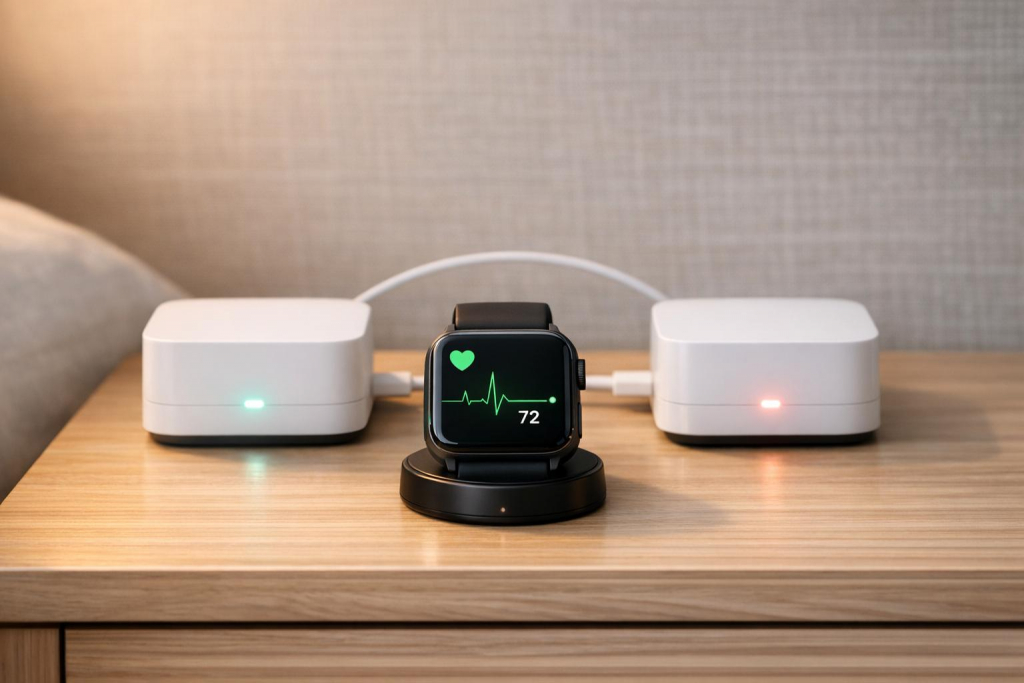
Real-time failover technology is transforming how chronic disease monitoring platforms handle disruptions. Devices like aiSpine (spinal alignment monitoring) and aiRing (vital sign tracking) ensure uninterrupted data flow, even during server failures or network outages. This is critical, as delays in transmitting health data can lead to severe consequences, including emergency hospitalizations.
Key points covered:
- aiSpine minimizes failover latency to under 1 millisecond, ensuring instant alerts for posture issues.
- aiRing maintains reliable vital sign tracking with integrated backup systems and anomaly detection.
- Generic IoT systems often fail during disruptions, with delays in recovery and higher data loss risks, making them less reliable for critical health monitoring.
Quick Comparison:
| Platform | Failover Latency | Data Loss Risk | Recovery Time Objective | Impact on Patient Outcomes |
|---|---|---|---|---|
| aiSpine | <1 millisecond | Low | Rapid | Minimal disruption |
| aiRing | Near-instant | Low | Rapid | Continuous monitoring |
| Generic IoT | Several minutes | High | Delayed | Increased emergency risks |
For patients managing chronic conditions, advanced platforms like aiSpine and aiRing provide reliable, continuous care. In contrast, generic IoT systems often fall short, risking patient safety and increasing operational challenges.
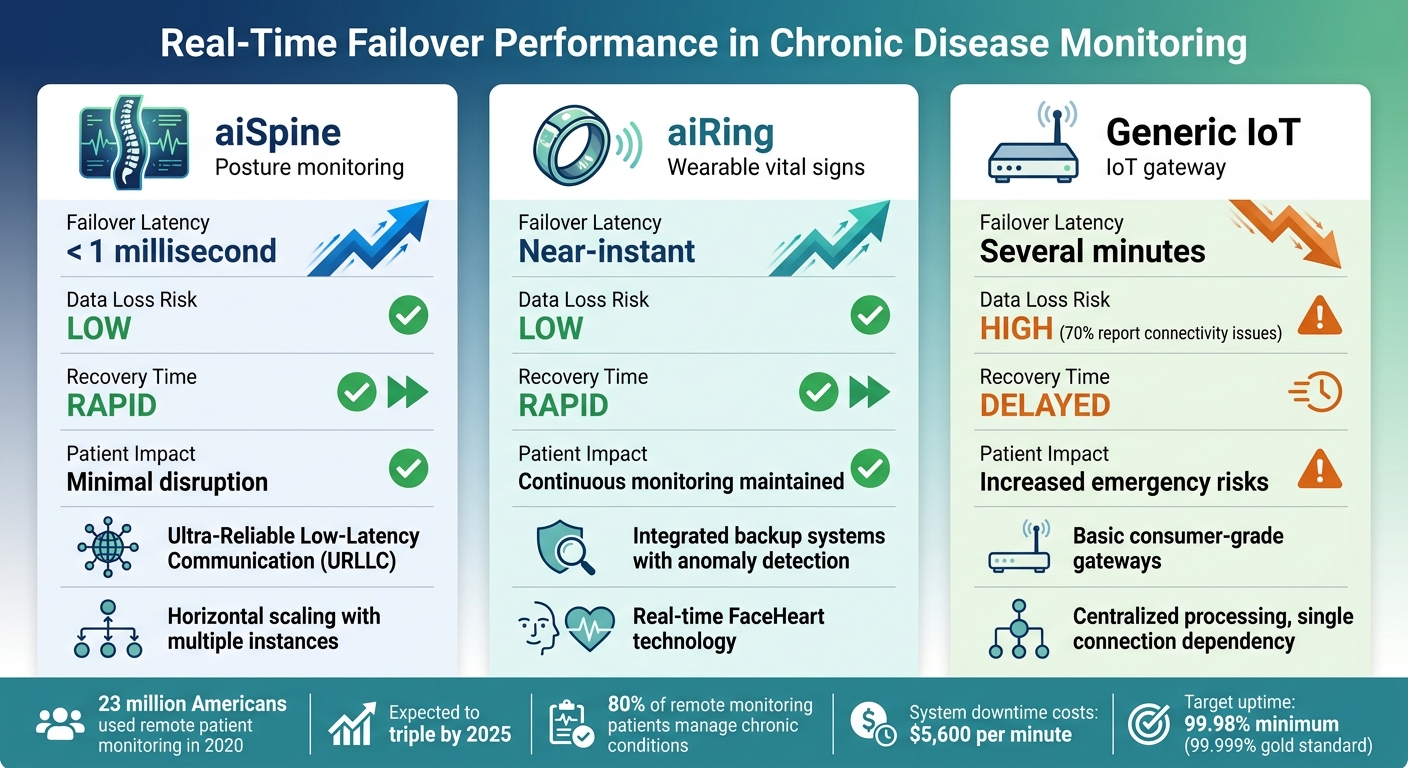
Real-Time Failover Performance Comparison: aiSpine vs aiRing vs Generic IoT Systems
EHR Downtime Resilience: CIOs Discuss Failover Strategy, Documentation Continuity, and Preparedness
sbb-itb-44aa802
1. aiSpine Device

The aiSpine device is built to continuously monitor spinal alignment using real-time data, while also maintaining functionality during failover scenarios. These features are key to its role in platforms designed for managing chronic conditions.
Failover Latency: In typical remote patient monitoring systems, delays range between 100 and 200 milliseconds. By incorporating Ultra-Reliable Low-Latency Communication (URLLC), the aiSpine reduces this delay to under 1 millisecond. This ultra-low latency ensures that features like vibration reminders and alerts are delivered almost instantly, making the device highly dependable for detecting posture issues.
Data Loss Risk: Continuous posture tracking demands minimal data loss. With advanced AI tools, the system identifies unusual patterns early, preventing significant data loss before it becomes a larger issue.
Recovery Time Objective (RTO): The aiSpine system employs horizontal scaling by running multiple application instances on separate hosts. If one container fails, the system’s routers quickly reroute traffic to functioning instances. This setup minimizes downtime and ensures seamless operation, while also supporting cost-efficient recovery.
Cost Efficiency: To keep costs in check, the system relies on immutable containers – read-only environments built from verified images. These containers ensure that after a failover, the system reverts to a stable, pre-configured state. This approach eliminates configuration errors and reduces the need for costly manual fixes.
2. aiRing Device
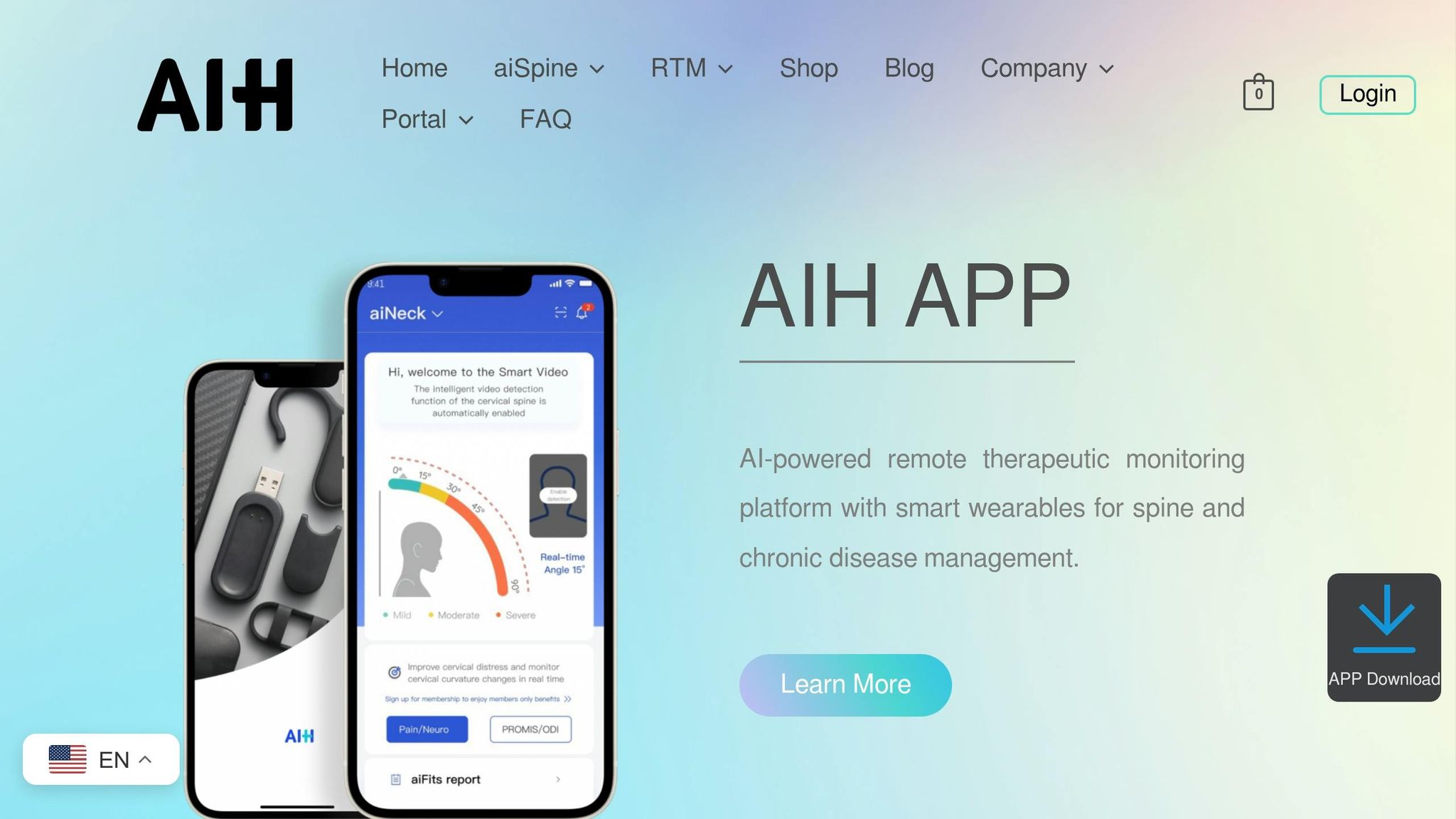
The aiRing device, developed by AIH LLC, is built for continuous tracking of vital signs, ensuring stability even during system disruptions through real-time failover mechanisms.
Failover Latency: Like the aiSpine system, aiRing emphasizes seamless data continuity. Its advanced failover technology keeps vital sign tracking reliable by instantly detecting anomalies or system issues. If a component fails, the system automatically switches to standby operations, ensuring that critical health data remains accessible without interruption.
Data Loss Risk: To safeguard against losing essential health information, the aiRing device includes integrated backup systems. These systems are designed to protect vital sign data during transitions, reducing the chance of missing key health indicators.
Recovery Time Objective (RTO): Using FaceHeart technology, aiRing operates in real time to identify unusual trends in vital signs. The system promptly alerts caregivers, enabling faster clinical responses when needed.
3. Generic IoT Health Systems
Generic IoT health systems, unlike the specialized setups in aiSpine and aiRing, often fall short when it comes to rapid failover capabilities. This is largely because they rely on basic, consumer-grade gateways. These systems lack the ability to handle real-time failover effectively, which can be critical in managing chronic diseases where every second counts. Most consumer-grade gateways, such as ADSL2+ or DOCSIS modems, depend on a single internet connection, and only a small percentage are equipped with fallback options like 3G or 4G.
Failover Latency: When the primary connection fails, these generic gateways can take several minutes to switch to a backup system. This delay is especially concerning in medical emergencies. As IEEE researchers point out:
Emergency alarms generated by medical devices, such as cardiac monitors, require immediate attention and response, and the failure of the internet connection through which these devices report their situation could result in catastrophic damage or loss of life.
Data Loss Risk: Another challenge is that the failover process often changes the gateway’s public IP address, which can disrupt secure medical data transmission. This leads to gaps in critical data during the transition. For instance, 70% of patients using Bluetooth-based remote monitoring devices have reported issues sending their readings to healthcare providers, and 56% have faced consistent connectivity problems.
Recovery Time Objective (RTO): Generic systems typically take several minutes to restore connectivity. However, chronic disease monitoring requires recovery times measured in seconds to ensure patient safety. Even though health monitoring networks generally operate with latencies between 100 ms and 200 ms, any delay can hinder emergency clinical decisions.
Impact on Patient Outcomes: Unreliable connectivity not only risks patient safety but may also violate HIPAA standards and harm patient trust. With over 23 million Americans using remote patient monitoring services in 2020 – a number expected to triple by 2025 – the demand for dependable, real-time failover solutions has never been more pressing.
These limitations highlight the critical need for advanced failover systems in platforms designed for chronic disease monitoring.
Strengths and Weaknesses
Building on the earlier analysis, this section takes a closer look at how different systems handle failover scenarios. When it comes to failover performance, specialized devices like aiSpine and aiRing clearly outshine generic IoT systems. These advanced devices leverage fault-tolerant frameworks that decentralize patient triage, shifting control from central servers to local devices. This setup allows them to detect sensor failures and assess emergencies directly on-site, which significantly reduces their reliance on network connectivity. On the other hand, generic IoT systems often centralize these functions at medical centers, making them more vulnerable during server or network failures.
Here’s a quick comparison of the systems:
| Platform | Failover Latency | Data Loss Risk | Recovery Time Objective | Patient Outcome Impact |
|---|---|---|---|---|
| aiSpine | Near-instant (local triage) | Low (leverages edge intelligence) | Rapid | Minimal disruption in monitoring |
| aiRing | Near-instant (local triage) | Low (local processing) | Rapid | Continuous vital signs tracking |
| Generic IoT | Noticeably delayed | High (70% report issues) | Delayed | Increased risk of missed emergency alerts |
This table highlights the operational strengths and challenges of each platform.
One standout feature of aiSpine and aiRing is their ability to maintain uninterrupted monitoring during network outages. By employing local multi-sensor fusion and RLLT algorithms, they can bypass failed central servers and establish connections directly with distributed hospital servers. This capability is critical, especially for the 80% of remote monitoring patients who manage chronic conditions like diabetes and cardiovascular diseases.
In contrast, generic IoT systems have a major drawback: their heavy reliance on Bluetooth and Wi‑Fi connectivity without robust local processing. As Kajeet points out:
If healthcare providers don’t have reliable data, patient outcomes may suffer due to delayed responses or missed identifiers of a medical issue.
This lack of reliability not only puts patient safety at risk but also erodes trust in the technology.
Connectivity failures in generic systems don’t just disrupt monitoring – they also drive up operational costs. While these systems may seem cheaper at first glance, their frequent failures often lead to costly manual troubleshooting or require direct patient intervention. Advanced platforms like aiSpine and aiRing, with their automated failover mechanisms and decentralized control, help avoid these hidden costs. They ensure consistent monitoring, even when primary connections fail, offering a more dependable solution for both patients and providers.
Conclusion
Our analysis highlights the clear advantages of advanced failover designs in healthcare, especially for remote patient monitoring. Devices like aiSpine and aiRing outperform generic IoT systems due to their edge-based architecture and localized triage algorithms. These features ensure uninterrupted patient monitoring, even during network or server outages – a critical factor for healthcare providers serving 50 million remote monitoring patients.
The Verizon outage on January 14, 2026, which disrupted services for 2 million customers, underscores the importance of robust failover systems. Platforms with multi-carrier redundancy and Wi-Fi fallback that automatically bypass network failures are essential safeguards. Real-world data shows that systems with carrier diversity can maintain seamless operations during such disruptions.
For developers working on chronic disease monitoring platforms, incorporating intelligent health checks to detect "Zombie Connections" and enabling functions that operate independently of central servers are crucial. These measures are not just technical enhancements – they significantly improve reliability. Facilities using AI-driven uptime solutions have reported a 35% drop in IT operational costs and a 10% decrease in adverse incidents tied to IT failures.
Meeting stringent service-level agreements is another key factor. Providers should aim for at least 99.98% uptime, with "five nines" (99.999%) being the gold standard for critical monitoring systems. Regular failover simulations are equally vital to ensure automated protocols are ready when needed. After all, system downtime in healthcare can cost an estimated $5,600 per minute.
In chronic disease management, reliable connectivity fundamentally changes patient care, shifting it from reactive to proactive. Platforms such as aiSpine and aiRing, with their decentralized control and fault-tolerant frameworks, set the standard for dependable monitoring. While generic IoT systems may seem less expensive upfront, their connectivity flaws and lack of local processing often lead to hidden costs and safety risks that outweigh any initial savings. For patients managing chronic conditions, choosing the right failover strategy is about more than technology – it’s about ensuring continuous, life-saving care.
FAQs
Why does real-time failover matter for chronic disease monitoring?
Real-time failover plays a crucial role in monitoring chronic diseases. It ensures that data keeps flowing and systems remain available, even when network disruptions occur. This constant reliability allows for timely alerts and interventions, which can help prevent serious health complications.
How can a monitoring device keep working during a network outage?
Monitoring devices can keep working even during a network outage by relying on multi-carrier cellular redundancy. This technology automatically switches the device to another available network, ensuring data keeps flowing without interruption. For example, during the 2026 Verizon outage, devices equipped with multiple cellular carriers avoided disruptions entirely and continued functioning without any hiccups.
What failover uptime and recovery targets should healthcare teams require?
Healthcare teams should set their sights on achieving 99.999% uptime (five nines) for failover systems and aim for recovery times of 6 minutes or less. Meeting these standards ensures critical systems remain accessible without interruptions, minimizing risks to patient safety and keeping healthcare operations running smoothly.