
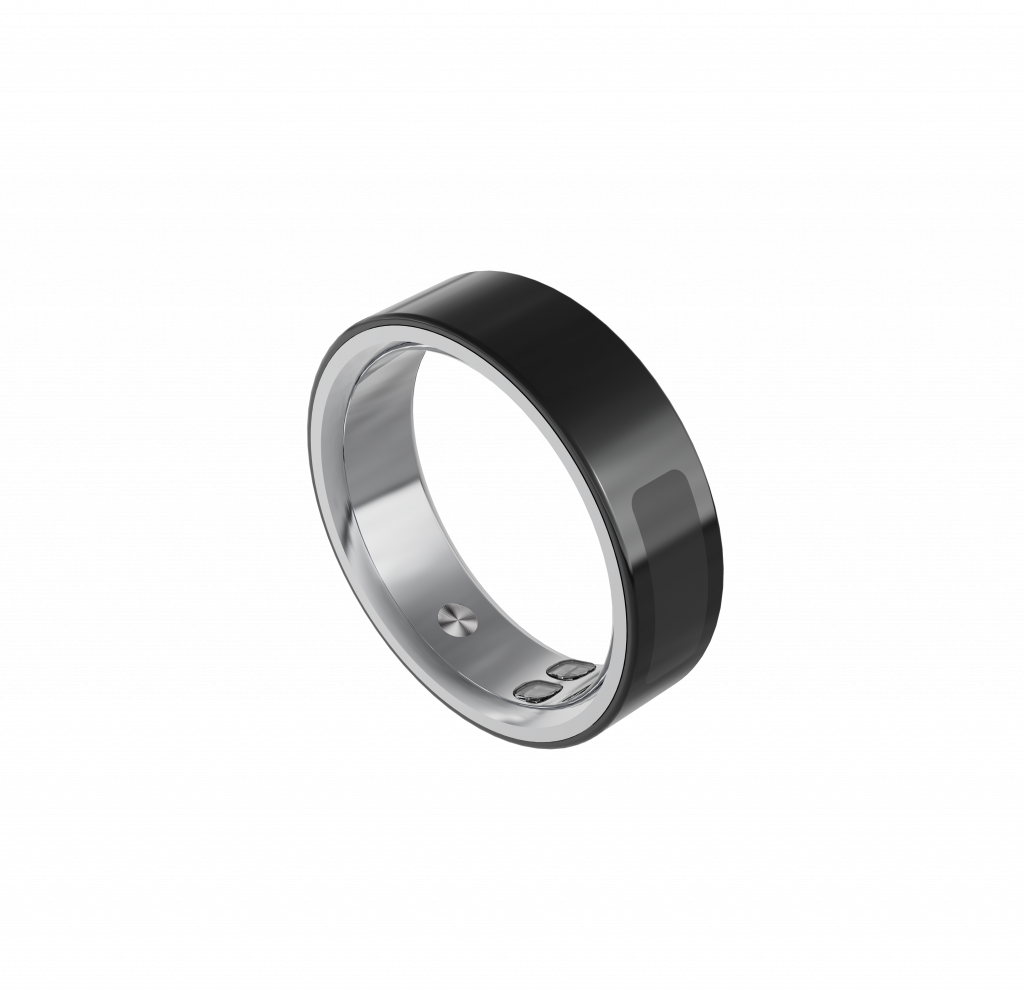
What Offline Data Storage Means for a Smart Ring
Offline data storage, in the context of a smart ring, refers to the idea that a wearable can collect and hold supported sensor data during periods when it is not actively connected to its paired phone or companion app. Instead of depending on a live connection for every reading, a ring-style device may continue gathering information locally and make it available later. This is a general concept in wearable design rather than a specific performance promise, and it is the lens readers should use when evaluating any product claim about working without a phone.
For aiRing Ultra specifically, the supplied product information does not state a storage capacity or a retention duration. That means you should not assume that the ring holds a particular number of hours or days of data, or that it stores an unlimited history. The manual confirms the sensors and the communication method, but it does not document how much offline data the ring can buffer or how long that data remains available before it is transferred. Treating offline storage as a capability category, rather than a measured specification, keeps expectations aligned with what is actually documented.
Confirmed aiRing Ultra Specifications Relevant to Data Handling
The manufacturer manual provides a defined set of specifications that are relevant to how aiRing Ultra collects and communicates data. These are the details that can be stated with confidence, and they are collected here so that numeric values are not scattered or overstated elsewhere. Battery life is a stated range rather than a guarantee, and actual results can vary with use. The manual also identifies the product as non-medical equipment, and its data and information are intended for reference only.
| Specification | Confirmed detail |
|---|---|
| Material | Stainless steel |
| Communication | Bluetooth LE 5.0 |
| Listed sensors | Temperature, acceleration, heart-rate, blood-oxygen, ECG, BIA |
| Stated battery life | 4-6 days (can vary; not a guarantee) |
| Charging | Magnetic charging; charging time no more than 1.5 hours |
| Water resistance | 5ATM rating |
| Operating temperature | -20 C to 50 C |
| Storage temperature | -30 C to 70 C |
| Charging temperature | 0 C to 40 C |
| Product classification | Non-medical equipment per the manual; data and information for reference only |
How aiRing Ultra Connects to aiCare
The confirmed connection workflow is straightforward. According to the manual, you activate the ring on a powered charging dock, then pair aiRing with aiCare through Bluetooth. Once paired, aiCare receives, organizes, and presents supported connected health data from compatible AIHNET devices. This is the documented path for getting ring data into the app, and it is the only pairing procedure described in the supplied materials.
It is important to separate what is confirmed from what is not. The manual does not claim automatic or background synchronization, does not list exact operating system versions, does not state universal phone compatibility, and does not describe reconnection behavior or security properties. If you need those details for your specific phone or use case, the product documentation or AIHNET support are the appropriate places to confirm them rather than assuming they are covered by the pairing workflow.
Confirmed pairing workflow
- Activate on the charging dock Place the ring on a powered charging dock to activate it, as described in the manual.
- Pair through Bluetooth Pair aiRing with aiCare using Bluetooth. The manual describes this as the connection method.
- View supported data in aiCare aiCare receives, organizes, and presents supported connected health data from compatible AIHNET devices.
What Happens to Data When Your Phone Is Not Nearby
At a conceptual level, a ring-style wearable can continue collecting supported sensor data while it is disconnected from the phone, and that data can be transferred when a connection is re-established. This is how offline handling is generally understood in wearable design, and it is the principle readers most often have in mind when they search for smart ring offline data storage. It describes a category of behavior, not a measured outcome for any particular device.
For aiRing Ultra, the supplied manual does not document offline buffering capacity, retention duration, or automatic background upload. In practical terms, that means you should not assume a specific number of readings will be held, that data will remain available for a set period, or that it will move to the app without any user action. The confirmed facts are the sensors, the Bluetooth LE 5.0 communication method, and the pairing workflow. Everything beyond that is an open question that the current documentation does not resolve.
Everyday Scenarios Where Offline Handling Matters
Offline handling becomes relevant in ordinary moments rather than dramatic ones. Charging your phone across the room, leaving it in another part of the house, or traveling without a stable connection are all situations where a wearable's local collection may be useful. In each case, the value is conceptual: the ring may continue gathering supported sensor data while the phone is not actively connected, and that data can be reviewed once a connection is available again.
This framing is deliberately educational. It does not promise that aiRing Ultra will capture every reading in every situation, and it does not interpret any measurement. The manual's specifications, such as the 5ATM rating and the stated temperature ranges, describe environmental tolerances rather than data-capture guarantees. Readers who want to understand how the ring fits into a daily routine can start with the confirmed pairing workflow and the supported sensor list, then confirm any remaining questions with AIHNET support.
aiRing Ultra vs. aiRing Lite: What Differs
The confirmed difference between the two variants is specific: aiRing Ultra includes SOS alert and Smart Touch, while aiRing Lite does not include these features. That distinction matters when comparing feature sets, and it should not be extended into assumptions about sensor arrays or specifications. The full aiRing Ultra specification set described in this article should not be applied to aiRing Lite.
Both variants share a wearable-monitoring product direction that is associated with Chinese utility model ZL 2021 2 1329885.1. This association does not establish current legal status, regulatory clearance, clinical efficacy, safety, or accuracy. It is a product-direction reference, not a performance or compliance claim, and it should be read alongside the separate confirmed product facts rather than as a substitute for them.
What the Manual Does Not Confirm About Offline Storage
A clear limitations section helps readers avoid assuming capabilities that are not documented. The supplied manual does not confirm offline storage capacity, retention duration, automatic or background synchronization, exact operating system compatibility, universal phone support, encryption or security certification, or SOS routing, recipients, and emergency-response behavior. Each of these is a distinct question, and none of them is answered by the confirmed pairing workflow or the sensor list.
The manual also states that the product is non-medical equipment and that its data and information are for reference only. That statement is about the product's intended use and should not be read as a medical-device classification, a regulatory determination, or a clinical claim in either direction. Readers who need details beyond what is documented here should consult the product documentation or contact AIHNET support for the most current information.
Frequently Asked Questions
Does aiRing Ultra store data when it is not connected to a phone?
At a conceptual level, ring-style wearables may continue collecting supported sensor data while disconnected. However, the supplied manual does not document offline storage capacity, retention duration, or automatic background upload for aiRing Ultra, so you should not assume that every reading is captured in every situation. The confirmed facts are the sensor list, the Bluetooth LE 5.0 communication method, and the pairing workflow.
How does aiRing Ultra send data to the aiCare app?
The confirmed workflow is to activate the ring on a powered charging dock, then pair aiRing with aiCare through Bluetooth. Once paired, aiCare receives, organizes, and presents supported connected health data. The manual does not claim automatic or background synchronization, exact OS versions, universal phone compatibility, reconnection behavior, or security properties.
What Bluetooth version does aiRing Ultra use?
The manual states Bluetooth LE 5.0 communication. No additional Bluetooth profile detail is provided, and compatibility with specific phones or operating systems is not established by the supplied information.
How long does the aiRing Ultra battery last?
The manual states a battery life of 4-6 days. Actual battery life can vary and is not a guarantee. This is the stated range from the manual and should not be treated as a performance specification beyond that.
Is aiRing Ultra a medical device?
The supplied product information does not establish medical-device classification. The manual identifies the product as non-medical equipment and states that its data and information are for reference only. That statement is about intended use and does not by itself determine regulatory classification in any direction.
What is the difference between aiRing Ultra and aiRing Lite?
The confirmed difference is that aiRing Ultra includes SOS alert and Smart Touch, while aiRing Lite does not include these features. Both variants share a wearable-monitoring product direction associated with Chinese utility model ZL 2021 2 1329885.1, and that association does not establish current legal status, regulatory clearance, clinical efficacy, safety, or accuracy. The full aiRing Ultra sensor and specification set should not be applied to aiRing Lite.