
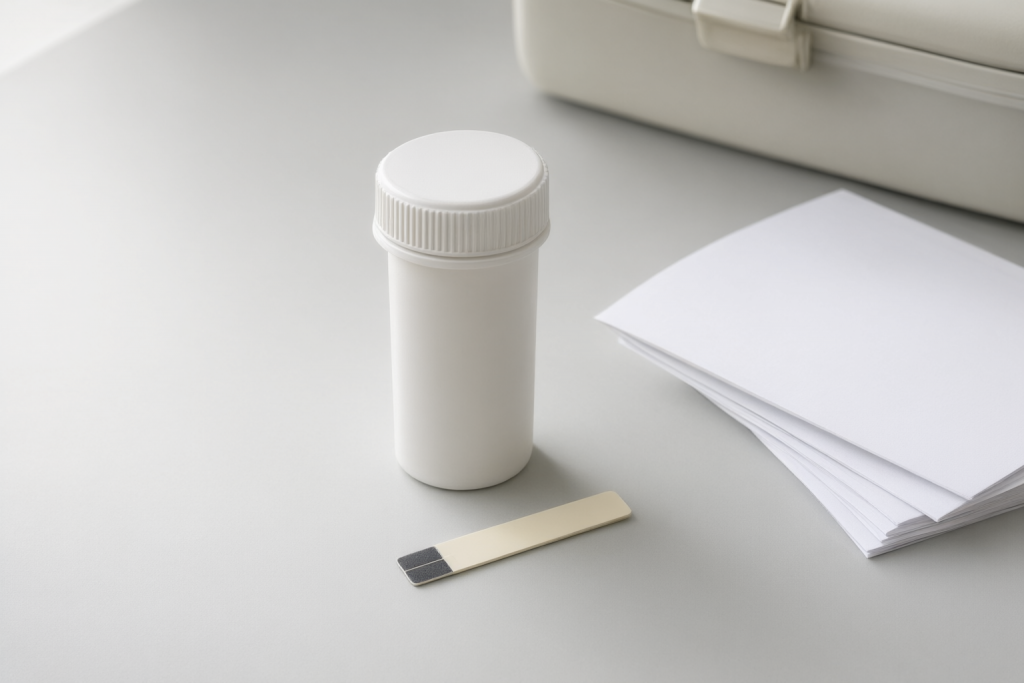
Why Test Strip Storage and Handling Matter for Accurate Readings
Blood glucose test strips are sensitive to moisture, heat, and contamination. Following the manufacturer's storage and handling instructions helps support reliable readings. Keep strips in their original container and use them as directed. If you are unsure about any step, check the instructions that came with your strips or contact the manufacturer.
How to Store Blood Glucose Test Strips: General Best Practices
General best practices for storing blood glucose test strips at home include keeping strips in the original vial with the cap tightly closed, storing them at room temperature, and avoiding extreme heat, cold, humidity, and direct sunlight. Specific temperature ranges vary by product, so confirm the exact storage conditions in the instructions that came with your strips.
Everyday Storage Steps
- Keep the original vial Store strips in the vial they came in and close the cap tightly after each use.
- Choose a stable spot Keep strips at room temperature, away from extreme heat, cold, and humidity.
- Avoid direct sunlight Do not leave strips in direct sun or in a hot car.
- Check your instructions Confirm the specific temperature range and any other storage details in the instructions that came with your strips.
Understanding Test Strip Expiration Dates and Lot Numbers
Test strip vials typically show an expiration date and a lot number. The expiration date indicates the last date the strips should be used, and the lot number helps identify the batch. Check the expiration date before each use and discard expired strips. Do not use strips past their expiration date. Specific shelf-life durations vary by product, so refer to the instructions that came with your strips for exact details.
Handling Test Strips: What to Do and What to Avoid
Good handling habits help keep test strips in good condition. Wash and dry your hands before touching strips, avoid touching the test area or electrodes, remove only one strip at a time and close the vial immediately, and do not use strips that appear damaged or discolored. Handling instructions can vary by product, so follow the instructions provided with your strips.
What Confirmed Product Documentation Supports for Your Test Strips
Product-specific specifications and capabilities require the applicable confirmed product documentation, which is not available for this topic. Until that documentation is confirmed, refer to the instructions included with your test strips and your meter for storage, expiration, and handling details. Do not rely on general guidance for product-specific requirements.
Common Questions About Test Strip Storage and Expiration
People often ask whether test strips can be stored in the refrigerator, what to do if they missed the expiration date, and whether strips from a damaged vial can be used. In general, follow the storage and handling guidance above and check the manufacturer's instructions for product-specific answers. Do not use strips that are expired or appear damaged. For questions about your results, consult your healthcare provider.
Frequently Asked Questions
How should I store my blood glucose test strips?
Keep strips in their original vial with the cap tightly closed, store at room temperature, and avoid extreme heat, cold, humidity, and direct sunlight. Specific temperature ranges vary by product, so check the instructions that came with your strips.
What happens if I use an expired test strip?
Expired strips may not give reliable results. Check the expiration date on the vial before use and discard expired strips. If you are unsure, follow the manufacturer's instructions or contact the strip manufacturer for guidance.
Can I store test strips in the refrigerator?
Some strips may be stored in the refrigerator, but many are not. Refrigeration can introduce moisture when the vial is brought to room temperature. Always follow the storage instructions provided with your specific strips.
Do your test strips have specific storage requirements?
Product-specific storage requirements require confirmed product documentation, which is not available for this topic. Refer to the instructions included with your test strips and your meter for exact storage, expiration, and handling details.
How can I tell if a test strip is damaged?
Signs of damage can include discoloration, warping, or a damaged vial seal. If a strip looks unusual, do not use it. Follow the manufacturer's instructions for handling and storing strips to help prevent damage.