
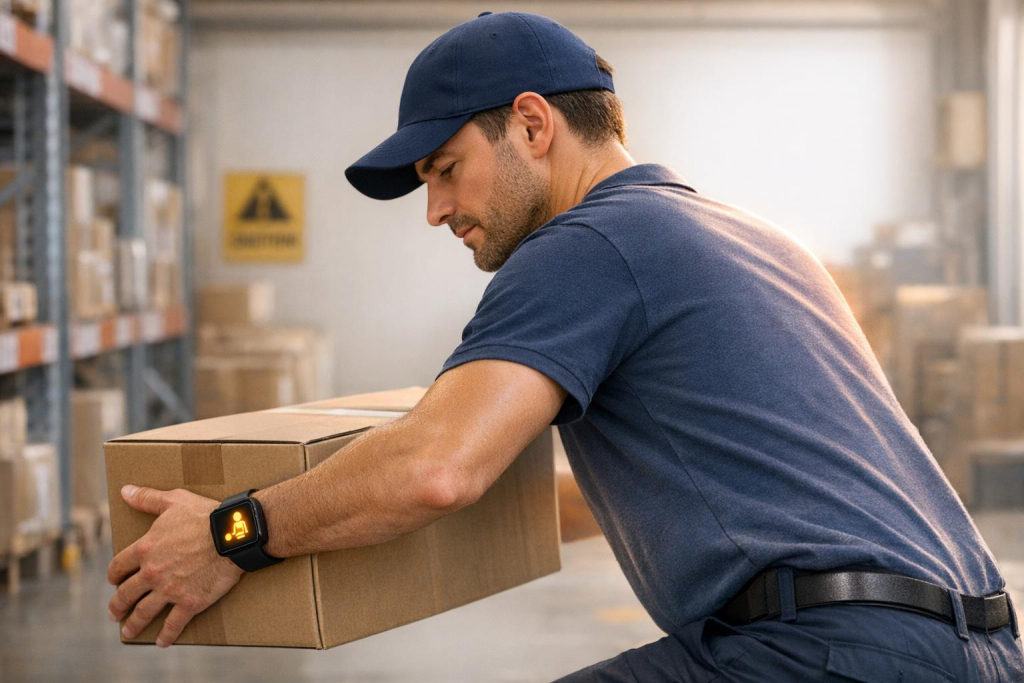
AI wearables are reshaping workplace safety by identifying and addressing ergonomic risks in real time. These devices use sensors like accelerometers, gyroscopes, and tactile sensors to monitor movements, posture, and physical strain during tasks such as lifting, bending, or twisting. With the help of AI, the data collected is analyzed instantly to detect unsafe actions, provide immediate feedback, and reduce injury risks.
Key takeaways:
- Ergonomic Risks: Poor posture, repetitive movements, and improper lifting lead to musculoskeletal disorders (MSDs), a major cause of workplace injuries and lost workdays.
- AI Wearables: Devices collect movement data using sensors and analyze it to flag risky behaviors. Examples include back bending and twisting during lifting.
- Real-Time Feedback: Alerts like vibrations guide workers to safer movements, reducing strain and injury likelihood.
- Proven Results: Companies using AI wearables have reported reductions in MSD cases by up to 71% within a year.
AI wearables like the aiSpine and aiRing offer targeted solutions for posture monitoring and physical health tracking, helping businesses create safer, healthier work environments while preventing injuries before they occur.
Common Ergonomic Risks in the Workplace
Main Ergonomic Problems at Work
Ergonomic risks show up in various industries, often stemming from poor posture, repetitive movements, and improper lifting techniques. Office workers, for instance, spend hours in static and awkward positions, while manufacturing employees frequently perform repetitive arm and wrist motions while using tools.
In warehouses and on construction sites, workers often lift heavy objects from low positions, twisting their torsos in ways that strain the spine. Construction workers, in particular, deal with lifting materials weighing between 22–66 lbs., often bending deeply and rotating their bodies to carry loads to shoulder height. Similarly, healthcare workers face repetitive strain during patient transfers. Movements that extend beyond the body’s natural range or combine bending with twisting place significant stress on the spine and shoulders, leading to faster muscle fatigue and tissue damage. These unsafe practices often result in severe health problems over time.
Health Effects of Ergonomic Problems
The consequences of these risks are both immediate and long-term. Poor ergonomics can cause discomfort right away but often lead to chronic health conditions. Back pain is a major issue, dominating the list of workplace health complaints. In fact, back problems are the top reason employees in the United States miss work. Repetitive motions involving the arms and wrists can result in conditions like carpal tunnel syndrome and repetitive strain injuries. Tasks requiring overhead work can lead to ongoing shoulder fatigue and limited mobility.
The financial toll is also hard to ignore. In the UK alone, over 500,000 workers experienced musculoskeletal disorders related to their jobs during 2024/25, leading to millions of lost workdays. One automotive plant reported 362 cases of musculoskeletal disorders in a single year before taking corrective steps. Addressing these risks is essential, with AI-powered wearables offering a way to continuously monitor and mitigate ergonomic hazards.
sbb-itb-44aa802
Building Safer Workplaces: AI-powered Wearables Monitor Worker Safety! Part 1 #ai #viral #aiinindia
How AI Wearables Track Ergonomic Risks
How AI Wearables Detect and Prevent Workplace Ergonomic Risks
Sensors and Data Collection
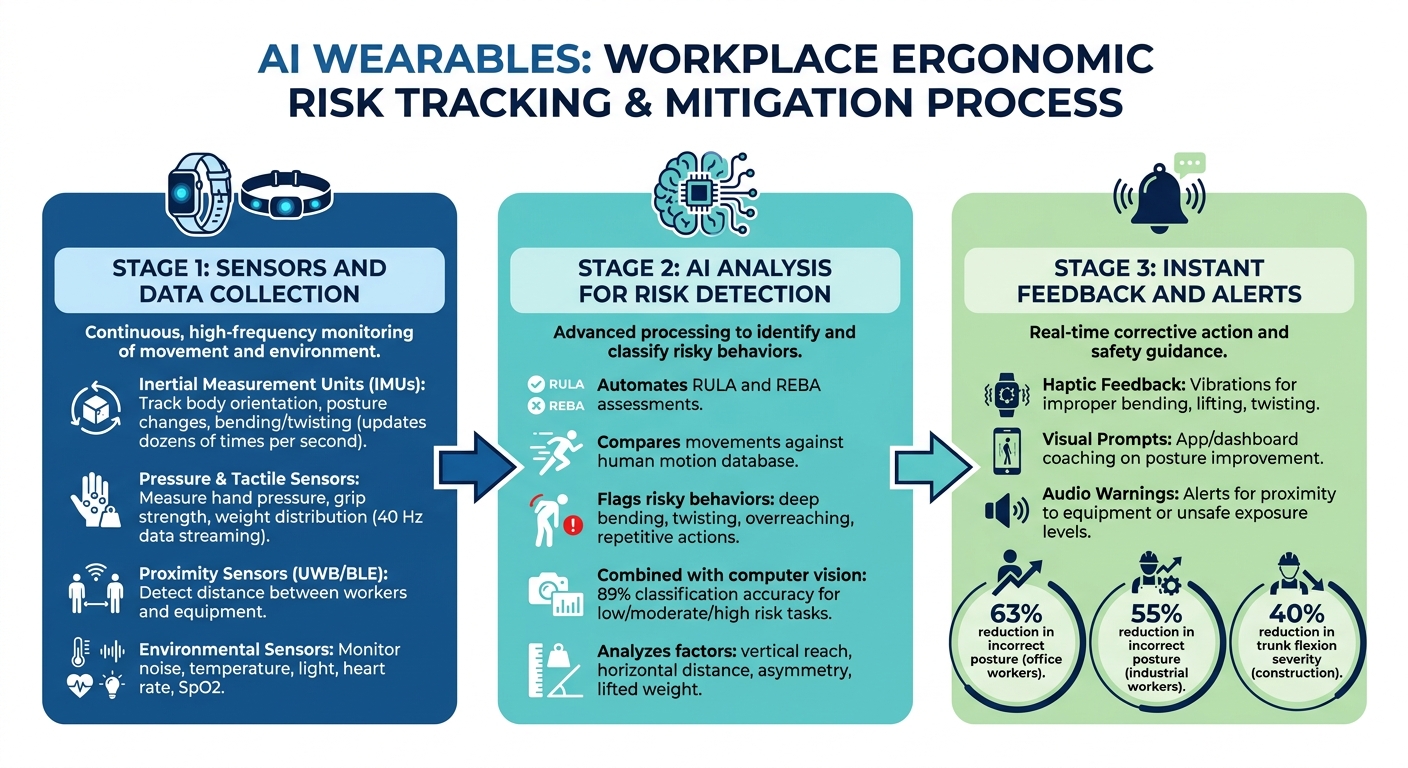
AI wearables are packed with sensors that gather detailed data on workers’ movements throughout their shifts. Inertial Measurement Units (IMUs), which combine accelerometers and gyroscopes, are a key component. They track body orientation, posture changes, and risky movements like deep bending or twisting – updating data dozens of times per second.
Another layer of precision comes from pressure and tactile sensors. These high-density sensor arrays, such as those found in PPS TactileGloves, measure hand pressure, grip strength, and weight distribution during lifting tasks. For instance, a Purdue University study led by Dr. Denny Yu in September 2025 used these gloves to analyze 2,747 lifting tasks performed by 31 participants. The gloves streamed data wirelessly at 40 Hz, capturing detailed force measurements that identified potential injury risks.
Proximity sensors using technologies like Ultra-Wideband (UWB) and Bluetooth Low Energy (BLE) help prevent collisions by detecting the distance and direction between workers and moving equipment, such as forklifts. Additionally, environmental sensors monitor factors like noise, temperature, light exposure, heart rate, and oxygen saturation (SpO2), providing a complete picture of physical strain and workplace conditions.
This combination of sensors creates a robust data stream that AI systems can analyze in real time to identify ergonomic risks.
AI Analysis for Risk Detection
AI algorithms process the raw sensor data instantly, evaluating posture and movement patterns to assess ergonomic risks. These systems automate assessments like RULA (Rapid Upper Limb Assessment) and REBA (Rapid Entire Body Assessment), turning complex motion data into clear risk scores. By comparing real-time movements against a massive database of human motion patterns, AI can quickly flag risky behaviors such as deep bending, twisting, overreaching, or repetitive actions.
Some advanced setups combine wearable sensor data with computer vision for even greater precision. During the Purdue University study, tactile glove data was paired with 3D body pose estimation, achieving 89% classification accuracy in categorizing tasks as low, moderate, or high risk. Factors like vertical reach, horizontal distance, asymmetry, and lifted weight were all considered. Dr. Denny Yu highlighted the potential of this approach:
"Our work shows that glove-based measurements can be a potential new tool for predicting of injury risks during manual lifting when combined with computer vision. This opens the door for smarter, scalable ergonomic assessments for improving workplace safety."
By translating raw movement data into actionable insights, these systems help companies proactively address workplace safety concerns.
Instant Feedback and Alerts
AI wearables don’t just detect risks – they also provide immediate feedback to correct unsafe actions. Haptic feedback, such as vibrations or buzzes, alerts workers in real time when they bend, lift, twist, or stretch improperly. According to the British Safety Council, these prompts help workers adopt safer movement patterns, like encouraging a hip hinge instead of rounding the back to reduce musculoskeletal strain.
Visual prompts on connected apps or dashboards provide additional coaching, offering tips on improving posture. Audio warnings are also used, sounding alerts when workers approach moving equipment or exceed safe limits for noise or temperature exposure. Proximity wearables enhance safety further by sending simultaneous alerts to both pedestrians and vehicle operators, reducing the risk of collisions.
The effectiveness of real-time feedback is backed by research. For example, a six-week study showed that AI posture monitoring reduced incorrect posture incidents by 63% for office employees and 55% for industrial workers. Immediate corrections lead to better ergonomic compliance compared to delayed reporting, making real-time alerts a critical tool for preventing injuries and fostering safer work habits.
How to Deploy AI Wearables in Your Workplace
Choosing the Right AI Wearables
Start by identifying high-risk tasks in your workplace. Review injury records and focus on operations that often involve bending, twisting, or overreaching, such as palletizing, repetitive assembly, or heavy lifting. The type of wearable you select depends on the nature of these tasks. For instance, passive exoskeletons are ideal for moderate lifting throughout the day, while active (powered) systems are better suited for frequent, heavy-duty movements.
It’s crucial to involve workers in the decision-making process. This helps build trust and ensures the devices won’t hinder their movements. Look for wearables equipped with multi-sensor telemetry – like accelerometers, gyroscopes, and pressure sensors – for accurate movement tracking. Choose systems with centralized hubs that handle automatic data synchronization and sensor recharging, so you can avoid complex IT setups. Define clear success metrics upfront, such as reducing high-risk movements (e.g., bending or twisting) by 40%. Selecting the right wearable is key to gathering the movement data AI needs to assess and mitigate ergonomic risks effectively.
Device Setup and Calibration
Once you’ve chosen the appropriate wearable, the next step is proper deployment and calibration. Follow a four-phase roadmap:
- Discovery (2–4 weeks): Identify high-risk tasks and establish baseline metrics.
- Pilot (2–4 weeks): Fit a small group with the devices, provide hands-on training, and monitor near-misses and high-risk events.
- Review and Scale: Analyze pilot results, refine processes, and expand deployment.
- Continuous Improvement: Regularly update risk assessments and improve based on wearable data.
Allow for a 1–2 week trial period where operators can get used to the devices during their normal tasks. This phase is essential for calibrating the AI algorithms to your workplace’s specific movement patterns. For example, in 2025, a construction supplier using Hapo Back exoskeletons for lifting aluminum profiles (weighing 22–66 lbs) saw a 40% reduction in trunk flexion severity after just one week of sensor calibration. This significantly lowered the risk of lower back injuries.
Adding AI Wearables to Workplace Safety Programs
To maximize the benefits of AI wearables, integrate their data into your safety programs. Use the metrics during safety meetings and toolbox talks to refine risk assessments and implement corrective actions. The British Safety Council emphasizes:
"AI wearables should be adopted as an additional layer to boost safety, and not be used as a substitute for the safe design of work, systems and equipment." – British Safety Council
In Phase 3 (Review and Scale), compare pilot results to your baseline metrics, establish Standard Operating Procedures (SOPs) for maintaining the devices, and expand their use across more teams. During Phase 4 (Continuous Improvement), update risk assessments quarterly to reflect changes in workflows or seasonal trends. Assign clear accountability to ensure corrective measures are implemented on time.
Transparency is essential to building trust. Make it clear that the wearables are designed for injury prevention and training, not to monitor individual performance. Use anonymized, team-level data to protect privacy and comply with regulations. Engage employee representatives or unions early in the process to address concerns. For example, during a 2025 trial in the residential care sector, caregivers used passive back-support exoskeletons for patient transfers over two weeks. The results were striking: zero sickness absences, reduced fatigue, and fewer high-risk movements. These outcomes led to widespread adoption, complete with training modules and regular maintenance protocols.
AIH LLC Products for Ergonomic Risk Assessment
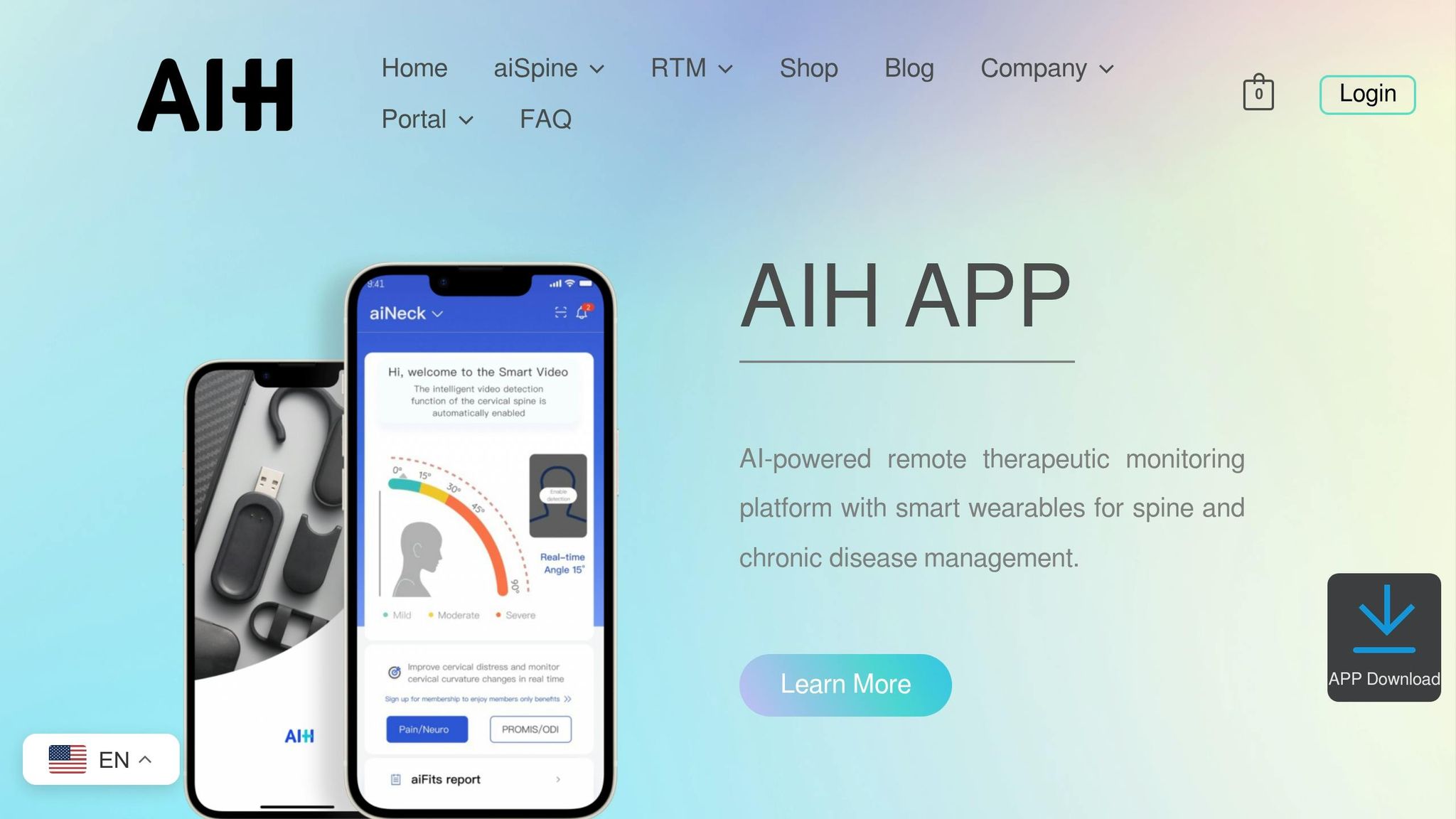
AIH LLC provides workplace solutions designed to improve ergonomics through continuous risk monitoring and wearable technology.
aiSpine for Posture Monitoring
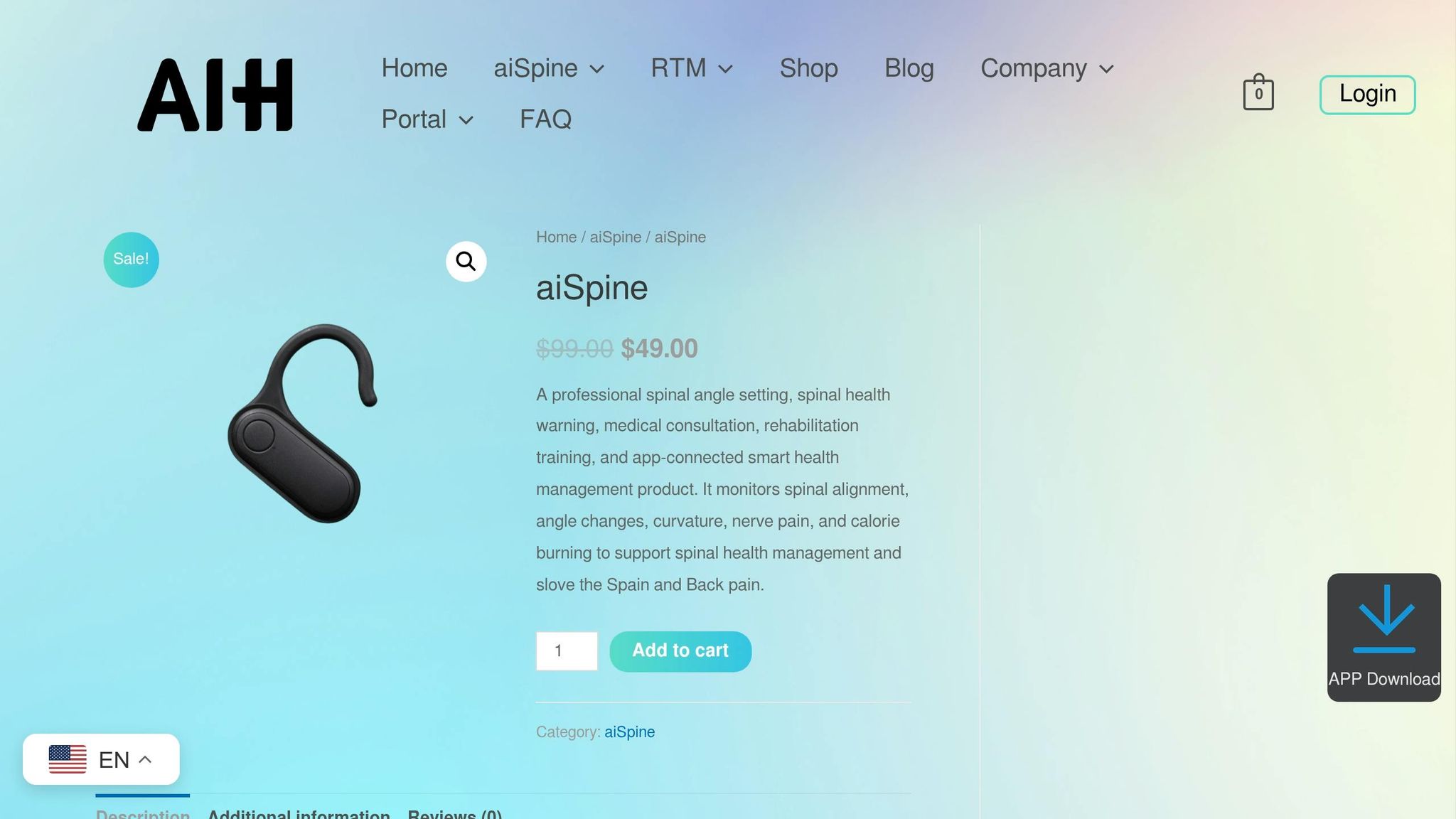
The aiSpine is a wearable device that helps workers maintain proper posture by tracking neck and back angles and curvatures. When it detects unsafe positions, it delivers real-time vibration alerts, encouraging immediate adjustments to prevent strain from developing into chronic pain or injury.
This device is available in multiple formats – over-ear, glasses-mount, or clip-on – making it easy to integrate with existing PPE. Data collected by the aiSpine syncs with the AIH Health App, which creates a digital health record. The app tracks activity levels, calories burned, and long-term posture trends, offering insights into individual and workplace-wide patterns while safeguarding privacy.
aiRing for Movement Tracking
The aiRing complements the aiSpine by focusing on broader physical health monitoring, capturing data beyond posture.
Equipped with advanced sensors and low-power Bluetooth, the aiRing tracks vital signs and movement patterns during physically demanding tasks. It identifies risks such as repetitive motion strain, heavy lifting stress, or prolonged exertion – areas that posture-specific devices might overlook.
Built with a waterproof design and intelligent touch controls, the aiRing is suitable for various environments, from warehouses to healthcare settings. Its multi-device linking feature ensures seamless data synchronization with the AIH platform, enabling early detection of potential health risks.
aiSpine vs. aiRing Feature Comparison
| Feature | aiSpine | aiRing |
|---|---|---|
| Primary Focus | Spine and neck posture monitoring | Vital signs and physical health tracking |
| Key Metrics | Angular/curvature changes, activity, calories | Vital signs, physical health data |
| Real-Time Feedback | Vibration alerts | Continuous health data analysis |
| Form Factor | Over-ear, glasses-mount, or clip-on | Finger ring |
| Best For | Posture-intensive roles (e.g., sitting, bending) | High-exertion tasks (e.g., lifting) |
| Durability Features | Versatile attachment for PPE | Waterproof, intelligent touch control |
| Integration | AIH Health App / RTM Platform | AIH Health App / RTM Platform |
Both devices integrate with AIH LLC’s Remote Therapeutic Monitoring (RTM) platform, which tracks musculoskeletal and respiratory health over time. By working together, these tools help employers identify and address ergonomic risks early, reducing the likelihood of serious injuries. As AIH LLC explains:
"The aiSpine and aiRing devices represent a significant advancement in workplace ergonomics, providing real-time data that empowers employees to make healthier choices".
Conclusion
AI wearables are transforming workplace safety by shifting the focus from reacting to injuries to proactively preventing them. These devices can detect risky movements like excessive bending, twisting, or overreaching before they lead to harm. Through real-time haptic feedback, workers are guided toward safer habits, such as hip-hinging instead of rounding their backs, encouraging long-term behavioral changes that support better health outcomes.
The continuous monitoring capabilities of these devices are already showing measurable results. Work-related musculoskeletal disorders (MSDs) impact hundreds of thousands of workers every year, leading to millions of lost workdays. However, organizations adopting AI-driven ergonomic tools are seeing remarkable improvements. For instance, a major automotive facility significantly reduced MSD cases within just one year. Graham Sharp, Managing Director at Stanley, highlights this shift:
"Safety wearables are moving toward mainstream adoption and are likely to become an expected component of personal protective equipment (PPE), alongside helmets, gloves and safety footwear".
This evolution is further supported by the development of intelligent ecosystems where wearables integrate with infrastructure and digital twins. These systems allow safety teams to test and refine workflow changes virtually before implementing them on the ground.
Research backs up the effectiveness of these technologies. A September 2025 study by Purdue University and NIOSH demonstrated that combining tactile glove sensors with computer vision achieved an impressive 89% accuracy in identifying lifting injury risks across 2,747 tasks. Such precision enables the creation of smarter, scalable safety programs tailored to individual workers’ needs.
AIH LLC’s aiSpine and aiRing devices exemplify how this technology is being applied. These wearables seamlessly connect with the AIH Health App and Remote Therapeutic Monitoring platform, offering real-time feedback and long-term tracking. By focusing on high-risk tasks through targeted pilot programs, they help establish safer workplaces and set the stage for the next generation of safety standards.
FAQs
How accurate are AI wearables at spotting risky posture and lifting?
AI wearables excel at pinpointing risky postures and lifting behaviors, boasting precision scores as high as 0.97 for low-risk scenarios and 0.88 for moderate-risk ones. These tools are a powerful ally in evaluating ergonomic risks, paving the way for safer workplace practices.
Will workers’ data be private, and is it used for performance monitoring?
AI-powered wearables designed for ergonomic assessments place a strong emphasis on privacy and security. To maintain employee trust, data collected by these devices is usually anonymized and processed in a way that aligns with established privacy standards. The primary purpose of these wearables is to evaluate ergonomic risks and improve workplace safety – not to track individual performance. The insights generated are typically shared at a team level, focusing on injury prevention and ensuring ethical use of data while balancing safety with privacy considerations.
How long does it take to pilot and calibrate wearables before rolling them out?
The time it takes to pilot and calibrate wearables before they’re ready for use isn’t set in stone. It depends on several factors, including the type of device, the specific needs of the workplace, and the scope of testing required.