
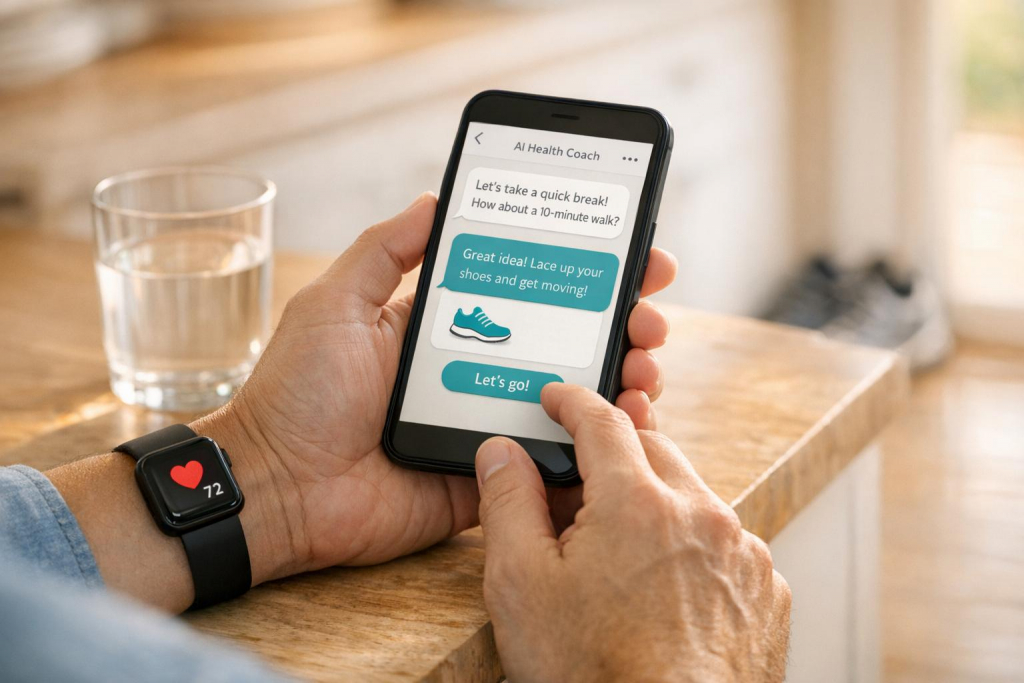
AI is transforming chronic disease management by offering personalized, day-to-day support through three main approaches: machine learning for predictions, conversational AI for coaching, and hyper-personalized Microsteps by AIH LLC. These tools address medical, behavioral, and emotional challenges, helping patients manage conditions like diabetes, obesity, and heart disease. Here’s what you need to know:
- Machine Learning: Analyzes large datasets to predict health outcomes (e.g., hypoglycemia risks) and tailor interventions.
- Conversational AI: Acts as a digital coach, providing reminders, guidance, and emotional support in real time.
- Microsteps by AIH LLC: Suggests small, actionable habits based on biometrics and medical history to build healthier routines.
With chronic conditions accounting for 90% of the U.S. healthcare budget, these AI-driven methods are improving medication adherence, lifestyle changes, and early risk detection. However, challenges like privacy concerns, algorithm transparency, and safety risks highlight the need for careful implementation and human oversight. Use AI tools strategically – ML for predictive tasks and conversational AI for behavior guidance – to achieve better health outcomes.
AI as a Therapeutic Agent in Chronic Disease Management: Myth or Reality?
sbb-itb-44aa802
1. AIH LLC‘s AI Algorithms
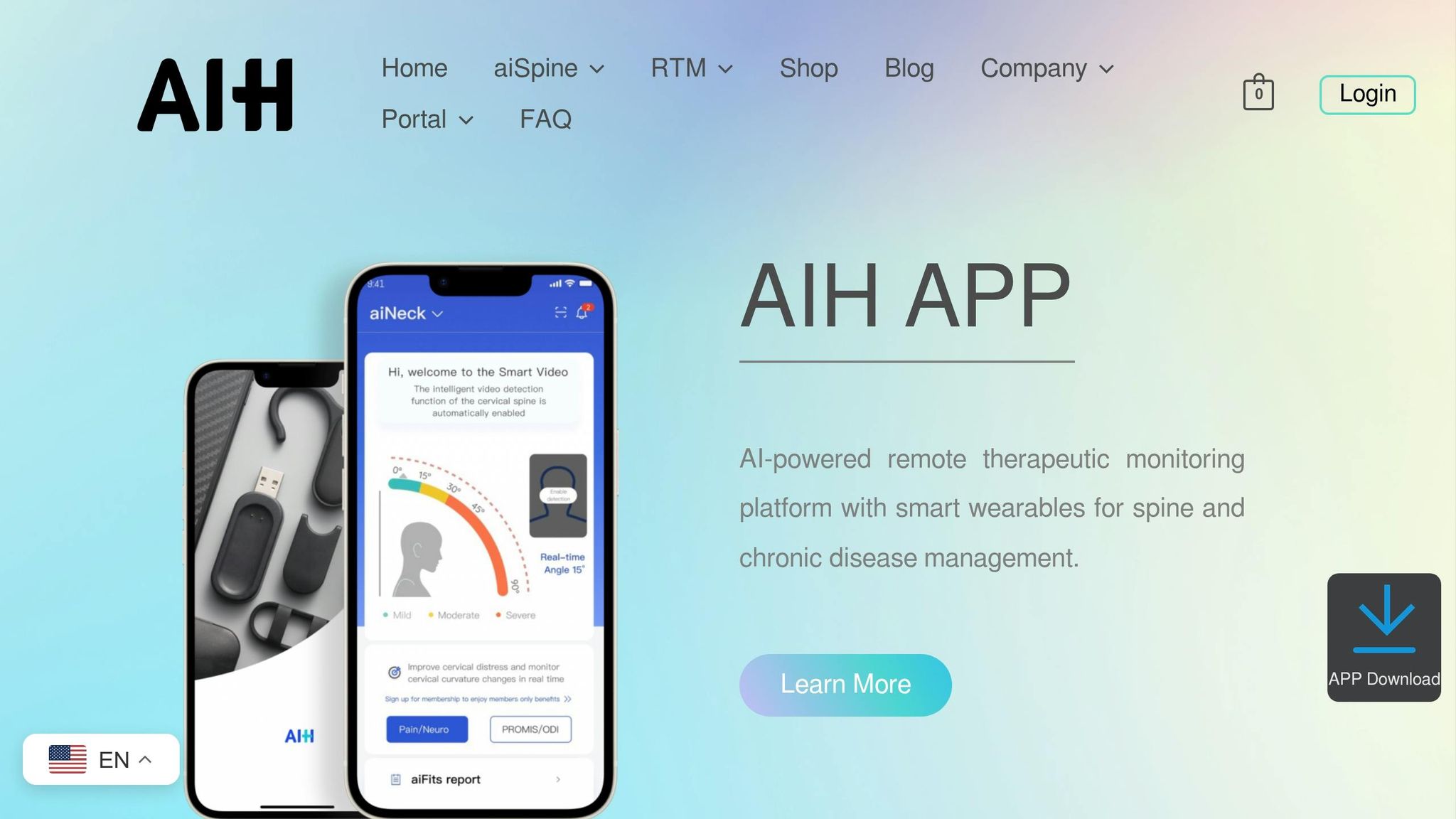
AIH LLC has developed algorithms designed to tackle the everyday challenges of managing chronic diseases by providing personalized, real-time support and interventions.
Personalization Capabilities
Think of AIH LLC’s algorithms as your personal wellness coach with an exceptional memory. They track your habits and preferences across key areas like sleep, diet, exercise, stress, and social interactions. By combining peer-reviewed research, Thrive’s methodology, and your personal data, the system delivers guidance tailored specifically to you. For example, if you find that an evening walk improves your sleep or that your stress peaks on specific days, the algorithm might suggest a calming wind-down routine at 10 p.m. or a quick 10-minute walk. This level of customization ensures that recommendations align with your unique lifestyle, making it easier to implement meaningful changes.
Real-Time Monitoring and Feedback
The platform doesn’t just analyze your habits – it actively integrates into your daily life with timely, context-aware nudges. Imagine being at the grocery store and receiving a suggestion to swap soda for lemon water, or being encouraged to try indoor stretches when rain disrupts an outdoor jog. These micro-adjustments, or "Microsteps", are small, actionable suggestions designed to build sustainable habits over time.
Clinical Effectiveness Metrics
The impact of these personalized interventions is backed by measurable results. A phase 3 randomized clinical trial, conducted between October 2021 and December 2024 at Johns Hopkins and Reading Hospital, compared an AI-led Diabetes Prevention Program with traditional human coaching in 368 adults with prediabetes and obesity. The findings? Both groups achieved similar composite outcomes – 31.7% for the AI-led program versus 31.9% for human coaching (measured by ≥5% weight loss, ≥150 minutes of weekly activity, or ≥0.2% reduction in HbA1c). However, the AI-led intervention had a higher program initiation rate (93.4%) compared to human coaching (82.7%).
The algorithm’s use of reinforcement learning plays a big role here. It adapts its notifications based on both active data (like meal logs) and passive data (such as location). For instance, if you’re near a grocery store, it might suggest picking up a high-fiber snack. These small but effective nudges help drive real behavior change, demonstrating the potential of AIH LLC’s approach to chronic disease management.
2. Machine Learning Algorithms
Machine learning (ML) algorithms stand out from traditional digital tools because they adapt and evolve based on your behavior, making recommendations that feel tailored specifically to you.
Personalization Capabilities
ML algorithms leverage digital phenotyping to analyze how individuals interact with health tools. For example, in March 2024, a study led by Danissa V. Rodriguez at NYU Grossman School of Medicine reviewed 704,242 daily records from a digital diabetes prevention program. Using a gradient-boosted forest model, the study achieved over 90% accuracy in predicting user engagement. It identified six distinct user profiles, such as "high engagement" and "attrition risk", and used these profiles to send personalized motivational messages tailored to each user’s engagement patterns.
What makes this approach particularly effective is the use of multi-agent optimization. Systems like Personalized Multi-Agent Reinforcement Learning (PMARL) break chronic disease management into smaller, manageable parts. Each "agent" focuses on a specific aspect – like medication schedules, dietary habits, physical activity, or mental health – and works together to adapt to your changing physiological needs. By combining these insights, ML algorithms can deliver interventions that are both timely and uniquely suited to your situation.
Real-Time Monitoring and Feedback
Another strength of ML algorithms is their ability to process continuous data streams from wearables, sensors, and electronic health records. This allows them to provide Just-In-Time Adaptive Interventions (JITAIs), offering support precisely when it’s needed.
The Apple Heart Study is a great example of this in action. With over 419,000 participants, the study used an ML algorithm to analyze photoplethysmography (PPG) signals from the Apple Watch. When irregular pulses were detected, users received real-time notifications and were connected to telehealth consultations to screen for atrial fibrillation. This ability to detect and respond to physiological changes immediately transforms passive data collection into active, preventive care, helping to address potential health issues before they escalate.
These real-time interventions not only enhance patient engagement but also lead to better health outcomes.
Clinical Effectiveness Metrics
The impact of ML algorithms is measurable and impactful. Take, for instance, the REINFORCE trial conducted at Brigham and Women’s Hospital from February 2021 to January 2022. The study involved 60 patients with type 2 diabetes (HbA1c ≥ 7.5%) and used a reinforcement learning algorithm to send personalized daily text messages. These messages were tailored based on five behavioral factors: framing, history, social reinforcement, content, and reflection. Over six months, medication adherence improved by 13.6%, as tracked by Pillsy® electronic pill bottles. For patients with HbA1c levels between 7.5% and 9.0%, adherence jumped by 33.6%.
"The algorithm ‘learns’ to personalize as it experiments, or ‘adapts’." – Nature Digital Medicine
3. Conversational AI for Behavioral Coaching
Conversational AI leverages natural language processing to guide patients through behavior changes. These systems go beyond basic chatbot interactions by responding with human-like empathy and reasoning, creating a more engaging and interactive experience.
Personalization Capabilities
One of the standout features of conversational AI is its ability to deliver highly personalized support. It achieves this by combining biometric data, lab results, and medical history with evidence-based research. Instead of generic advice, these systems analyze factors like sleep patterns, diet, activity levels, stress, and social habits to provide tailored recommendations.
For instance, Thrive AI Health, a collaboration announced in July 2024, takes personalization to the next level. It offers real-time suggestions based on your daily routine and preferences. Imagine getting a prompt for a healthy recipe to replace your usual fast-food dinner on a hectic evening – this is the kind of support Thrive AI delivers.
"Behavior change can be a miracle drug, both for preventing disease and for optimizing the treatment of disease." – Sam Altman and Arianna Huffington
These AI tools rely on Behavior Change Techniques (BCTs) like "shaping knowledge", "feedback and monitoring", "natural consequences", and "goals and planning" to encourage sustainable behavior changes. The result is a personalized and continuous coaching experience.
Real-Time Monitoring and Feedback
Conversational AI doesn’t stop at offering tailored advice – it also provides ongoing monitoring and feedback. Unlike periodic check-ins with healthcare providers, these systems deliver continuous, unbiased support. They excel at offering Just-In-Time Adaptive Interventions (JITAIs), meaning you get the right guidance exactly when you need it.
A 2025 study published in Scientific Reports highlights the effectiveness of this approach. Researchers tested the My Diabetes Care app, which features an animated AI assistant named Dia-vera, with 200 participants from rural health clinics in southern Pakistan. The app achieved 98% training accuracy, 95% testing accuracy, and successfully answered 88.86% of 2,830 user questions. It also improved medication adherence, physical activity, and HbA1c levels among users.
Clinical Effectiveness Metrics
Beyond personalization and real-time support, conversational AI demonstrates measurable clinical benefits. These include improvements in diagnostic accuracy, prescription appropriateness, patient engagement, and behavior change outcomes.
In September 2025, a global research team, including experts from the Yale School of Public Health, assessed China’s ERNIE Bot in 384 simulated patient consultations for conditions like unstable angina and asthma. The AI achieved a 77.3% diagnostic accuracy rate, far surpassing the 25% accuracy achieved by frontline doctors in China’s primary care system.
However, the study also revealed significant safety concerns. ERNIE Bot ordered unnecessary lab tests in 91.9% of cases and prescribed potentially harmful medications to 57.8% of simulated patients. These findings underscore the importance of human oversight in ensuring patient safety.
"We must prioritize safety, equity, and human oversight if we want AI to strengthen global health systems." – Dr. Xi Chen, Associate Professor of Public Health, Yale School of Public Health
While conversational AI shows immense promise, these challenges highlight the need for robust safeguards to ensure it complements, rather than compromises, patient care.
Pros and Cons
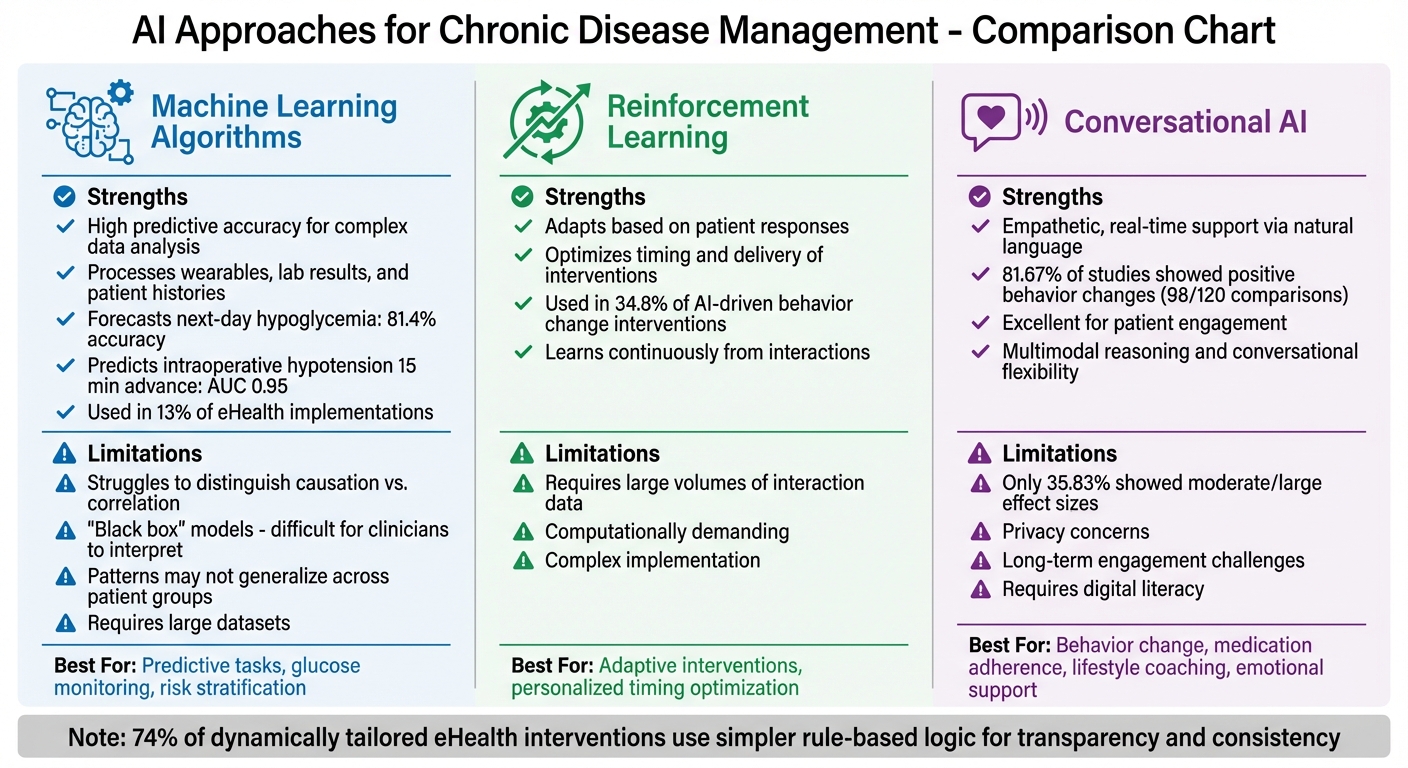
Comparison of Three AI Approaches for Chronic Disease Management
This section breaks down the strengths and challenges of different AI approaches used in chronic disease management, helping to identify which methods suit specific patient needs and healthcare environments.
Machine learning algorithms shine when it comes to analyzing complex data from wearables, lab results, and patient histories to craft tailored treatment plans. These systems achieve high levels of predictive accuracy. However, they often struggle to distinguish between causation and correlation. This limitation can lead to patterns that work for one patient group but fail to generalize to others. Another drawback is the "black box" nature of these models, which makes it hard for clinicians to understand the reasoning behind specific recommendations.
Reinforcement learning offers adaptability, learning from patient responses to optimize the timing and delivery of interventions. It’s a key component in 34.8% of AI-driven behavior change interventions. On the downside, these systems need large volumes of interaction data and are computationally demanding.
Conversational AI brings a different set of benefits and challenges. It excels at delivering empathetic, real-time support through natural language. A review of 33 studies found that 81.67% of comparisons (98 out of 120) showed positive health behavior changes. However, only 35.83% demonstrated moderate or large effect sizes, indicating that while improvements are measurable, they are often modest. Privacy concerns and maintaining long-term user engagement remain ongoing hurdles for these systems.
Interestingly, 74% of dynamically tailored eHealth interventions rely on simpler rule-based logic. These systems offer transparency and consistency, which are often missing in more complex algorithms. However, as one review highlighted:
"While many [interventions] showed positive within-group outcomes, benefits over controls were inconclusive".
This serves as a reminder that advanced technology doesn’t always guarantee better clinical outcomes.
Ultimately, these comparisons highlight the trade-offs involved in choosing AI approaches for managing chronic disease and driving meaningful behavior change.
Conclusion
When selecting AI algorithms, it’s essential to align them with your clinical objectives. Machine learning algorithms stand out for their ability to predict medical events with impressive accuracy. For instance, they can forecast next-day hypoglycemia with 81.4% accuracy and predict intraoperative hypotension up to 15 minutes in advance with an AUC of 0.95. These tools are adept at analyzing complex data from electronic health records and wearable devices, helping healthcare providers identify at-risk patients before symptoms become apparent. While machine learning shines in predictive analytics, conversational AI offers a different, more interactive approach.
Conversational AI focuses on engaging patients directly. By leveraging natural language processing, these systems assist with lifestyle changes, medication adherence, and even emotional support. As Lingyi Fu et al. explain:
"AI chatbots can communicate in natural language, offering personalized support, multimodal reasoning, and conversational flexibility".
However, the success of these technologies depends on factors like digital literacy and seamless integration into clinical workflows. Even the most advanced AI systems can falter if alerts are ignored or the tools are cumbersome to use. Interestingly, most eHealth interventions still rely on simpler rule-based systems for their transparency and reliability, while machine learning approaches account for just 13% of implementations.
To maximize impact, consider using machine learning for tasks like glucose monitoring and risk stratification, while employing conversational AI for promoting behavior changes, such as encouraging physical activity or providing diet guidance.
Regulatory advancements also play a key role in shaping the future of AI in healthcare. For example, the FDA’s December 2024 guidance on "Predetermined Change Control Plans" supports adaptive AI by allowing pre-approved updates to continuously learning models. This step ensures that evolving AI systems maintain clinical oversight and prioritize patient safety. By balancing predictive accuracy with patient engagement, healthcare providers can better address the challenges of chronic disease management.
FAQs
Which AI approach is best for my condition?
The right AI approach varies based on your chronic disease and individual requirements. Tools like machine learning, predictive analytics, and AI chatbots can play a big role in improving behavior and managing your condition. For instance, machine learning can help identify potential health risks, while AI chatbots deliver personalized guidance and support. Wearable devices, such as AIH LLC’s aiSpine or aiRing, offer real-time health tracking and customized feedback to fit your needs. It’s always best to consult your healthcare provider to find the solution that works best for you.
What data do these AI tools need from me?
AI tools designed to support behavior change for chronic diseases often rely on personal health data. This can include vital signs like heart rate, blood pressure, and oxygen levels, typically gathered through wearable devices such as AIH LLC’s aiRing or aiSpine. Beyond that, these tools may track symptoms, medication routines, lifestyle choices, and even emotional well-being. By analyzing this data, AI systems can offer real-time monitoring, identify potential issues early, and deliver tailored recommendations to help individuals make meaningful changes.
How is my privacy protected when AI monitors me?
Your privacy is protected through methods such as data encryption, secure storage, and strict access controls. Many AI systems adhere to regulations like HIPAA, ensuring that sensitive health information is only used for authorized purposes. For example, platforms from AIH LLC include built-in privacy protections, allowing patients to control how their data is shared. These platforms also prioritize transparency, clearly outlining how information from devices like aiSpine and aiRing is utilized.