
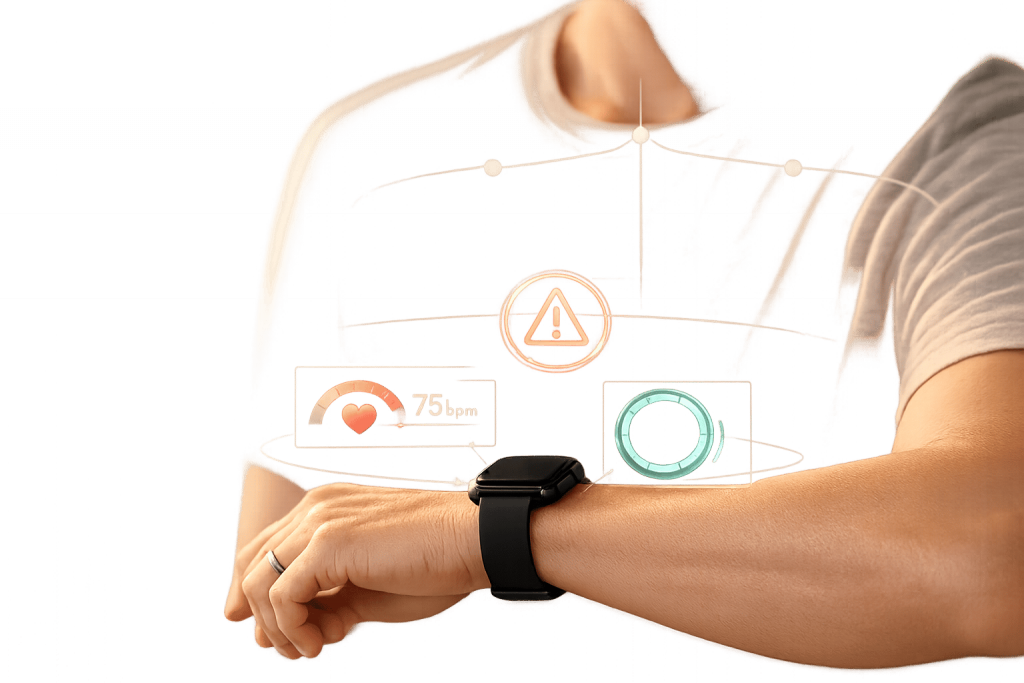
Wearable devices have evolved far beyond step counting. Customizable feedback algorithms now transform raw sensor data into personal health insights, helping users manage spine health, chronic conditions, and more. These AI-driven systems analyze individual metrics like heart rate, posture, and activity to provide tailored advice, detect irregularities, and improve recovery processes.
Key Takeaways:
- Personalization: Algorithms adjust to your age, weight, habits, and medical history for realistic goals.
- Real-time Monitoring: Devices detect irregularities like abnormal heart rhythms or poor posture and suggest timely actions.
- Advanced AI: Wearables use edge-AI for faster processing, privacy, and lower battery use.
- User Engagement: Smart notifications reduce alert fatigue, improving long-term device use.
- Health Management: Early detection of risks (e.g., falls, stress) and continuous monitoring prevent complications.
Devices like AIH LLC’s aiSpine and aiRing, paired with the AIH Health App, demonstrate how these systems are reshaping personal health management. From posture correction to stress monitoring, wearables are becoming indispensable tools for proactive health tracking.
AI-Driven Wearable Technology: Enhancing Patient Outcomes and Neurodiversity Support
sbb-itb-44aa802
Key Components of Customizable Feedback Algorithms
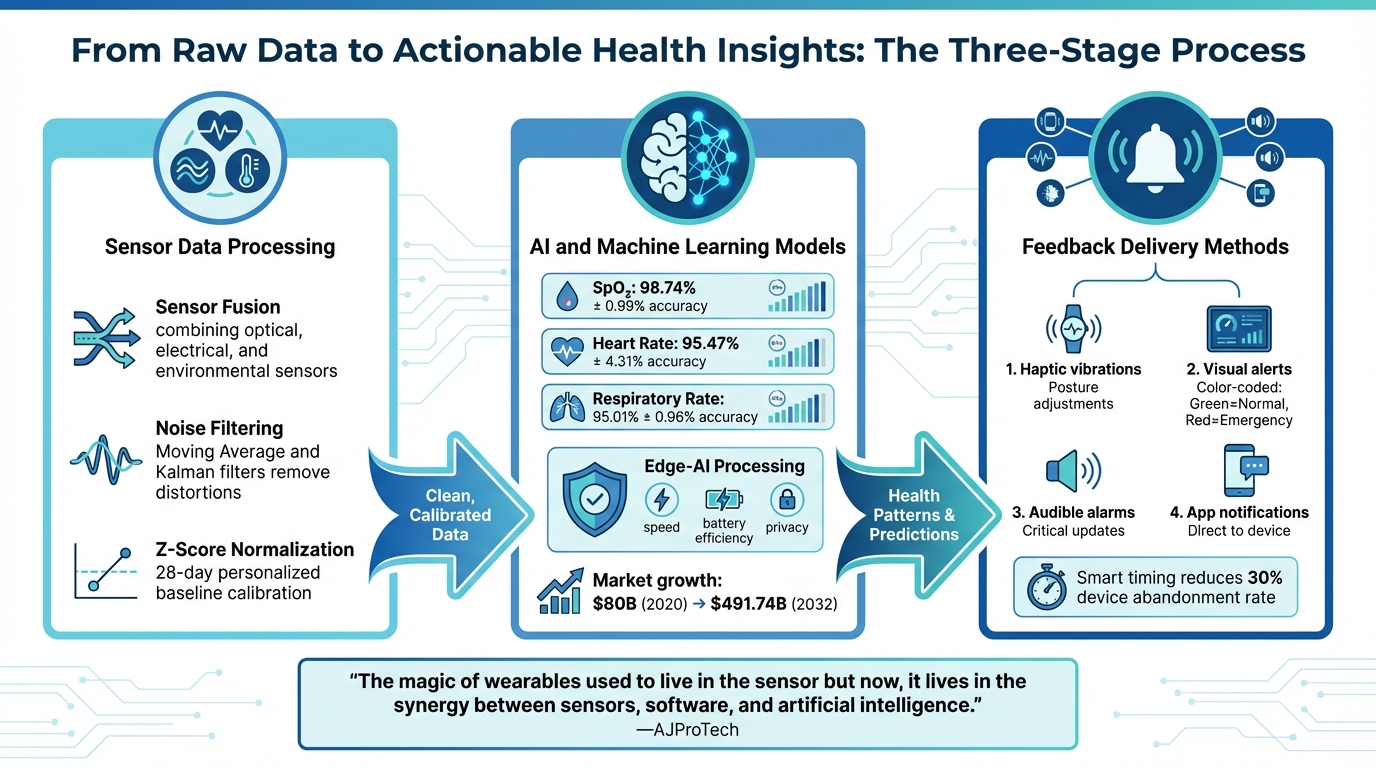
How Customizable Feedback Algorithms Transform Wearable Data Into Health Insights
Creating effective feedback algorithms for wearable devices depends on three essential elements working in harmony. Each plays a unique role in converting raw sensor data into actionable health insights for users.
Sensor Data Processing
Wearables gather data on pulse, motion, temperature, and oxygen levels all at once. The tricky part? Combining these streams into a unified health overview. This is where sensor fusion steps in, blending inputs from optical, electrical, and environmental sensors to form a complete picture of your health.
Raw data from sensors often contains noise, which can obscure meaningful patterns. Techniques like Moving Average and Kalman filters help clean this data by removing movement-related distortions. Another crucial step is z-score normalization, which uses a personalized 28-day baseline to compare current readings, ensuring the data is calibrated specifically for you. This refined data serves as the foundation for AI algorithms to detect health trends and anomalies.
AI and Machine Learning Models
Once sensor data is cleaned and calibrated, AI algorithms analyze it for patterns that can predict significant health events. For instance, Random Forest Regression has been used to estimate complex metrics, such as blood pressure, using just one optical sensor. Early prototypes of AI-powered devices have achieved impressive accuracy rates: SpO₂ at 98.74% ± 0.99%, heart rate at 95.47% ± 4.31%, and respiratory rate at 95.01% ± 0.96%.
Many modern devices now use edge-AI processing, where computations happen on the wearable itself rather than relying on cloud servers. This approach minimizes delays, saves battery power, and boosts privacy. Such advancements are fueling the wearable technology market, which was worth $80 billion in 2020 and is expected to surpass $491.74 billion by 2032.
Feedback Delivery Methods
Once the AI identifies health trends or risks, delivering feedback in a clear and actionable way is crucial. Wearable devices have evolved to provide feedback through various channels suited to different scenarios. For example:
- Haptic vibrations gently nudge users for posture adjustments.
- Visual alerts, such as color-coded dashboards, make data easy to interpret – green indicates normal readings, while red signals emergencies.
- Audible alarms and app notifications ensure critical updates are delivered directly to your smartphone.
Timing is everything. AI systems now focus on delivering feedback at the right moments to avoid unnecessary interruptions. This feature helps combat notification fatigue, a major reason why nearly 30% of wearable users stop using their devices within six months.
The magic of wearables used to live in the sensor but now, it lives in the synergy between sensors, software, and artificial intelligence.
- AJProTech
Personalization Through Machine Learning
Modern wearable devices are stepping up their game by using machine learning to turn basic tracking data into tailored health insights. Instead of relying on broad population averages, these devices learn your unique patterns, offering a more personalized approach to health monitoring.
How Algorithms Learn from User Data
When you first start using a wearable, it spends about a week gathering data like heart rate variability (HRV), movement speed, and resting heart rate to establish your personal baseline. This calibration is key – what might signal fatigue for one person could be completely normal for someone else. Once the baseline is set, the algorithm evaluates real-time data against factors like sleep quality, diet, and even self-reported stress levels. For example, a 12% drop in movement speed during a workout might indicate central nervous system fatigue. These systems adjust thresholds weekly by around ±5%, fine-tuning their responses based on past data.
This adaptability is a big reason why fatigue-aware systems are gaining traction. While nearly 78% of users give up on static fitness apps within three months, systems that adapt to fatigue can boost long-term activity tolerance by 18% to 22%.
"Fatigue isn’t noise – it’s data. The most effective AI coaches don’t ignore variability; they map it, weight it, and respond before compensation patterns form."
- Dr. Lena Torres, Exercise Physiologist & Lead Researcher, Human Performance Lab, Stanford Medicine
Applications in Posture and Vital Sign Monitoring
These adaptive algorithms aren’t just theoretical – they’re actively improving wearable device performance. Take AIH LLC’s devices, for instance. Their aiSpine posture monitor uses machine learning to analyze movement patterns like joint angles and velocity. If it detects a decline in technique, such as poor spinal alignment, it provides real-time feedback to prevent issues like compensatory movements.
Similarly, the aiRing, a vital signs monitoring device, tracks your HRV baseline and keeps an eye on cardiovascular and respiratory health. It’s designed to catch early signs of stress, burnout, or even illness. Both devices sync with the AIH Health App, which integrates multiple data streams – posture, heart rate, sleep, and activity – into an adaptive health profile.
The machine learning models behind these tools are highly accurate. For example, they’ve reached an AUROC score of 0.97 in predicting risks like falls and mobility decline. Random forest models, a common choice in wearable sensor studies, are used in about 20% of these cases.
How AIH LLC Devices Use Feedback Algorithms
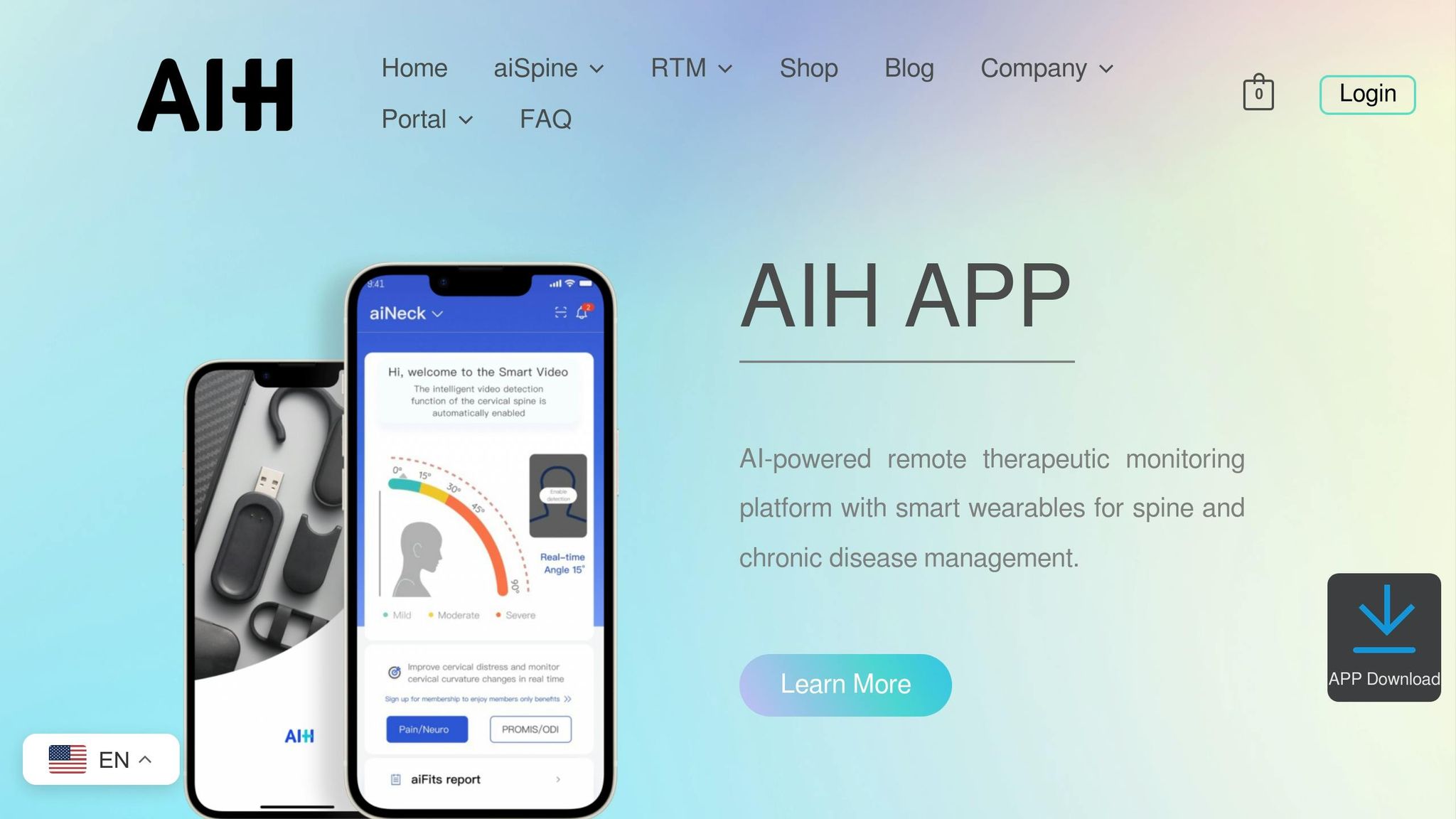
AIH LLC has taken wearable technology a step further by incorporating feedback algorithms designed to turn raw sensor data into practical health insights. Instead of just tracking basic stats like step counts, these devices leverage advanced AI models, including LLM agents, to deliver tailored recommendations for posture improvement, vital sign monitoring, and managing chronic conditions.
The system operates through a modular feedback framework that interprets health data, performs real-time analysis, and uses the latest guidelines to provide actionable advice. This shifts the focus from simple summaries – like "you walked 5,000 steps today" – to a more interactive approach that identifies patterns and offers specific, personalized interventions based on your physiological trends.
aiSpine: Posture Monitoring and Feedback
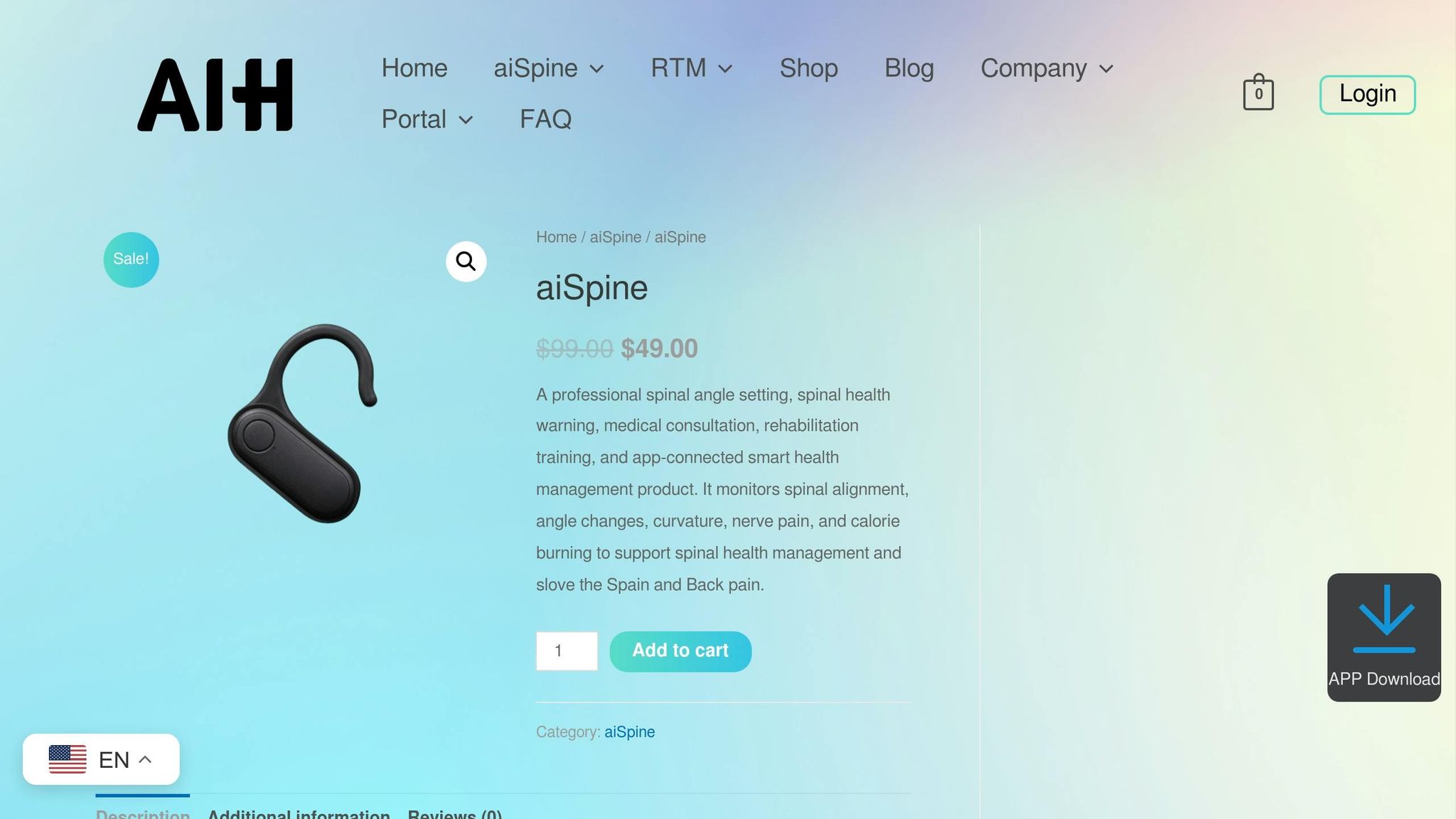
One standout example of this technology is the aiSpine device, which uses machine learning to track spinal alignment. Sensors monitor joint angles and movement velocity to detect poor posture, such as forward head tilt or rounded shoulders. When the system identifies an issue, it sends immediate vibration alerts to prompt correction. Over time, the device learns your movement patterns, distinguishing between harmless variations and compensatory movements that could lead to chronic discomfort.
The feedback system also stores historical data, continuously refining its understanding of your posture. This helps the algorithm provide more accurate alerts, preventing harmful habits from forming and addressing potential issues before they become significant.
aiRing: Vital Sign Tracking with Custom Alerts
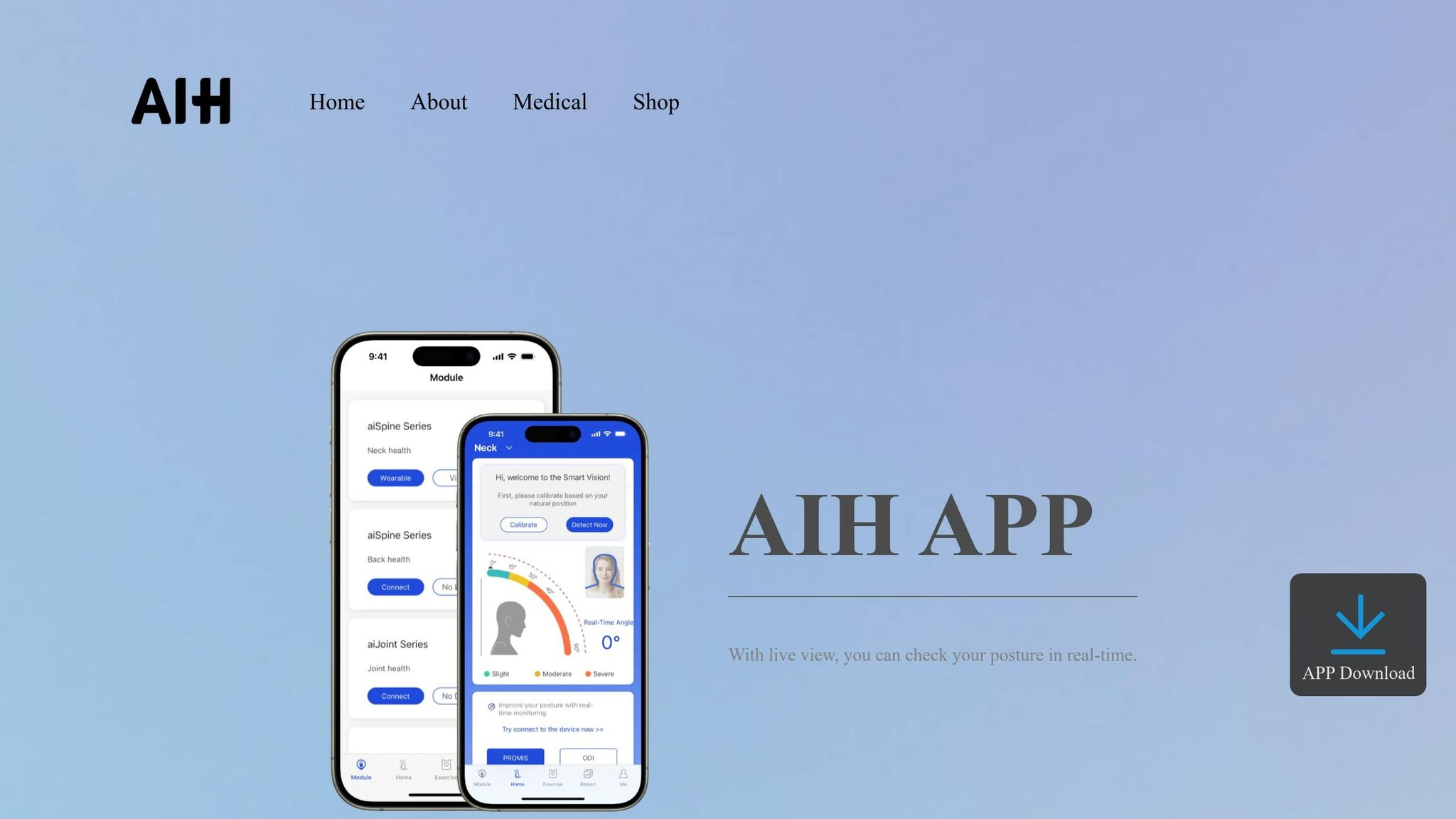
The aiRing takes a similar personalized approach to monitor cardiovascular and respiratory health. Using precision sensors, it tracks metrics like heart rate variability (HRV) and blood pressure. The feedback algorithms analyze these readings in context, differentiating between normal fluctuations and concerning trends. For instance, if your HRV drops steadily while your resting heart rate rises, the system may flag early signs of stress, fatigue, or illness.
Designed for versatility, the waterproof aiRing can be used in various scenarios, from sleep tracking to workouts. Its algorithms adjust alert thresholds based on your unique health profile, minimizing false alarms while ensuring timely notifications. This is especially helpful for managing chronic conditions, where even small changes in physiological markers can indicate the need for medical attention.
Integration with the AIH Health App
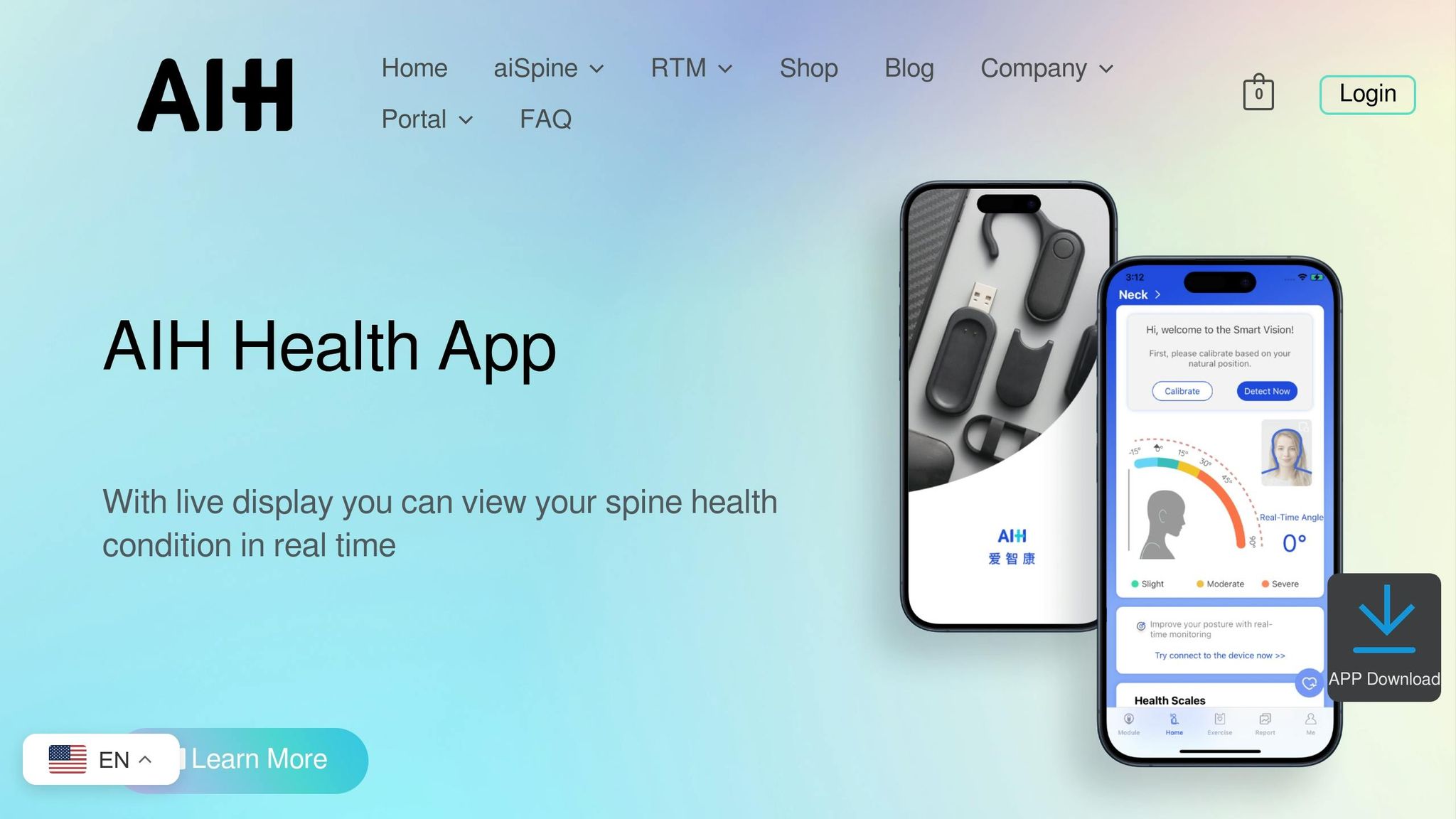
The AIH Health App ties everything together, acting as the central hub for all the data collected by aiSpine and aiRing. It bridges what researchers call the "Data-to-Insight Chasm", transforming raw biometric data into clear, actionable advice. Using advanced techniques like the Allied Data Disparity Technique (ADDT), the app corrects inconsistencies or gaps in sensor data, ensuring reliable monitoring even during irregular data flows.
Raw data doesn’t drive behavior change. Contextual narrative does.
The app employs Multi-Instance Ensemble Perceptron Learning (MIEPL) to prioritize the most clinically relevant data, delivering real-time health updates. By analyzing trends across multiple metrics – posture, heart rate, sleep quality, and activity levels – it can predict potential health risks before they arise. For example, it might suggest a 15-minute walk after lunch based on your personal sleep patterns, work schedule, and stress levels. This kind of tailored coaching has shown results: in 2024, Singapore’s NudgeRank system used similar AI-driven personalization to boost daily steps by 6.17% and exercise minutes by 7.61% among 1.1 million users over 12 weeks.
Benefits of Customizable Feedback Algorithms for Health Management
Early Detection and Timely Interventions
Customizable feedback algorithms take the uncertainty out of health monitoring by delivering objective, continuous data. These systems can identify subtle physiological changes – like irregular heartbeats, abnormal sleep patterns, or shifts in gait speed – that might go unnoticed during self-assessment. Such early detection is vital for catching chronic conditions before they worsen.
By establishing personalized baselines, these algorithms can quickly flag deviations, enabling immediate action. For example, a 2020 study involving 31 participants with major depressive disorder used Empatica wristbands to track electrodermal activity, heart rate, and sleep patterns over two months. Researchers Paola Pedrelli from Massachusetts General Hospital and Rosalind Picard from MIT demonstrated that machine learning models could link these physiological markers to clinician-rated symptom severity. This approach shows promise for automated systems that notify doctors of a patient’s worsening depression or treatment non-response, potentially preventing crises.
Wearable sensors also excel in predicting physical health risks. For instance, they’ve achieved an impressive AUROC curve of up to 0.97 in assessing fall risk and mobility decline. In spine health, sensors can monitor 3D spine poses and lumbar kinematics to track recovery and daily movements. Such precision ensures that potential problems are caught early, making them easier to manage.
Better Adherence and User Engagement
These algorithms don’t just detect issues – they also keep users engaged. By turning wearables into active health partners, personalized systems provide more than just raw data. They deliver tailored coaching, answering questions like, “Am I overtraining?” or “Is my posture correct?”.
One standout feature is the reduction of alert fatigue. By learning a user’s habits and routines, these systems send notifications at the most effective times, focusing only on significant health signals and avoiding unnecessary disruptions.
Technology should serve people, not nag them. – AJProTech
In rehabilitation, AI-powered tools analyze biomechanical data to adjust exercise intensity based on individual progress. This personalized approach boosts patient satisfaction and adherence to recovery plans. The popularity of smartwatches and fitness trackers – used by 45% of Americans, including 70% of Gen Z and over 50% of millennials – highlights the growing demand for actionable, user-friendly coaching over overwhelming streams of data.
Reduced Health Complications Through Continuous Monitoring
Continuous monitoring adds another layer of protection by addressing health issues before they escalate. For chronic conditions like Parkinson’s disease, adaptive algorithms in deep brain stimulation systems adjust neurostimulation in real time using biomarkers. This dynamic approach reduces motor fluctuations and enhances quality of life. Unlike static care plans, these adaptive systems evolve with the patient’s needs.
Beyond immediate adjustments, these systems analyze long-term data to predict risks for conditions like hypertension or diabetes. This allows for proactive lifestyle changes that can prevent complications. For instance, AIH LLC’s devices, such as aiSpine and aiRing, continuously monitor posture and vital signs, helping to manage chronic conditions and prevent health deterioration.
AI can be used to detect exacerbations of a mental health state that can lead to a harmful behavior, such as smoking or substance use, and intervene in a just-in-time way that can be more effective than what is done now without AI.
– Peter Yig˘itcan Washington, Assistant Professor, University of California, San Francisco
Future Developments in Feedback Algorithms for Wearable Tech
Predictive Monitoring and Analytics
Wearable technology is evolving from tracking past events to predicting future outcomes. Emerging systems aim to identify patterns like potential burnout or early signs of illness days before symptoms become noticeable.
For instance, in July 2025, researchers demonstrated a wearable system using a MAX30102 sensor and random forest regression to estimate blood pressure without a cuff. This breakthrough in single-sensor, multi-parameter tracking means wearables can monitor more health metrics without increasing size or complexity.
Additionally, studies reveal that muscles produce unique burst signals roughly 100 milliseconds before movement begins. Algorithms leveraging this lead-time could predict movements, offering critical benefits like fall prevention and improved assistive device performance. With the elderly population expected to hit 1.5 billion by 2050, such predictive tools will be essential. These advancements are further enhanced by the integration of richer data from multimodal sensors.
Multimodal Sensors for Better Personalization
Future wearables are set to combine data from various sensor types to deliver more personalized health insights. For example, integrating Electromyography (EMG) data with time-domain joint analysis from Inertial Measurement Units (IMUs) has been shown to improve motion intent prediction accuracy by over 10%. This level of precision allows wearables to not only understand current movements but also anticipate the next, enabling real-time adjustments to feedback and alerts.
The shift to edge-AI is a key enabler of these advancements. By processing machine learning models directly on the device instead of relying on the cloud, wearables can analyze complex sensor data in real time while using just 0.7 to 1.4 watts of power. This approach ensures quicker responses, enhanced privacy, and extended battery life, making continuous health monitoring more practical.
Looking further ahead, researchers are exploring biochemical sensors that analyze sweat or saliva to complement traditional monitoring methods.
Conclusion
Customizable feedback algorithms are reshaping wearables, turning them into proactive health tools. Instead of just tracking steps or heart rates, these systems analyze massive datasets to deliver timely insights, predict potential health issues, and tailor recommendations to each person’s unique physiology. This evolution marks a shift from simple tracking to predictive monitoring, fundamentally changing how we approach personal health management.
The numbers tell the story. Machine learning models in wearables now predict fall risks and mobility declines with impressive accuracy. Meanwhile, nearly 45% of Americans regularly use a smartwatch or fitness tracker. These devices are no longer mere accessories; they’re becoming indispensable for managing chronic conditions, preventing injuries, and maintaining overall wellness.
"As AI continues to advance, we see wearables not as gadgets, but as personal partners: listening quietly, acting wisely, and helping users write their own health stories." – AJProTech
AIH LLC’s aiSpine and aiRing, paired with the AIH Health App, take this innovation further by delivering context-aware alerts. These alerts are designed to reduce notification fatigue by appearing only when meaningful changes occur, addressing a common frustration with static fitness apps.
Looking ahead, advancements in edge-AI, sensor fusion, and predictive analytics promise to elevate these systems even more. Customizable feedback algorithms won’t just improve individual health – they’ll play a key role in population health management, cutting healthcare costs, and helping people maintain independence as they age. This technology has moved from concept to everyday use, proving its value in how we monitor and manage health. AIH LLC’s work showcases how wearables, powered by intelligent algorithms, can transform health outcomes on both personal and societal levels.
FAQs
How does a wearable learn my personal baseline?
Wearable devices gather and analyze your physiological data over time to understand your unique patterns. By using AI algorithms, they establish a personalized baseline, covering aspects like heart rate, sleep quality, and activity levels. This baseline helps the device spot changes, adjust its feedback, and deliver insights specifically tailored to you. As your habits and body change, the device evolves with you, offering more precise health tracking and potentially catching early signs of health concerns.
What is edge-AI, and why does it matter for privacy and battery life?
Edge-AI allows artificial intelligence algorithms to operate directly on wearable devices, eliminating the need for cloud-based processing. This approach prioritizes privacy by ensuring that sensitive health data, such as ECG readings or motion signals, remains on the device, minimizing the chances of data exposure. Additionally, it optimizes battery life by reducing the energy demands of constant data transmission. With its event-driven processing, the system activates only when necessary, allowing for real-time monitoring while safeguarding both data and the device’s lifespan.
How can wearables reduce false alarms and notification fatigue?
Wearable devices tackle the challenge of false alarms and notification fatigue by using advanced algorithms powered by AI techniques, such as deep learning. These algorithms analyze sensor data to identify subtle patterns, which helps improve the accuracy of alerts and cut down on unnecessary notifications.
By customizing feedback for each user and ranking alerts based on urgency, AI-driven wearables ensure that notifications are sent only when they matter most. This approach not only prevents overwhelming users but also builds trust and supports better health management.