
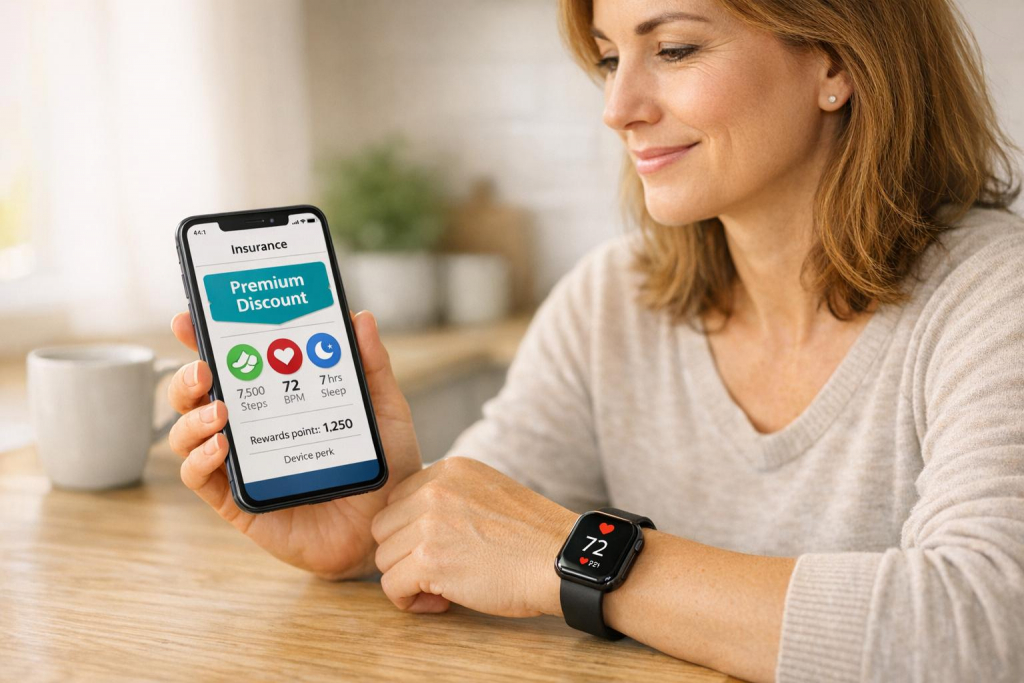
Insurance companies are offering discounts and rewards to policyholders who use wearable devices to track their health. By sharing data like steps, heart rate, and sleep patterns, you can lower premiums or earn perks. Programs from companies like UnitedHealthcare, John Hancock, Aetna, Humana, and Oscar Health provide incentives tied to fitness goals, preventive care, and even chronic condition management.
Key Takeaways:
- UnitedHealthcare Rewards: Earn up to $1,000 annually by meeting activity and health goals.
- John Hancock Vitality: Save up to 25% on life insurance premiums and get discounted Apple Watches or fitness trackers.
- Aetna Active Rewards: Focuses on health coaching and discounts on fitness products rather than direct premium reductions.
- Humana Go365: Offers points for fitness and wellness activities, redeemable for rewards.
- Oscar Health: Simple step-tracking program with Amazon gift cards as rewards (up to $240 annually).
Quick Overview:
- Who benefits? Active individuals, those managing chronic conditions, and anyone looking to save on insurance.
- What data is tracked? Steps, heart rate, sleep, exercise, and preventive care activities.
- How to participate? Use compatible wearables like Fitbit, Apple Watch, or Garmin and sync them with insurer apps.
Wearable-based programs are reshaping insurance by encouraging healthier habits and offering financial incentives. Whether you want premium discounts or perks like fitness devices, these programs align health efforts with savings opportunities.
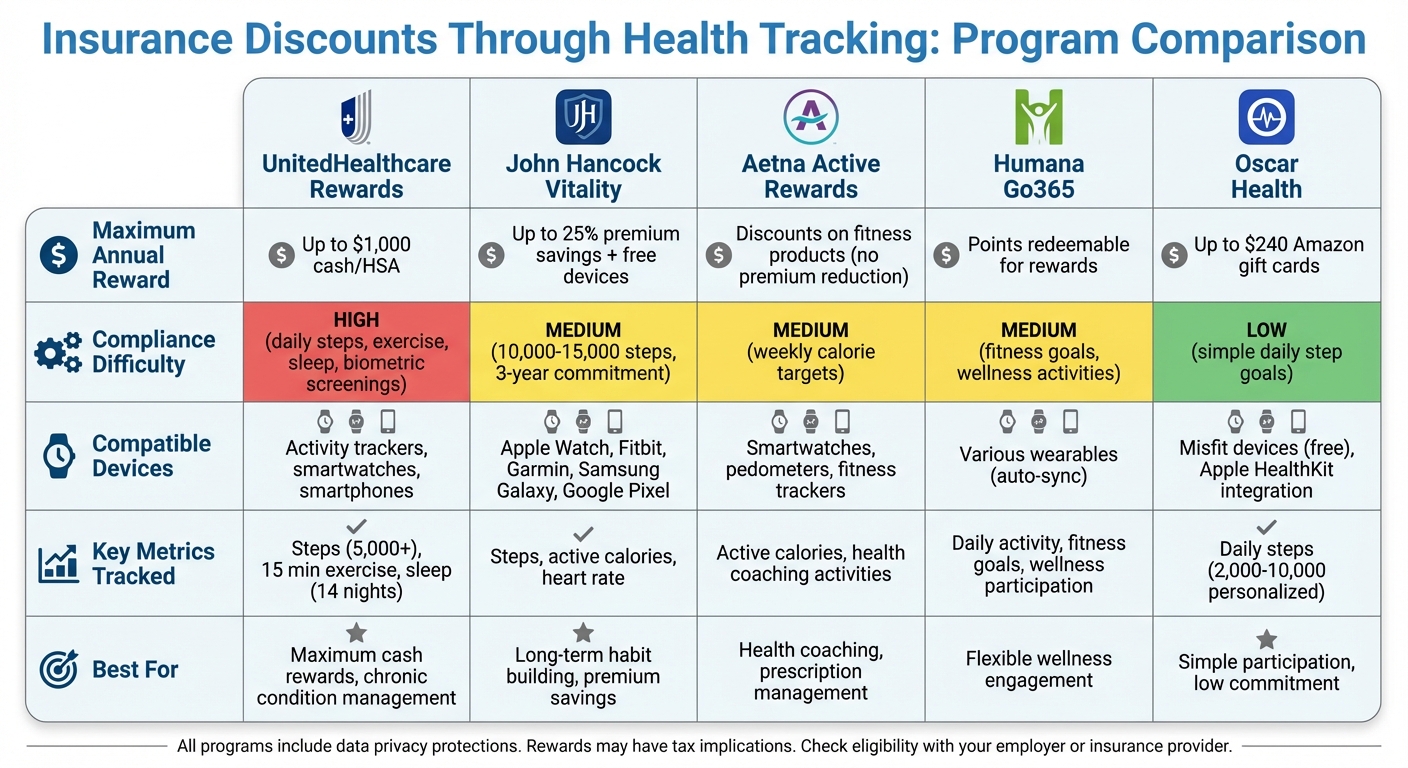
Insurance Wearable Programs Comparison: Rewards, Requirements, and Benefits
Insurance company wants to track Fitbit data from customers
sbb-itb-44aa802
1. UnitedHealthcare Vitality Program
UnitedHealthcare’s UHC Rewards program offers eligible employer health plan members (and their spouses) the chance to earn up to $1,000 annually in cash incentives. This initiative highlights how insurers use wearable technology to encourage healthier lifestyle choices.
Eligible Wearables
Participants can connect compatible devices, including activity trackers, smartwatches, or smartphones. Getting started is straightforward: download the UnitedHealthcare app, sign in or register, and activate UHC Rewards. Once connected, the device automatically tracks and shares step data with UnitedHealthcare, which is the only data collected.
Compliance Metrics
The program rewards members for both consistent daily habits and milestone achievements. Daily activities, such as reaching 5,000 steps or completing 15 minutes of exercise, can earn about $5.25 per week. Tracking sleep for 14 nights adds a $10 reward. Milestone rewards include $25 for completing a health survey and $50 for undergoing an annual checkup.
Annual Rewards
Members can receive their rewards through a prepaid debit card or direct deposit into a Health Savings Account (HSA). Brandon Cuevas, Chief Growth Officer, describes the program as:
"UnitedHealthcare Rewards is a modern, gamified approach that incentivizes diverse activities to promote health".
Keep in mind that rewards issued via prepaid cards may have tax implications.
This program reflects a shift in the insurance industry from traditional premium models to behavior-based incentives, emphasizing real-time health tracking and engagement.
2. John Hancock Vitality Rewards
John Hancock’s Vitality program connects fitness tracking with life insurance savings through a points-based system. Similar to UnitedHealthcare, this program uses data from wearables to help reduce life insurance premiums.
Maximum Discount Percentage
This approach encourages proactive health management. Members can save up to 25% on their annual life insurance premiums. The savings are tiered, meaning the more engaged you are, the more you can save. To participate, members need to register for the program and typically complete a Vitality Health Review (VHR).
Eligible Wearables
The program supports a variety of popular devices, including:
- Apple Watch (Series 0 through Ultra 3)
- Fitbit (Charge 5/6, Sense, and Versa series)
- Garmin (Fenix, Forerunner, and Venu lines)
- Samsung Galaxy Watch series
- Google Pixel Watch
These devices securely connect to the program and track activities like steps, active calories, and heart rate data.
For Vitality PLUS members, there’s an option to get an Apple Watch Series 10 or SE with an initial payment of $25 plus tax. The remaining cost is spread over 24 months, and monthly payments can be reduced by meeting activity goals. Lindsay Hanson, Chief Marketing Officer at John Hancock, highlights the program’s focus on health insights:
"Apple Watch Series 10 provides actionable health insights that are central to our Vitality Program, helping customers enhance both lifespan and healthspan".
Compliance Metrics
The program includes two workout tiers:
- Standard: 10,000–14,999 steps
- Advanced: 15,000+ steps
Other metrics, such as active calories burned or heart rate thresholds, can also count toward these goals. For members aged 71 and older, step count requirements are adjusted to reflect their needs.
Interestingly, Apple Watch users in the program earn about 7 times more Vitality Points annually compared to those who don’t use the device. Plus, 92% of Apple Watch users wear their device daily, showcasing its popularity and effectiveness.
Data Privacy Features
Participation in the program is entirely optional and adheres to strict privacy standards like HIPAA and GDPR. Insurers only receive anonymized, summary-level data and cannot access sensitive information like location or communications. Additionally, the program complies with the FTC’s Health Breach Notification Rule, which ensures that users and the FTC are informed of any unauthorized access to identifiable health data.
3. Aetna Active Rewards Program
Aetna takes a different approach to wellness by offering free health coaching and support through its "Simple Steps To A Healthier Life®" program. This online coaching platform is included with Aetna health benefits at no extra cost to members, providing a convenient way to focus on well-being.
Eligible Wearables
The program integrates with a variety of wearables, including smartwatches, pedometers, and fitness trackers, all of which connect seamlessly with the Aetna Health℠ app. Members start by completing an initial assessment, which unlocks personalized health plans. To make wearables more accessible, Aetna also offers discounted rates on third-party devices.
Compliance Metrics
Aetna’s program focuses on "Simple Steps" to address key health areas such as diabetes, cholesterol, stress, weight management, asthma, and quitting tobacco. Members can track their progress by participating in online coaching sessions and hitting milestones in their personalized plans. Data collected from assessments and wearable devices is used to set realistic, tailored goals.
Annual Rewards
Instead of offering direct premium discounts, Aetna provides savings on third-party products and services. Members can enjoy discounts on gym memberships, fitness devices, and weight-loss programs like Nutrisystem. However, it’s important to note that these discounts are not insured benefits, and members are responsible for covering any remaining costs. This approach highlights how insurers are finding new ways to encourage health tracking and engagement beyond traditional premium reductions.
4. Humana Go365 Program
Humana’s Go365 program combines wearable technology with financial incentives to encourage preventive health measures. It keeps members engaged and accountable by tracking their health progress through connected devices.
Eligible Wearables
The Go365 program works with a variety of wearable devices to monitor daily activity and health metrics. It automatically syncs data from smartwatches, fitness trackers, and similar gadgets, allowing members to choose devices that suit their preferences and routines. This broad compatibility ensures consistent tracking, which plays a crucial role in the program’s rewards system.
Compliance Metrics
Go365 goes beyond just tracking steps or activity levels. Members earn points by sticking to tracking habits, achieving fitness goals, and participating in wellness-related activities. The program uses data from wearables to verify these healthy behaviors, ensuring members stay engaged and accountable. This system provides a clear way to measure and reward commitment to personal health.
Data Privacy Features
While promoting healthier lifestyles, the Go365 program also prioritizes protecting members’ data. Humana employs Secure Socket Layers (SSL) to encrypt sensitive information during transmission. Access to personal data is restricted to authorized personnel who must adhere to strict security and confidentiality agreements. The company follows established industry practices to safeguard information both during transmission and once stored. Additionally, all third-party service providers, including cloud storage vendors, are required to meet privacy standards that align with or exceed Humana’s policies. Members have control over their data, with options to access, correct, or request deletion. The program also differentiates between general personal information and health data protected under HIPAA regulations.
5. Oscar Health Step Tracking Discounts
Oscar Health offers members an engaging way to save money while staying active. By meeting daily step goals, participants can earn Amazon gift cards – $1 per day, capped at $20 per month and $240 annually. For someone on a Silver plan with premiums around $405, this could amount to over 5% in savings. The program works through specific device integrations and personalized tracking metrics to make it easy and effective for users to participate.
Eligible Wearables
The program primarily uses Misfit wearable devices, which Oscar Health provides at no cost (valued at about $60). Additionally, the platform integrates with Apple HealthKit, enabling members to sync step data from various third-party wearables.
Compliance Metrics
Oscar uses a dynamic system to set personalized step goals, ranging from roughly 2,000 to 10,000 steps a day. The algorithm adjusts goals based on performance – consistent achievement increases the target, while missed goals lower it. As Oscar Co-CEO Mario Schlosser explained:
"Nobody has to be in training to achieve the goal, but at the same time we want to stretch you a little more out of the daily routine and make you walk more than you normally would."
Data Privacy Features
Oscar takes data privacy seriously. Members can earn an additional $10 by completing health questionnaires, emphasizing the company’s commitment to securely managing synced data.
Using AI Wearables to Meet Insurance Requirements
AI-powered wearables like AIH LLC‘s aiSpine and aiRing are changing the way people meet insurance compliance standards. These devices track real-time health metrics – such as heart rate, activity levels, sleep quality, and stress indicators – and integrate with insurance platforms to automatically trigger rewards. Unlike traditional step counters, these wearables capture a wider range of health data that insurers require, making them a more comprehensive solution.
Practical Applications: Posture and Vital Sign Monitoring
The aiSpine focuses on spine health by issuing vibration alerts when poor posture is detected. It logs this data through the AIH Health App, helping users maintain better posture habits. On the other hand, the aiRing is designed for continuous monitoring of vital signs. From tracking sleep patterns to monitoring daily activities, this ring uses advanced sensors and AI algorithms to deliver precise data. Both devices ensure the level of accuracy insurers need for verification purposes.
To protect user privacy, these platforms share only summarized achievements like "10,000 steps completed" instead of transmitting raw biometric data.
Supporting Chronic Condition Management
For individuals with chronic conditions, AI wearables play a crucial role in monitoring key health indicators such as hypertension, sleep apnea, and atrial fibrillation. By enabling early intervention, these devices help reduce long-term healthcare costs. Dr. Neil Wagle, Chief Medical Officer at Devoted Health, highlights their importance:
"The key to getting chronic diseases under control quickly is reducing the time between a change in someone’s health and the response. And nothing does that better than a connected device…"
These wearables not only improve health outcomes but also align seamlessly with insurance requirements, offering a win-win for users and insurers alike.
Pros and Cons
When you stack these programs side by side, it’s clear there are tradeoffs between the potential rewards and how easy they are to follow. UnitedHealthcare Rewards leads the pack in terms of payout, offering up to $1,000 annually. Rewards are deposited directly into a prepaid debit card or an HSA, which can help cover out-of-pocket medical expenses. However, the program requires participants to track daily steps, exercise, sleep, and complete biometric screenings. These more demanding requirements make wearable devices practically a must-have.
John Hancock Vitality takes a different angle with its hardware perks – offering devices like a free Amazon Halo or Fitbit – but it does come with a three-year commitment. The program monitors activity, heart rate, and sleep, making it particularly appealing for individuals looking to build long-term healthy habits and prevent conditions like diabetes.
Aetna’s Attain app zeroes in on active calorie targets and also sends helpful reminders, such as when to refill prescriptions or schedule flu shots. This makes it a solid choice for managing chronic conditions and staying on top of essential health tasks.
For participants with limited mobility or chronic conditions, Vitality Active Rewards (a UK-based program) offers flexibility by awarding points for activities like mindfulness exercises, nutrition quizzes, and health check-ups. It also provides weekly perks, such as discounted coffee or movie tickets, which feel more immediate compared to annual payouts.
On the simpler end of the spectrum, Oscar Health sticks to straightforward daily step goals, offering up to $240 per year in Amazon vouchers – essentially $1 per day for hitting your targets. While the rewards are modest, the program’s low demands make it accessible to a broader audience.
Here’s a quick comparison to break it all down:
| Program | Ease of Use | Compliance Difficulty | Chronic Condition Benefits | Annual Reward Potential |
|---|---|---|---|---|
| UnitedHealthcare Rewards | High (automated sync) | High (detailed step intervals, biometric screenings) | HSA deposits for medical costs; high diabetes participation | Up to $1,000 |
| John Hancock Vitality | High (automated sync) | Medium (point-based, 3-year commitment) | Habit tracking for heart health and diabetes prevention | Free devices + gift cards |
| Aetna Attain | High (app-based) | Medium (weekly calorie targets) | Prescription and appointment reminders | Apple Watch or gift cards |
| Oscar Health | High (app-based) | Low (simple daily steps) | Telemedicine integration | Up to $240/year |
| Vitality Active Rewards | High (links to major wearables) | Medium (weekly/annual status tiers) | Inclusive points for mindfulness, health checks; food discounts | Apple Watch + weekly perks |
Brandon Cuevas, Chief Growth Officer at UnitedHealthcare, highlights the program’s appeal:
"UnitedHealthcare Rewards is a more modern approach to employer-sponsored well-being programs, leveraging gamification elements and giving members the opportunity to earn incentives for any number of activities that may promote health".
Even though 90% of employees have access to wellness programs through their employers, only 23% actually take advantage of them. That said, 75% of those who do participate report seeing positive health outcomes. These stats emphasize how wearable technology and precise tracking can align health behaviors with insurance incentives, making programs more effective and engaging.
Conclusion
When it comes to choosing an insurance program that incorporates wearable data, the decision ultimately depends on your personal health goals, the devices you own, and the type of rewards you value most. These programs offer a range of incentives, from cash and HSA contributions to tech perks. For instance, if you’re eyeing a new smartwatch, John Hancock Vitality and Aetna Attain stand out by offering an Apple Watch as a reward – though John Hancock requires a three-year commitment for this benefit.
Device compatibility plays a major role here. Fitbit users will find plenty of options with Blue Cross Blue Shield, Cigna, and Kaiser Permanente programs. Meanwhile, Apple Watch users are likely to benefit the most from Aetna and John Hancock plans. Since program benefits are closely tied to supported devices, it’s essential to double-check that your wearable is compatible before signing up. For example, Cigna primarily supports Garmin and Fitbit devices, which may limit options for those using other brands.
Each program also differs in how it tracks and rewards activity. UnitedHealthcare (UHC) focuses on simple metrics like daily steps and sleep, while Aetna takes a broader approach, rewarding both physical activity and actions like refilling prescriptions or getting flu shots. This makes Aetna a better fit for individuals with limited mobility or chronic conditions.
Neil Wagle, M.D., Chief Medical Officer at Devoted Health, highlights how connected devices can transform chronic disease management:
"The key to getting chronic diseases under control quickly is reducing the time between a change in someone’s health and the response. And nothing does that better than a connected device, like an Apple Watch, paired with responsive clinicians".
This insight underlines the importance of matching your insurance program to your specific health needs. For example, if you’re managing diabetes, UnitedHealthcare Motion has shown strong participation rates, with diabetics being 40% more likely to engage than other members. On the other hand, if you’re highly active and looking to lower your renewal premiums, Vitality’s shared-value model links your activity levels directly to insurance costs.
FAQs
Will sharing wearable data raise my insurance rates later?
Sharing data from wearables with your insurance company doesn’t automatically lead to higher premiums. In fact, many insurers provide discounts or rebates as incentives for achieving health milestones or maintaining good habits. That said, if the data reveals potential health risks, it could influence future rates. Regulations, such as the 80/20 rule, are in place to promote fairness and transparency. Still, it’s crucial to familiarize yourself with your insurer’s policies and safeguards to avoid any unfair rate adjustments tied to health tracking.
What happens if I miss goals or stop wearing the device?
If you fail to meet your goals or discontinue using the device, you might risk losing insurance discounts or rewards that depend on adhering to health tracking requirements. Many insurers base benefits on consistent participation and activity data, which means they could adjust or even revoke those perks if your engagement drops.
How is my wearable health data protected and used?
Your wearable health data is safeguarded by privacy laws and security protocols. Insurers can only access this data with your explicit permission. Typically, this information is used to track health metrics, offer feedback, or provide discounts for maintaining healthy habits. In the U.S., agencies like the Centers for Medicare & Medicaid Services (CMS) ensure that privacy standards are upheld. It’s essential to carefully review the privacy policies of both your insurer and your device provider, as their data-sharing practices can differ.